Addiction recovery is possible: Kildare service users share experiences
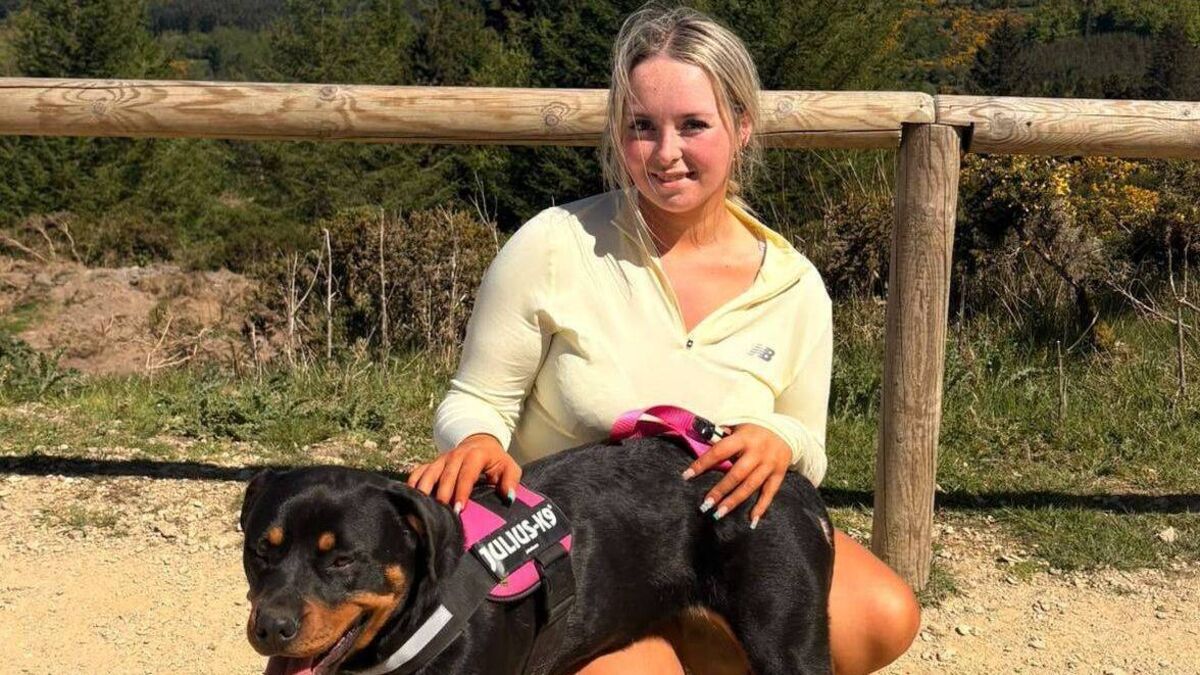
Emma Lynch, a service user from The Dara Project in Kildare Town
THIS September, the Substance Use Regional Forum (SURF) is celebrating Recovery Month with events taking place throughout Kildare.
To highlight the positive impact of recovery services, two local service users have shared their experiences with the Kildare Nationalist, sending a clear message that recovery is possible.
For Emma Lynch, recovery began with a decision to give herself one more chance.
For Jake Kemmy, it began with a moment of feeling completely lost, and looking for somewhere else to turn.
Their journeys into addiction have been very different, but today both are part of the same recovery community through the DARA Project, an addiction day programme for people in recovery from substance misuse.
23-year-old Emma from Portlaoise was referred to Kildare Town’s DARA Project for treatment and has never looked back since.
As a child, she described herself as outgoing but also deeply shy and anxious.
“I always felt really conflicted in that. I loved the academic side of school, but I never felt like I belonged in any friend group.” At 12, Emma first discovered alcohol. It gave her a way into social circles.
“If you had a can in your hand, you were part of the group,” she said.
What began as a way of overcoming her social anxiety quickly escalated.
By 14 she had started taking drugs and, by 16, she was using them every day.
Her teenage years became increasingly difficult.
Drugs and alcohol became central to her life, while the friendships surrounding them increasingly became her support system.
As she reached her late teens, Emma had become involved in criminal activity, lost relationships with members of her family and experienced periods of homelessness.
She spent time sleeping on friends’ couches in Portlaoise and Dublin, and sometimes sleeping rough when she had nowhere else to turn.
Speaking about her experience at that time, she said: “At that time I was taking street tablets. I would literally take drugs to black out. I have little bits of memory of really bad situations but the in-between parts are kind of still fairly foggy to me.”
Emma had tried to get sober before. She first attended meetings at around 16 and went to treatment for the first time at 17. In total she has attended five treatment centres.
“I thought I was going to be an addict forever,” she said.
During her last relapse the reality of her addiction became impossible to ignore, and she decided to call her mother and asked for one more chance.
Her mother had seen the DARA Project on Facebook and suggested that Emma give it a try.
“Usually I'd be fighting against it, but I was like, ‘Yeah, let's go tomorrow,’” she said.
That was the end of May 2025, and she hasn’t looked back since.
Previous treatment had provided a temporary respite, but she would then return to the same community, the same triggers and the same problems.
At the DARA Project she could work on those challenges while still living in the community.
The project also gave Emma something she had struggled to develop during years of addiction: the opportunity to discover who she was without drugs.
“When I came into recovery, I literally only spoke in street language,” she said.
“I didn't know how to socialise with people sober. I didn't know what I liked.” She has also had to leave behind friendships that were once central to her life. That was one of the hardest parts of recovery.
“I had a real false sense of responsibility to a lot of them,” she said. “I kind of had to grieve that part of my life in a way. It was all I knew for so long.”
Today, Emma has built new friendships within the recovery community. She describes The DARA Project as being like another family.
“I was afraid I was never going to have friends again or never going to laugh again.” Jake (31), who is originally from Newbridge, first encountered addiction as a child, as he grew up with his mother who struggled with alcoholism.
One of six, Jake and his siblings moved between his mother, father and grandmother, and spent time in foster care.
Jake would later develop an addiction of his own, using weed, cocaine and street tablets including Xanax.
Anxiety and fear had been a constant presence in his life, and he initially used drugs to cope with those feelings.
“The street Xanax was probably the worst one of the three because I was so anxious,” he said. “I was so full of fear all the time.” By the end of 2024, Jake was homeless after being kicked out of his mother's home.
He moved to Athy and spent around a year living there, including time in a hostel. It was there that somebody suggested he visit the DARA Project.
At the time, Jake said he was feeling lost: “I was walking around Athy with nothing to do and no; I was just lost. I didn’t really have any purpose or direction to go in.”
He hadn't even fully recognised himself as an addict at this point, but after joining the project and listening to other people talk about their experiences, something began to change.
“When I got in there and heard everybody talking and sharing and I learned a bit more about addiction, I think that’s when I properly realised that I was actually an addict.”
For Jake, the biggest challenge in recovery was his anxiety.
Sitting in groups and talking openly about his feelings was extremely uncomfortable. It took him a month or two to settle in and feel that he belonged.
At first, he would struggle to speak in front of the group and would sometimes leave the room to calm himself down.
Today, he still experiences anxiety, but he has learned that he can cope with it.
Jake credits the DARA Project with playing a central role in his recovery. He has built a new life around the project, recovery meetings and a new social circle.
Moving away from Newbridge meant leaving behind his old life and old friendships, but in Athy he has made new friends with people who understand what he is going through.
“It's not just about obviously going to the meetings and going to the projects,” he said. “It’s after that as well – spending time with the right people.”
“They understand. If something is on my mind or I'm struggling with something, they're there for me as well.”
The DARA Project has provided both Emma and Jake with more than a place to attend meetings.
The project offers a structured week which can include group therapy, relapse prevention, education, courses and recreational activities.
The project has also given Jake opportunities to study.
He told the Kildare Nationalist that he has recently completed a Level 5 course in Community Addiction Studies, funded through the project, and hopes to continue his education.
He is now looking towards a Level 7 qualification in Community Addiction Studies and a group facilitation course, with the long-term goal of working in addiction services himself.
“I want to help people that were in the same position that I was in,” he said.
Both Jake and Emma describe recovery as a process of rebuilding, not simply stopping drinking or taking drugs, but learning how to live differently.
For Emma, that has meant rebuilding relationships with her family and finding purpose again.
“For me, today, to be able to wake up clean and sober, to have a relationship with my family, to have made friends, that is probably the biggest achievement I'm ever going to make in my life,” she said. “I feel like I have purpose again.”
A year earlier she had resigned herself to the idea that she would be an addict forever. Today, she is thinking about work, having a family and owning her own home.
“These things actually feel possible now,” she said.
For Jake, being asked to share his story has made him feel proud. His hope is that people who don't know about recovery services will learn that help exists.
Most importantly, he wants people struggling with addiction to know that they are not beyond help.
“Don't give up on yourself,” he said. “Recovery is possible for everybody.” Emma shared a similar message, that everyone deserves to recover.
“Nobody deserves to live the way you live in addiction,” she said. “Give yourself one more chance.”