Anti-drone technology will be in place by next summer – Helen McEntee
By Gráinne Ní Aodha, PA
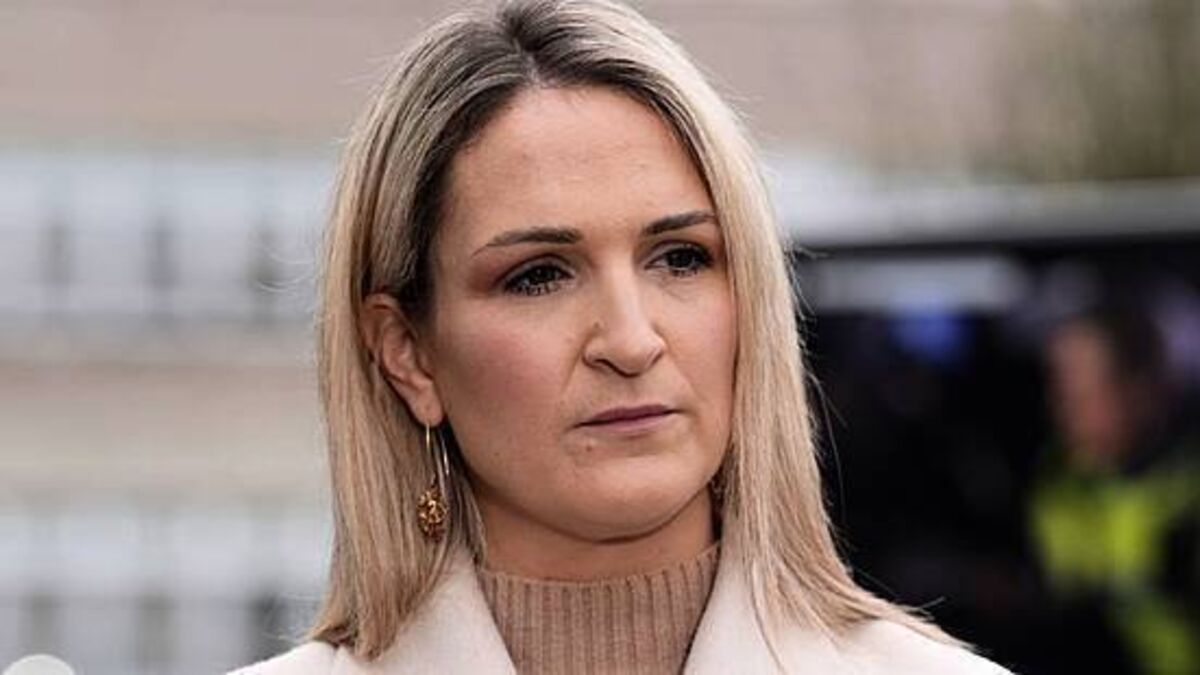
Ireland will have anti-drone technology in place by next summer, Minister for Defence Helen McEntee said.
The technology will “identify and neutralise” drones that “may be a threat” and will be in place before the meeting of senior EU figures in Dublin.
Ireland will host the presidency of the Council of the European Union from July 1st next year, which will include an informal meeting of EU ministers in Ireland.
Asked whether an under-investment in defence raised questions about Ireland’s capabilities to host the EU presidency next year, Ms McEntee said “absolutely not”.
She said it was “essential” that Ireland’s defence continued to be funded amid “changing” and “emerging” threats.
She was speaking at the Curragh Camp in Co Kildare as the €1.7 billion national development plan for the Defence Forces was published.
Ms McEntee said it represented an increase of about 55 per cent on the previous plan.
My focus and priority as Minister for Defence, working with the department and working with the Defence Forces, is to make sure that the Defence Forces are growing, expanding, and that we are enhancing capabilities at every step of the way
“My focus and priority as Minister for Defence, working with the department and working with the Defence Forces, is to make sure that the Defence Forces are growing, expanding, and that we are enhancing capabilities at every step of the way.”
She said that anti-drone technology would be in place by next summer to identify and neutralise threats, and a radar system would be in place by 2028.
She said that there are three strands to the radar. The first is an anti-drone technology in place by next summer. The second is the long-range systems that will give Ireland the ability to identify helicopters and planes, and the third is “the land element”.
She said that the counter-drone technology would be in place to prevent incidents such as the reports of drones near Dublin Bay when Ukrainian President Volodymyr Zelensky landed in Dublin for his first official visit to Ireland.
Police are investigating the presence of drones over Ireland during Mr Zelensky’s brief visit to Dublin last week.
The National Security Council is to provide the Government with a “comprehensive report” on the matter.
“Yes, there was identification of drones in the skies at certain times,” Ms McEntee said. “There is a review underway at the moment.
“As is the case with any type of incident, we have to find out the information and then respond and learn from it.
“In many instances – and I’ve seen this from my colleagues across the EU – these drones are there to disrupt, and we’ve seen very recently, hundreds of millions euros worth of disruption was caused because of drones in the airspace. That didn’t happen last week.”
Ms McEntee said Mr Zelensky’s visit was “a hugely successful day” and that would not have been the case if the Defence Forces and An Garda Síochána were not working closely together.
Asked why the Government had been seen to be reluctant to confirm details of reports of drones off the Dublin coastline, Ms McEntee said: “When it comes to national security, this isn’t something that’s going to be spoken about all the time.
“The Defence Forces monitor our seas, our skies and our land all the time, and where issues happen, and where we need to respond, where I need to be informed of as minister, that is exactly what happens.”
Ms McEntee was also asked about a “strike list” of towns and cities in the UK that would be targeted by Russia if war broke out with the EU, which included Belfast and Fivemiletown in Co Tyrone.
“I think any government would be foolish not to take any type of threat seriously,” she said.
“We’re not immune to the changes and the challenges that we’re seeing across the world. We’re not immune to the new types of hybrid threats that we’re seeing happening regularly.
“We’re not immune to the cyber threats that are happening as well, that are impacting our businesses, our governments, our state agencies.
“Again, that’s why we are investing, not just in the Defence Forces, but there’s been huge investment in An Garda Siochana to be able to respond to these types of threats.
“It is a priority for me to make sure that we are working in whatever way we can, obviously taking into account our neutral position, but that we are working with our partners across Europe as well.”