Man who set fire to Conor McGregor’s pub and stabbed garda says he was inspired by ISIS
Eoin Reynolds
A self-described jihadist who set fire to a pub owned by Conor McGregor and later stabbed a garda on a Dublin street while shouting 'Allahu Akbar' told detectives he was inspired by the founder of Isis, Musab al-Zarqawi, and had pledged his allegiance to the terrorist organisation.
A sentencing hearing at the three-judge Special Criminal Court also heard on Monday that 24-year-old Abdullah Khan, who describes himself as a Salafi jihadist, is part of a "wider group of people of a like-minded mindset".
Det Inspector Gavin Ross of the Garda Special Detective Unit said an investigation is ongoing with lines of inquiry still open.
He said that statements made to gardaí by Khan's associates are also the subject of ongoing investigations.
Khan's defence counsel, Michael Bowman SC, suggested that there may be others who are "operating in the shadows" and preferred to have Khan, who has a history of social isolation, depression and paranoia, operating in broad daylight.
Motivation
Ross said that when Khan was asked for the motivation behind his crimes, he said he wanted to send a message to McGregor and others with a "right-wing mindset" not to insult the Prophet Muhammad.
He said he was angry that the State allowed people to insult the Prophet and attacked the garda to show his anger and make his protest known.
He said he had listened to speeches by al-Zarqawi, who was killed in 2006, and was inspired by them. He said he found al-Zarqawi "charismatic" and his message resonated with him.
Khan, with an address in Dublin that cannot be published due to a court order, previously pleaded guilty to eight charges.
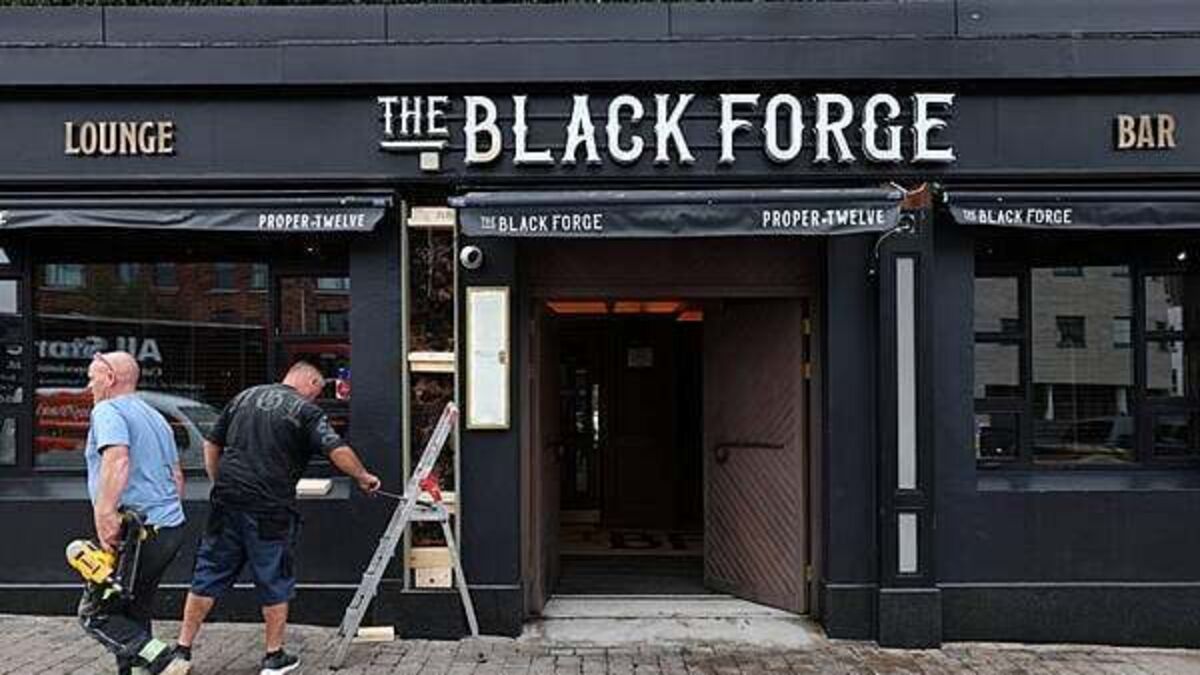
He was charged that on July 25th 2025, at the Black Forge Inn, Drimnagh Road, Dublin 12, he committed arson by pouring petrol on the front door of the pub and lighting it with a match.
He was charged four days later, on July 29th 2025, at Capel Street, he assaulted Gda Gary Lynch causing him harm, and attempted to assault Gda Patrick Nevin.
He was further charged with producing a knife during the same incident and two counts of endangerment, in that he intentionally or recklessly engaged in conduct which created a substantial risk of death or serious harm to the two gardaí.
Khan was further charged with two counts of engaging in terrorist activity or terrorist-linked activity on the dates of each offence.
Det Sgt Liam McLoughlin told the sentencing hearing that Lynch and Nevin were on foot patrol near Little Britain Street in Dublin city when Khan ran up behind them carrying a knife and stabbed Gda Lynch in the arm while shouting 'Allahu Akbar'.
The gardaí put distance between themselves and their attacker as he continued to wield the knife and tried to move towards them.
They used their 'ASP' batons and pepper spray, and a member of the public brought Khan to the ground before the two gardaí moved in to arrest.
Lynch suffered two lacerations to his arm that required stitches and nerve damage that required surgery.
In a victim impact statement handed into court, the garda described his "shock and disbelief" that there was nothing he could do to prevent such a violent attack.
He described ongoing pain, discomfort and stress.
During his first interview following his arrest, Khan immediately admitted to setting fire to Mr McGregor's pub four days earlier, saying it was "better to get that over with now than have it come back to me later."
Khan said he came from a professional family, but when he had issues with his mental health, he resisted their efforts to find help and he became homeless for some months prior to the offences.
Radicalised
Det Insp Ross told prosecution senior counsel Gerardine Small SC that the Special Detective Unit (SDU) became involved due to the concern that Khan had been radicalised by Islam.
The use of the term, Allahu Akbar and an attack on police was similar to terrorist attacks elsewhere in Europe, he said.
In his first interview with the SDU, Khan said it was "undeniable" that what he had done was terrorism. He later explained that from the age of 18, he had started listening to people like al-Zarqawi online, and his beliefs progressed in his early 20s.
Det Insp Ross said Salafi Jihadism is a puritanical and literal interpretation of Muslim law that was adopted by Isis.
In his interviews, Khan referenced the four core principles of Salafi, including a rejection of man-made laws and the ability to declare those who do not follow the religion as apostates and legitimate targets.
His beliefs removed prohibitions on attacking members of the security forces in any country where the State does not follow a literal interpretation of the Koran, the inspector said.
Ross said that when it became more difficult to visit ISIS territory in Iraq and Syria, the leaders of the movement declared that individuals could take responsibility for their own jihad wherever they lived.
During his garda interviews, Khan declared his support for Isis ideology, saying he had a love for them and had pledged his allegiance to the organisation.
Insults
Khan spoke of being motivated by insults against the prophet by "people with a right-wing mindset" and said he was angry at the Irish State.
He described such insults as "outrageous and unacceptable" and said they made him sad and angry.
He said McGregor had helped the far-right to grow in Ireland, so he held him responsible for the insults.
He said he wanted McGregor to know that he was "playing dangerous games". He added: "When it comes to the prophet, we don't see it as a matter of freedom of speech." He said insults to the prophet are always provocative, and there is a "duty on the state anywhere in the world" to denounce such insults.
When he attacked Gda Lynch, he said he did not expect his victim to die, but he wanted to "injure him to make the point".
He added: "This was a message to the Irish government that if, under the name of free speech, you insult our prophet, there will be people who are angry."
In mitigation, Bowman asked the court to consider his client's early guilty plea and his admissions to gardai. He said his client was in a "state of mental crisis" and apologises to his victims.
Justice Karen O'Connor, presiding, commended the bravery of the two gardai who arrested Khan. She adjourned sentencing to April 20th and remanded Khan in continuing custody.