Skeleton remains should be returned to Naas
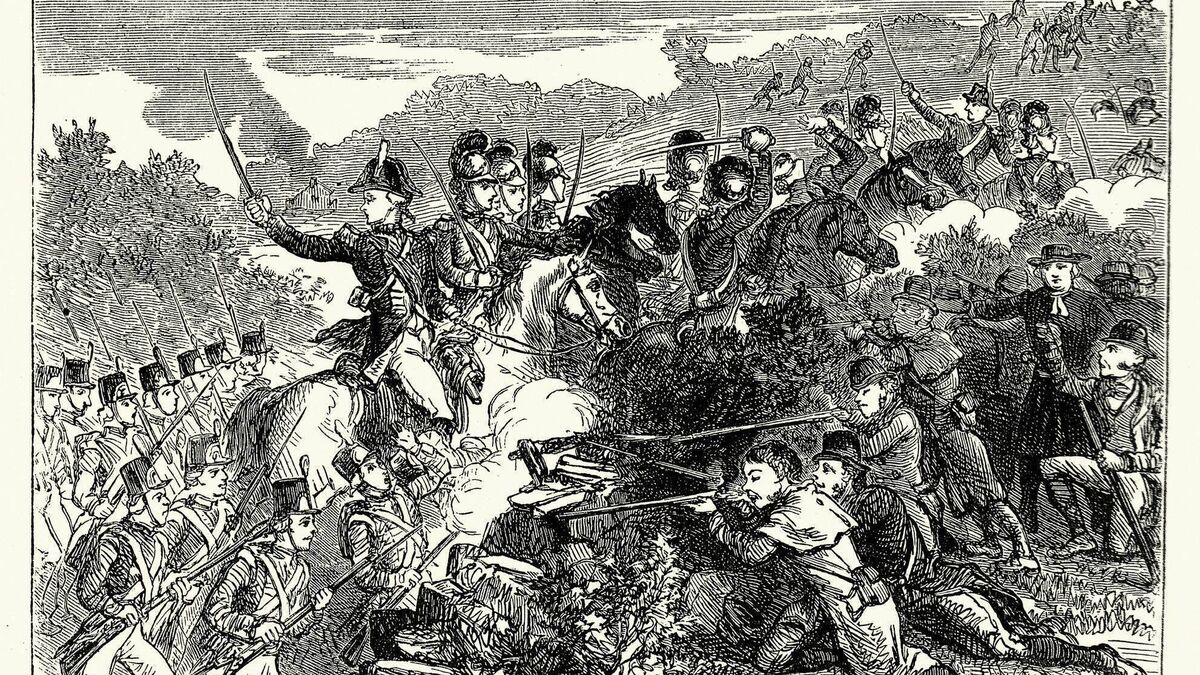
The area where the remains were found is known locally as Gallows Glen and is associated with the United Irishmen’s rebellion
A KILDARE councillor is seeking that the remains of skeletons possibly linked to the 1798 Rebellion be buried in a mass grave in Naas.
A burial site containing skeletal remains was unearthed in September of last year in Naas, in the area known locally as Gallows Glen. The area is associated with the United Irishmen’s rebellion.
The remains were transferred to Cork for forensic examination.
At September’s meeting of Naas Municipal District, cllr Seamie Moore proposed that the council provide an update on what was discovered from the examination of the skeletons.
He also asked, in the context of the remains being taken to a laboratory in Cork for analysis earlier this year, if the council had any plans to return the skeletons to the Kildare town and bury them ‘with dignity and respect in a communal grave in the local cemetery’.
Senior planner Amy Granville issued the council’s response, which stated that the excavation was carried out under the supervision of the National Monuments Service, adding that ‘any analysis and/ or arrangements for interment/ burial is a matter for the appropriate department officials’.
The National Monuments Service falls under the Department of Housing, Local Government and Heritage.
Speaking at the meeting, cllr Moore said he wanted a mass grave in memory of the Naas rebels, saying that he does not want the skeletons cremated and expressing his view that “we owe it to those people to bring them back and have them buried with a bit of respect”.
Cllr Moore said that he would be working with the council’s planning team to see if contact can be made with the department.
The independent councillor said that the manager of St Corban’s Cemetery has a site available for the communal mass grave.
Cllr Moore told the last year that there is a “strong belief” in Naas that the remains are those of rebels who took part in the Battle of Naas during the 1798 Rebellion.
Naas mayor Bill Clear expressed support for the initiative.
However, also speaking to last year, historians Paddy Behan of the Kildare Local History Group and Dr Patrick Geoghegan of Trinity College Dublin expressed caution over concluding that the remains are from the Battle of Naas.