Victim of helicopter crash in Kildare had to be identified using DNA match, inquest hears
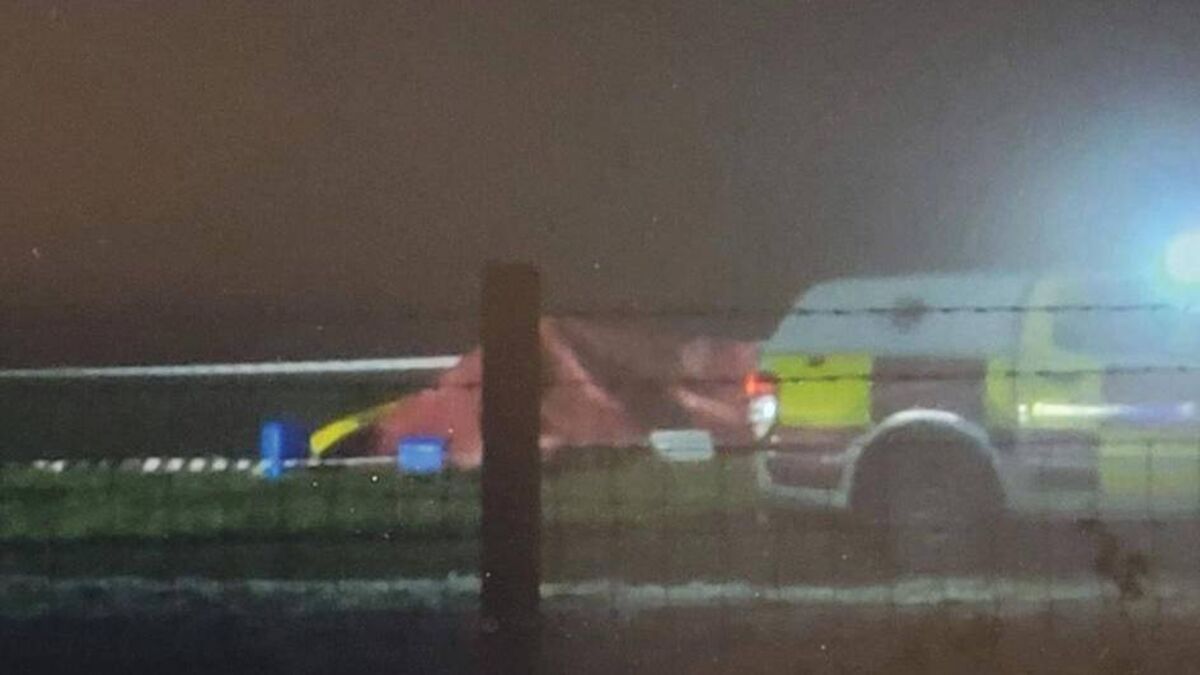
Jim O’Brien (71), suffered extensive traumatic injuries and burns after his Robinson R44 Raven II helicopter crashed in Kennycourt – about 6km south-east of Kilcullen
A pilot who was killed when his helicopter crashed into a field on farmland in Kildare four years ago had to be formally identified through a DNA sample, an inquest has heard.
A sitting of Kildare Coroner’s Court heard that the pilot, Jim O’Brien (71), suffered extensive traumatic injuries and burns after his Robinson R44 Raven II helicopter crashed in Kennycourt – about 6km south-east of Kilcullen, on December 11, 2022.
A postmortem showed that the married father-of-three of Butterfield Avenue, Rathfarnham, Dublin, sustained multiple fractures to all four limbs but confirmed that he had not suffered any medical event that could have contributed to the collision.
An inquest into Mr O’Brien’s death heard evidence that he had difficulty in locating his scheduled destination – Kilrush Airfield in Co Kildare – due to poor visibility after weather conditions deteriorated during a short flight from Tagoat, Co Wexford.
Garda James Lacey told the inquest that he was alerted to the crash at 3.53pm and discovered the helicopter on fire in a field about 300 metres away from the road.
Garda Lacey said a DNA sample had been taken from the deceased’s brother, Anthony O’Brien, to formally establish the victim’s identity.
The inquest heard gardaí took statements from several eyewitnesses who described seeing the helicopter pass back and forth over the area a few times as if it was in trouble.
One individual said it looked like the pilot had lost his way in the fog before he heard a bang and then saw black smoke from the crash site.
Another eyewitness, Mark Eager, said he saw the helicopter flying over his house a number of times when he heard the sound of its engine change before hitting the ground at a 45º angle.
Mr Eager said he jumped in his car to get to the crash site but was unable to get close to the helicopter due to the fire.
In reply to questions from coroner, Loretta Nolan, Mr Eager said it was foggy and cold that day with visibility described as “very poor”.
The deceased’s wife, Arlene, explained how the couple went to their holiday home in Ballygarrett, Co Wexford every weekend.
Ms O’Brien said she last saw her husband when she was returning back to Dublin on the day of the fatal crash at around 1pm.
She understood he was going on a short five-minute flight in the helicopter to Rosslare, Co Wexford.
The inquest heard Ms O’Brien discovered about the accident when gardaí called to her home at around 6pm later that evening.
An inspector with the Air Accident Investigation Unit, John Owens, said an investigation into the crash had determined that it was probably caused by “a loss of control due to spatial disorientation following a loss of external visual references during an attempted or aborted descent in sub-optimal visibility conditions”.
Mr Owens confirmed that no mechanical faults were found with the helicopter and that it had not run out of fuel.
However, the inspector said a contributory factor may have been increasing pressure felt by the pilot to land due to a decreasing fuel quantity.
Mr Owens estimated that Mr O’Brien had around 35 minutes of flying time before the aircraft ran out of fuel but acknowledged it was “possibly less”.
The witness said another likely contributory factor was “plan continuation bias” which he explained was an unconscious bias to sticking with an original plan despite changing circumstances which indicated a new plan was required.
Mr Owens said the investigation report had recommended that the Irish Aviation Authority should promote awareness of the effects of plan continuation bias, particularly among non-commercial pilots.
Relatives of Mr O’Brien observed that he had been “caught between a rock and a hard place” when trying to land in fog.
Dr Nolan said a verdict of accidental death was the most appropriate one as the pilot had done nothing that was inherently risky to make a finding of death by misadventure.
Endorsing the AAIU’s recommendation, the coroner observed that the deceased had become disoriented in poor visibility and had overshot his destination in attempting to find it.
Offering her condolences to the pilot’s family, Dr Nolan said the evidence showed that Mr O’Brien was “a very sensible person and was trying to do the right thing”.