Two men avoid jail over firearms sting in Kildare
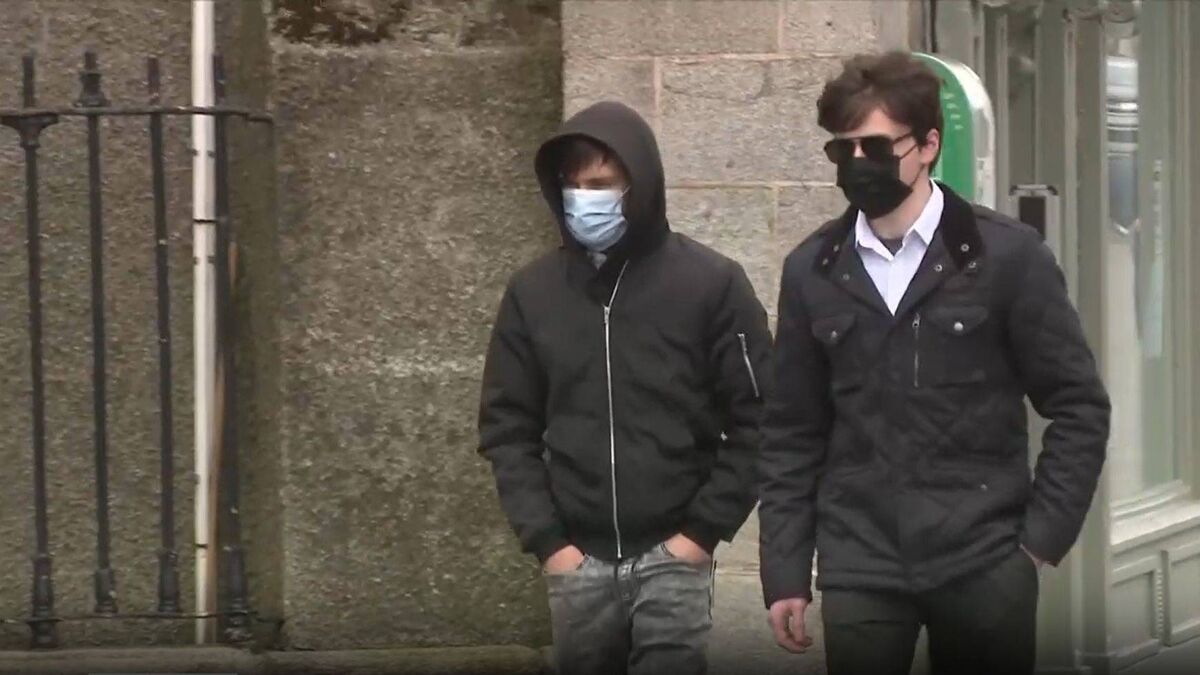
Daniel Quinn Burke (Left) and Shane Kinsella (Right) arrving at Naas Circuit Criminal Court on Thursday 16 April
Two young Wicklow men who were caught with military-grade weapons as part of a garda sting operation have avoided a prison sentence, with a judge citing their peripheral roles and the unusual circumstances of the case.
Daniel Quinn Burke (22), of Allendale Lawn, Baltinglass, and Shane Kinsella (22), of Tynock, Kiltegan, were sentenced at Naas Circuit Criminal Court today after previously pleading guilty to possession of a Remington semi-automatic pistol, a Heckler and Koch assault rifle, and ammunition at Ponsonby Bridge near Straffan, Co Kildare on 2 March 2024.
A third man arrested alongside them on the same date, Evan Fitzgerald, of Portrition, just outside Kiltegan later died from self-inflicted wounds after discharging a firearm at Fairgreen Shopping Centre, Carlow on 1 June 2025.
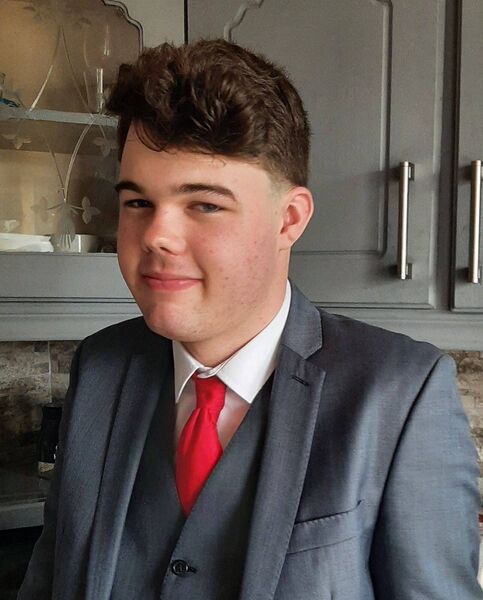
All charges against him were withdrawn after his death.
Judge Elva Duffy imposed a three-year suspended sentence on the pair, with the suspension lasting five years, during which time they are to be of good behaviour and not come before the court again, with both men entering into a €100 own bond.
The court heard that the operation to procure the weapons had been instigated entirely by Mr Fitzgerald, who had a deep fascination with firearms and had acquired the weapons via the dark web.
At a previous hearing, Detective Inspector Ken Donnellan of the Garda Organised Crime Unit outlined how intelligence had been received in late January 2024, contact was made with Mr Fitzgerald, and specific firearms were subsequently requested and sourced. The weapons — a military-grade Heckler and Koch assault rifle and a Remington semi-automatic pistol — along with 22 rounds of .45 ACP calibre ammunition and 20 rounds of Winchester ammunition, had been rendered safe prior to the operation. €2,700 in cash was offered for the guns and ammunition.
The court heard that arrangements had been made to meet at a location that changed a number of times before the final meeting point was settled at Ponsonby Bridge. Three men arrived in a car driven by Mr Quinn Burke, with Mr Kinsella acting as front-seat passenger and navigator. It was Mr Fitzgerald who exited the vehicle, handed over the money, and brought the firearms back to the car. Neither Mr Quinn Burke nor Mr Kinsella left the vehicle at any point. All three were subsequently brought to Leixlip and Naas garda stations where they were detained for two days and were cooperative throughout.
Referring to evidence given at the previous hearing, Judge Duffy recalled that Detective Inspector Donnellan had accepted in cross-examination that the case was “highly unusual”, noting that firearms of this type were normally associated with organised crime or subversive activity, but that such links were entirely absent here.
The court heard that neither Mr Quinn Burke nor Mr Kinsella had any history of criminal or subversive activity, and that it was the garda view that both men had been led into their involvement through loyalty to their lifelong friend. It was acknowledged that this strayed significantly from what gardaí would normally encounter.
Judge Duffy said she had listened very carefully to the detective inspector's evidence and noted that the involvement of both men had been somewhat peripheral. She said that while the weapons were of a murderous kind and their nature was an aggravating factor, she accepted the characterisation of the two defendants as young men who had been led astray by loyalty rather than criminal intent. She described their engagement in the scheme as "beyond foolish" and said that she too wondered, as Mr Quinn Burke himself had reflected, whether the signs of their friend's deteriorating state had been missed.
Judge Duffy noted that the Director of Public Prosecutions had taken the unusual step of indicating that the mandatory minimum five-year sentence was not warranted in the circumstances, and that the appropriate sentence might sit below the lower range. Judge Duffy said that she was departing from the expectation of an immediate custodial sentence while acknowledging that there must be consequences that are seen to be imposed.
In mitigation for Mr Quinn Burke, the court heard that he had entered an early guilty plea, cooperated fully with gardaí, and had not been involved financially in the purchase of the weapons.
The court heard that Mr Quinn Burke, who was 19 at the time of the offence, has since qualified as a mechanic, and is working as an apprentice earning around €500 a week, with a particular interest in electric vehicles. His garage employer of two years provided unwavering support, describing his growth and development during that time. A probation report was highly positive, assessing him as a low risk of reoffending and of low ongoing danger to society. Mr Quinn Burke also lost his father in 2025, which the court heard had had a significant impact on the family. A letter handed into court expressed his deep regret.
For Mr Kinsella, the court heard he has since moved to Carlow, where he is living with his sister and working full time. His guilty plea, Judge Duffy noted, while entered somewhat later than Mr Quinn Burke's, was accepted as still being an early one. His role on the day had been one of assistance rather than active participation, with his act being the use of his phone for navigation. He had engaged positively with probation services, demonstrated real insight, and expressed deep shame and apology, including in a letter handed into court. He was described as diligent and pro-social, and the court heard of the traumatic impact the death of Evan Fitzgerald had on him.
Judge Duffy said the probation reports on both men had very positive things to say, and that the references submitted on their behalf reflected men of whom people speak very highly. She said she could depart from the mandatory minimum for both young men and would not impose an immediate custodial sentence but emphasised the serious consequences should they come before the court again in the next five years.