What's next for Kildare's senior footballers?
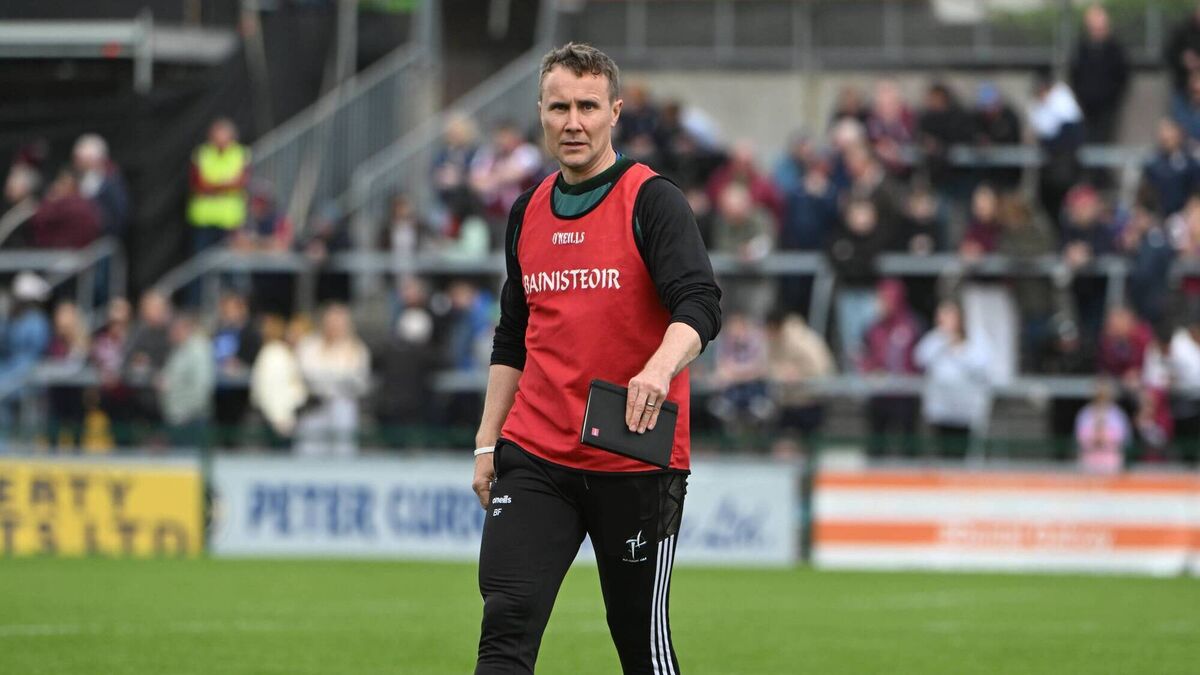
Brian Flanagan has much to address if Kildare are to bounce back from a hugely disappointing season in 2027 Photo: ©INPHO/Andrew Paton
When Brian Flanagan was appointed Kildare manager in August 2024 he ticked a lot of the right boxes for this writer. Articulate, intelligent Kildare man who put his heart and soul into his football when a player, coaching experience with Kildare, Westmeath, Summerhill, two Leinsters and an All-Ireland at under-20 level managing many of the players who would likely form the backbone of the county team over the coming years.
The initial meeting with the media was impressive and engaging. Among other things, Flanagan spoke of the team needing to re-build a connection with the supporters, of the need to “build something that is resilient and robust as a team, that can take bad days and take bad moments in a match and overcome them.”
His requirement for a four-year deal didn’t seem self-serving, a get-out-of-jail excuse for any bumps in the first couple of years. The reward would be worth it, you felt, “to be competitive against the top sides in the country.”
That was, he said, the simplified version of what he achieved over the four years.
‘Flano’ felt he had the right management team beside him. Aidan O’Rourke was, he said, “the best coach he ever worked with”. Damien Hendy “in terms of standard bearer within the group and the way he prepared, the way he thought about the game, had such an impact on the younger lads.” Daryl Flynn “was just a leader on the field, the man in the trenches when the going got tough.” He identified two key weaknesses that would have resonated on the terraces concerning an inherited panel heading for Division 3 after disastrous back-to-back relegations. Strength and conditioning and confidence.
On strength and conditioning: “The challenge we’ve maybe found is in transitioning young, talented schools and underage footballers into senior inter-county footballers. A lot of that step up is around athletic conditioning and strength and conditioning in general.”
To that end Flanagan introduced Neil Welch, who he had worked with in 2016 and Dean Ryan, who he had gotten to know more recently, emphasising his experience across a range of sports.
A county that was crying out to be dragged kicking and screaming into the modern age had found its evangelists it seems.
As someone who has watched almost half a century of Kildare teams fail (generally) to reach their potential when it mattered, the focus on confidence/morale/resilience pressed a lot of the right buttons.
Emer Fogarty, the former LGFA county player who had performed the role for Flanagan’s under-20 set-up was back alongside him as psychologist.
“In high-level sport,” Flanagan told us, “when momentum goes for you, you can feed off that. Whereas when it goes against you it’s a very hard thing to arrest in inter-county football.”
At under-20 level Flanagan felt Fogarty “brought a calmness, a composure and a self-belief to those lads.”
The new St Conleth’s Park was another positive, Flano felt.
“We can’t wait to bring a team in there. That will energize things,” he said.
“I think the fans will want to come out and see it, see a new management team, see a new team, see a new stand. You’d like to think we can mobilise that enthusiasm for GAA in Kildare again.”
Year one went largely to plan. Flanagan brought through a clutch of his under-20’s but still had the likes of David Hyland, Kevin Feely, Mick O’Grady, Dan Flynn and Niall Kelly around to provide experience and know-how.
It wasn’t without its bumps in the road. There were defeats to main rivals Clare and Offaly in the two key Division 3 games, and it was only through outscoring the likes of a weakened Leitrim that the team won promotion on scoring difference.
Being out-run and out-foxed by Offaly for a second time in the league final was disappointing to say the least, though not as much as passing up a good chance to reach a Leinster final when going down to Louth in Tullamore having overcome Westmeath in the quarter-final.
That confined Kildare to a Tailteann Cup campaign and while there were good performances along the way, including a revenge mission on the Faithful in Newbridge, Flanagan’s side fell over the line truthfully against the likes of Sligo and Fermanagh and in the final against Limerick.
By and large, though it was a case of “on track” coming into year two.
The addition of Davy Burke to the coaching ticket was an interesting one, a “ballsy” one both by Flanagan and the County Board. It meant Kildare had on board two of only three men who had brought an All-Ireland to the county since 1928. Burke brought inter-county experience. His role and how it fitted with O’Rourke’s and Hendy’s was unclear, but one hopes that was only to external observers.
How then did we get to the situation where, before the team even exited the championship, clubs were raising serious concerns about the direction of travel in year two?
It started off well enough, though giving up an eight-point lead to Westmeath in the O’Byrne Cup final, conceding six largely uncontested two-pointers from play in the second half, raised red flags.
That was largely forgotten when a side decimated by injuries drew in Omagh and beat Offaly by nine points in Newbridge a week later.
February is where it all went pear-shaped and truthfully the team and management have failed to drag themselves out of that rut since. The harsh dismissal of Alex Beirne against Derry was certainly a trigger but where was the resilience when two early second-half goals turned the momentum of that game towards Derry?
With tougher assignments to come the feeling abroad was that Cavan in Breffni Park offered the opportunity to move onto five points and almost secure our divisional place for another year.
For whatever reason, and no doubt the absence of Beirne (suspended) and Feely (injured) contributed, the performance that day was among the worst we have seen for years with players unable to raise a gallop while struggling with the basic skills of the game.
The spiral after that was stark and worrying with Meath taking control of the game in Newbridge from the start and running out uncontested fourteen point winners before Cork ran riot in the opening half in Páirc Uí Rinn before Kildare threw the kitchen sink (and Jack Robinson) at them in the second period on the way to a nine point reversal.
Relegation was confirmed, despite a better performance, in a sixth successive loss to Louth, by 1-25 to 0-25 in Newbridge.
Kildare got back on the horse with an unconvincing win over Laois in the Leinster quarter-final but there were echoes of the year before in Tullamore when Westmeath secured their final spot in extra-time, going on to replicate Louth’s final win of the year before, emphasising the great opportunity lost by Flanagan’s men.
Kildare were ranked 16th for the Sam Maguire and although drawing Galway and Kerry was harsh, there’s nothing to suggest they would have fared much better against other opposition.
The difference in class, physique, pace and tactics was stark in those two outings, culminating in thirteen- and fourteen-point defeats as the state of football in the county, at senior level at least, was laid bare.
The natives were becoming restless. At June’s County Board meeting, Brendan Nurney of Kilcock and John Flood of Rathcoffey were particularly critical of the year the senior team had endured.
Nurney declared that it was “not working”, that the side “went backwards in two years” while describing the display in Salthill as “horrific”.
Flanagan railed at the timing of those comments, but you wondered would clubs take kindly to being told they should restrict their observations to the end of the season, particularly given the scarcity of Board meetings in the summer months.
It’s not as if the views expressed did not reflect those of the terraces, where frustration mixed with apathy, the crowds dwindling throughout the year before the ‘occasion’ and David Clifford drew 10,000 to the Kerry game.
It’s a results business and Kildare played eleven league and championship games in 2026, winning two, drawing one and losing eight, with those eight defeats coming in the last nine games. They only beat two teams, one Division 3 bound (Offaly) and the other a very average Division 3 outfit in Laois.
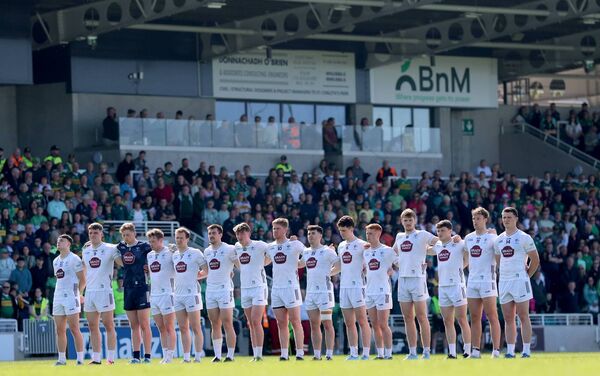
Flano accepts that he is not blameless in all this though he seeks a review of the year to be carried out under a “broader lens” that looks more strategically at a three-to-five year timeline and what needs to be done to bring Kildare football to a higher plane.
While there is no doubt a strategy for football is long overdue, and the last overall Kildare GAA strategy seems to have withered on the vine after Pat Gilroy gave his thoughts, that task surely falls to Bryan Murphy while Flanagan has enough to concern himself with in terms of getting the senior train back on the right track for 2027.
If you’re Chairman Mick Mullen sitting down with the manager over the next few weeks, what are the questions exercising your mind? I would suggest the following:
1. Was it wise in retrospect to release so many more experienced players prior to this season given that four were retiring (Hyland, O’Grady, Flynn and Kelly) with others stepping away such as Kevin Flynn. Flanagan has used 59 different players over two years, 36 of those in 2025 and 43 this year. Of the 36, 16 were no longer available in 2026, a 44% drop-off rate. Could some of that churn have been avoided?
2. What can or will be done to address the imbalance of the panel that left the back seven positions sorely lacking maturity (with the exception of Brian Byrne and Mark Dempsey) and experience. Are there players on the club scene or recently departed county players who could be brought back in to shore up these positions?
3. Possession is nine-tenths of the law, in life and in gaelic football. Kildare won around 55% of their own kickouts while their opponents won around 65% of theirs. The results were almost inevitable. Can the goalkeepers be coached to sufficiently address this deficiency and if they do, can midfield and the middle eight be bolstered with players with the physical attributes to compete at inter-county level?
4. To these eyes, we have a slow, lumbering attacking style compared to other counties, or even to our own successful underage teams, with a reliance on individual brilliance rather than tactics. There is little or no off-the-shoulder support for the attacker. Why is this and how can it be addressed?
5. What is the input from the manager and the strength and conditioning team on the high level of injuries, particularly hamstring strains, that seemed to afflict the team during 2026. The backroom team is stacked with professionals from strength & conditioning experts to physios to nutritionists as well as experienced coaches. What is the collective analysis of the level of injuries and the apparent lack of fitness of the team over the course of the year. Were players, particularly those coming off long seasons with their clubs, simply pushed too hard? What changes can and will be made, whether they be in fitness programmes or backroom personnel for 2027?
6. Resilience and confidence appear to be on the floor, in contrast to the goal set in 2024, and as referenced by Hyland on Newstalk’s Off The Ball recently. How are these psychological deficits being addressed. Is more help needed, perhaps from experienced external experts to address this?
7. How are coaching roles differentiated? Are there too many voices? Who has the responsibility and know-how to coach restarts and attacking tactics in particular? Will the current coaching team remain given the poor results and performances in 2026?
No doubt there are other issues that need to be addressed, and the sincere hope is that Flanagan comes to the table with a cogent plan to address those as well. The temptation might be to throw the baby out with the bathwater, but where would that leave us? Address the issues above and it would take Flanagan and Kildare a long way down the path of getting the team back on track and on an upward curve in 2027.
The overall strategy and finding the cure to bringing bigger, better and more athletic, modern-game-ready footballers is for another day, but must be addressed or Flanagan and his successors will continue to bang their heads against a brick wall.