EU executive loses compensation bid over missed Dublin flight
Ray Managh
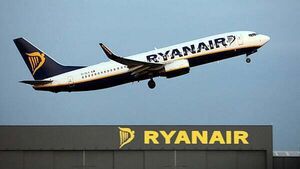
A Brussels-based EU executive, with ties to Ireland, has failed in a bid to legally force Ryanair pay him compensation for a missed flight just over a year ago.
Jonathan Murphy told Judge Dierdre Browne in the Circuit Civil Court that he had turned up “only two minutes late” at the airline’s check-in at Brussels Airport, on 20th November 2024, to find the desk had already closed.
He said Ryanair staff had told him that because he had not checked in online, and would have to pay a pre-flight fee for a manual check-in, they would not have enough time to handle his boarding details before the flight was scheduled to take off 40 minutes later.
Judge Browne heard that, by a cruel irony, the plane he had booked to take him to Dublin, and which he had missed by only two minutes, had to stand on the airport apron for the following four hours because of a snowstorm delay.
Murphy, who represented himself, stated that he had to overnight in Brussels and pay an additional €100 to transfer to a flight the following day.
He had also sought a refund of his €250 ticket and had brought a compensation claim against Ryanair, a claim that had been thrown out in the Small Claims Court.
In his appeal to the Circuit Court, Murphy claimed Ryanair had wrongly failed to facilitate him at the Brussels airport. He told Judge Browne he had been delayed due to his mobile phone having been stolen on the day of departure and due to weather conditions.
Barrister Kenneth P Hyland, who appeared for Ryanair with Ennis and Associates Solicitors, told the court that the airline was strictly obliged, under EU Regulations, to close its check-in 40 minutes before departure.
He said Ryanair, like other airlines, could not, under any circumstances, breach this EU Regulatory Statute by issuing latecomers with a boarding pass outside the stipulated 40-minute cut-off deadline before the scheduled time of departure.
Mr Hyland said that by Mr Murphy’s logic, he would be entitled to turn up and be issued with a boarding pass two minutes or one minute or even 30 seconds before the stipulated statutory closure of the check-in, which, in any case, was beyond Ryanair’s powers.
Ms Jessica Brady, Ryanair’s ground operations front-of-house procedures and training manager, told the court that a passenger could not check in 40 minutes before departure. This strict EU regulation was in place to facilitate the generation of the passenger manifest, passenger baggage reconciliation, fuel, and other checks by the flight crew.
“Once the scheduled departure time minus 40 minutes closure of the check-in is triggered, that process cannot be restarted,” she said. “Check-in closures are usually operated on the instructions of airport operation managers, and we close at 40 minutes before departure no matter what.”
Ms Brady said Mr Murphy had pre-booked his flight but had not checked in online.
As a result of this, he had to pay a manual check-in fee at an office in Brussels airport, at least two minutes walk from the check-in desk.
This, together with a manual card payment process, would have added four to five minutes to his return to check-in time, and then the usual formalities of passport checks, etc. would have taken another four to five minutes.
She said that for Ryanair to have allowed this to happen two minutes outside the scheduled 40 minutes before departure stipulation would have caused an impossible breach of the regulation by 8 to 10 minutes, and this could not have been permitted.
Judge Browne, who had been told that the consequent four-hour weather delay was outside Ryanair’s hands, said an eight to 10-minute check-in delay would have taken the airline outside the time stipulated by the EU statute, and she could not allow his appeal. He had arrived late, and she affirmed the dismissal decision of the Small Claims Court.
Mr Murphy is head of programme at Inter Pares Parliaments in Partnership, office of International IDEA to the EU, Avenue des Arts, Brussels.