How a Kildare mum turned autistic burnout into a support for other families
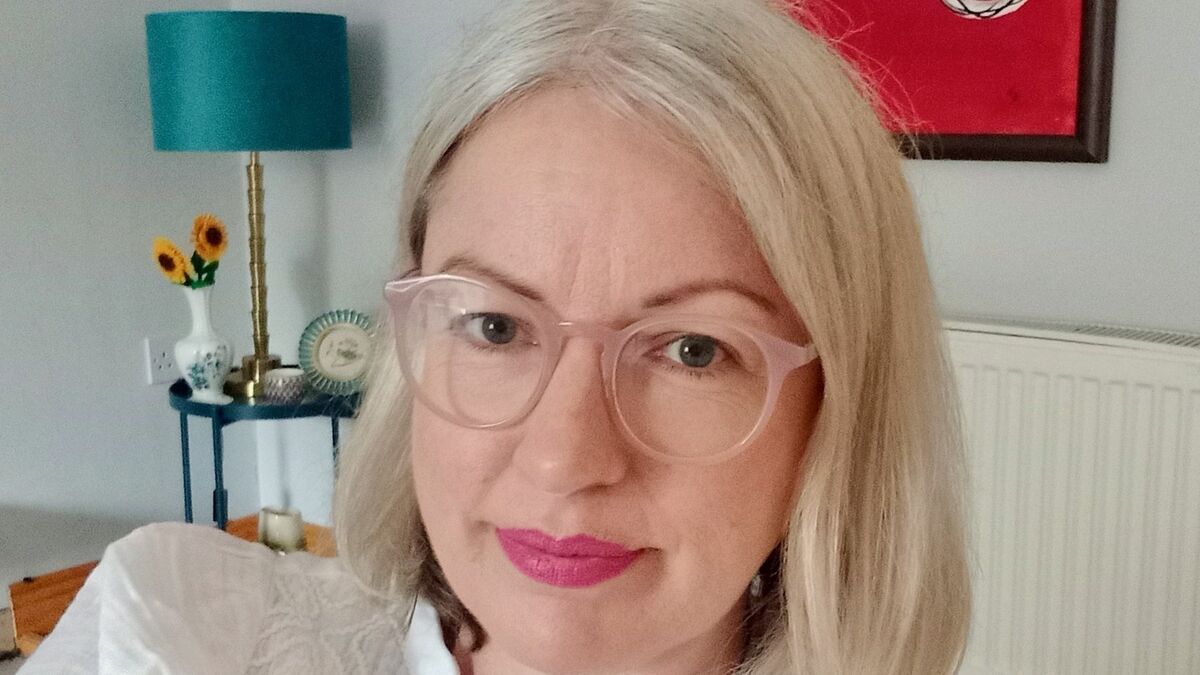
Sylvia Ann Kelly
“THE best way I can describe it is like being in lockdown again.”
WHEN Sylvia Ann Kelly’s six-year-old, James, went into autistic burnout more than a year ago, one symptom was that he refused to go back to school.
That meant she had to take all-day care of him herself.
It impacted every aspect of the family’s life, both work and social.
She recalls it as a very challenging time, not least because she found herself dealing with something beyond her previous understanding, and which experts didn’t always acknowledge.
"It was a very daunting, very scary place to be," she says. "We had no idea what was going on, and we were trying to make sense of it. I have a very supportive GP, who referred us to CAMHS (Child and Adolescent Mental Health Services), but they said they couldn't help, that they'd keep us on a waiting list for a psychiatrist, and referred us back to our GP."
Her experience prompted her to dig deeper into a problem which she found to be more common than she had thought.
"I had to work this out and listen to podcasts and read and research and just gather all the information. Parent support groups were absolutely key, helped me make sense of my situation and realise there are other people and other families experiencing this. It wasn't just an isolated situation."
Describing her progress as “an emotional roller-coaster”, she said she was both shocked and relieved, the latter in part because "I had found my tribe."
Sylvia has worked as a career coach for fifteen years, and more recently a mental health & neurodiverse coach, and has a master's in the discipline.
She has now retrained as a rapid transformational therapist, which combines neuroscience and psychotherapy and cognitive behavioural therapy. She has set herself on a mission to raise awareness of autistic burnout and to let parents like her know that there is support for them and their situation.
Autistic burnout has been hiding in plain sight.
No less than how neurotypical people can burn out when they push themselves outside their comfort zone, so too can children with autism.
It can present in different ways. Possibly when picking a child up from school and they suddenly explode in a meltdown.
"They can be crying, angry, completely dysregulated. They may refuse to go back to school, not being defiant or bold, but because their nervous system, their mind, is saying, 'I can’t do this any more'.” Sylvia recalls her son no longer having the capacity to go to school. He ceased all activities.
"There were weeks of us not leaving the house, and that was incredibly hard. It's like you just can't see the way ahead, and you're just trying to make sense of it and navigate through.
But I believe that I've gone through that and I'm stronger and wiser for it."
She also experienced frustrations when trying to get professional help, with some specialists not even recognising autistic burnout.
Deciding she had to take ownership of the situation herself, Sylvia gave up her work for a year, studied the subjects of nervous system regulation and low-demand parenting, because the slightest stress overwhelmed James.
Gradually, there were signs of recovery, a slow re-engaging with activities. Eventually the family could go to a friend’s for dinner.
James could engage in a birthday party. There was finally the joyous and meaningful experience of seeing him in a playground again, laughing and playing with friends.
Another realisation was how the school system is under-equipped to deal with the issue.
"We're expecting neurodivergent children to fit into an environment that's not able to meet their needs. Teachers and SNAs are just wonderful people who are all doing their best in a very challenging situation, trying to meet so many different needs. They can't do everything. There just aren't enough SNAs."
A key lesson from her experience is that parents can burn out too.
Sylvia describes “hitting a wall” last Christmas. She realised that she had to learn to prioritise her own mental and physical health.
To make time for herself because she was obviously going to be a better mother to James if she was looking after herself.
Her core message is that in order to help the child, the mother has to help herself.
Sylvia’s programme, called Calm Minds, is mainly focused on supporting mothers, "because it’s mothers who are predominantly in the front line here". Her service is based specifically on giving one-to-one support because the remedy is not one-size-fits-all.
She says she needs to be able to work out where each client is at and what plan is needed for each person, each family.
But she is also considering small group sessions because then the parents would also get support from their peers.
An e-book, From Burnout to Recovery, will be a guide based on her own story and the practical strategies she has developed to deal with autistic burnout. Other resources will include recorded meditations to help deal with the stress and anxieties.
Sylvia is also a trained hypnotherapist, and that can also be considered in appropriate circumstances.
But for now, the initial emphasis is on coaching because Sylvia feels that is most practical for the mothers in this context.
The whole strategy is based on what’s termed “neuroplasticity”, rewiring the brain to reframe negative thoughts and behaviours.
Her primary focus is to make the support for mothers accessible, affordable, and practical.
Sylvia will offer a free initial consultation after which a client can decide to take part in a first practical session.
This could be the first step to escaping the “lockdown” that autistic burnout can bring.
More information is available at calmmindshypno.com or email Kellysylviaann@gmail.com.