Living Greener: A beginner’s guide to wild mushrooms
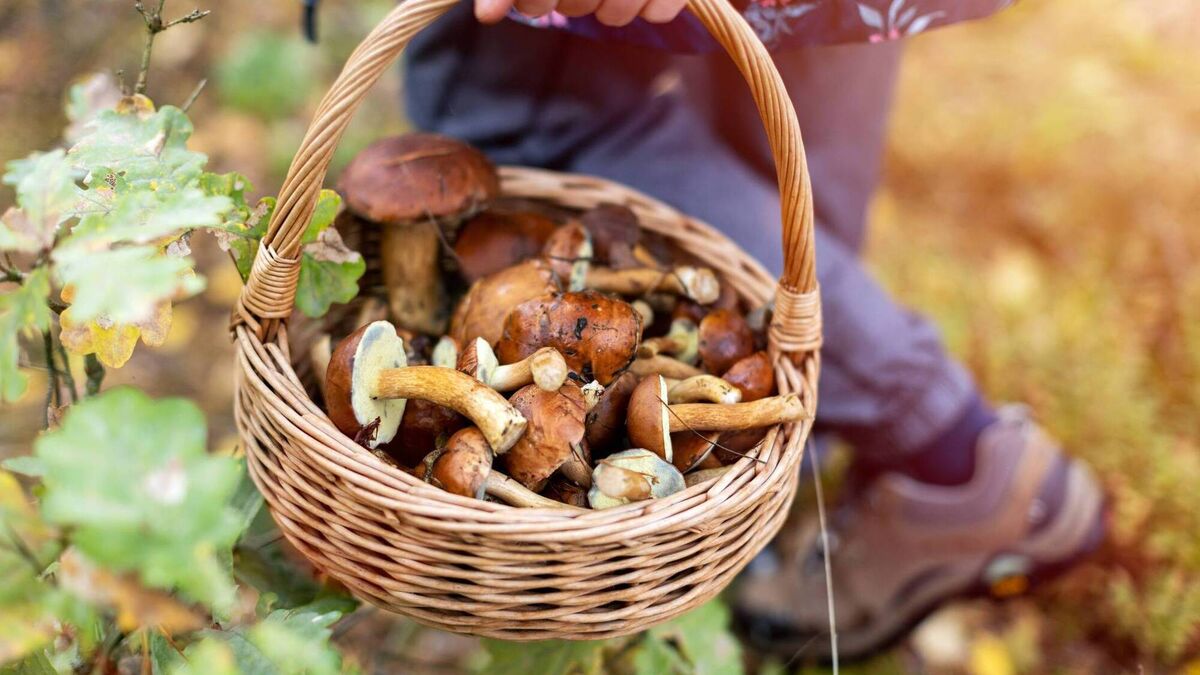
Ireland has about 3,000 species of mushrooms of which around 25 are deadly
JUST as a few of our older neighbours here in Ireland still scour the hedgerows for food and the fields for game, so a few still quietly gather their own mushrooms.
In parts of central Europe, I’m told, it’s not so quiet; mushroom season there resembles deer season among the Irish in rural America, with elders and children alike heading deep into the woods together and returning laden with trophies.
Tell most people you forage for mushrooms, though, and they say the same thing: that sounds too dangerous for me.
Even people I know who gather wild plants or hunt game fear fungi – the wrong one can kill you, they tell me, so why not avoid them all?
It’s a fair argument; there’s no getting around the fact that some mushrooms are fatally poisonous, and people die each year from eating them.
Compare that risk, however, to your risk of dying from car accidents, which kill 40,000 people each year in the USA alone.
Food poisoning made 48 million Americans ill last year, of whom 3,000 died – people who accidentally ate an allergy trigger or dodgy fast-food burger.
How many of those were from eating wild mushrooms, on average per year in that country?
Seventeen. Not 17,000 – just 17, or one-half of one per cent of all food-related deaths.
Most of us, moreover, eat wild mushrooms all the time, from restaurants or jars at the store, so we obviously believe they can be selected safely.
Most of us simply trust food sent from strangers more than we trust our own ability to learn.
To put the risk in perspective another way: Ireland has about 3,000 species of mushrooms — continents like North America have many more — and 25 are deadly poisonous, according to Irish mushroom expert Bill O’Dea.
Only about 50, however, are deemed “edible,” while the other 2,925 are not lethal but are unsuitable for other reasons; they taste bitter, smell bad, give you indigestion – one ‘inedible’ mushroom is even spicy like a hot pepper, and in Italy is dried and ground like cayenne.
A few are edible under certain circumstances: the ink-caps that we pick on our property, interestingly, are perfectly edible unless you’ve drunk alcohol recently, in which case a chemical in them reacts with the alcohol and gives you severe stomach cramps.
You need not learn 3,000 types of mushroom, or however many exist around you; rather, learn a few common, safe and unmistakable species and stick to those.
Italian mycologist (mushroom scientist) Jonathan Spazzi, who grew up in one of those mushroom-hunting families, said this was how children learn to forage; first ascertain a common edible with absolute certainty, then two, and so on.
My daughter and I follow the same method, and while we still don’t know most of the mushrooms we see, we know enough to occasionally return with a basket of food.
Even then, we began deliberately, first taking a couple of courses under trained mushroom experts, buying a few books with great detail and large pictures, consulting neighbours who know their mushrooms, and sticking to our small but gradually expanding repertoire.
While I took us on a mushroom-hunting course with the aforementioned Mr O’Dea, we found several basketfuls of mushrooms of impressive variety. Some were puffballs, quite edible; others, slightly darker, turned out to be earth-balls, black inside and inedible.
Still others were inedible sulphur caps, and one was the infamous stinkhorn, its powerful smell detectable from meters away.
We found chanterelles, that most edible mushroom that makes an amazing combination with steak There were also amethyst deceivers, edible but tiny. They are worthy of caution anyway, as the name implies. A number of mushrooms in the deceiver family look alike, and not all are edible.
We created a useful flow chart, in which you count characteristics you go from the base to the outer branches, as it were.
If it’s a ‘mushroom-shaped’ mushroom – you know what I mean — see if it has gills. If it has gills and the stem snaps, it’s Russula or Lactarius, and if it breaks into fibres, it’s something else. Then you look at the spore colour, the shape, whether it has a ring, and so on, and you see what kind of something else it is.
By learning this basic chart my daughter can find a large and unidentified mushroom in the Bog of Allen, casually snap the stem, pinch the cap, declare it an inedible Lactarius and move on. Neither of us knows the exact species, but we don’t need to.