Living Greener: The boats that carried civilisation forward
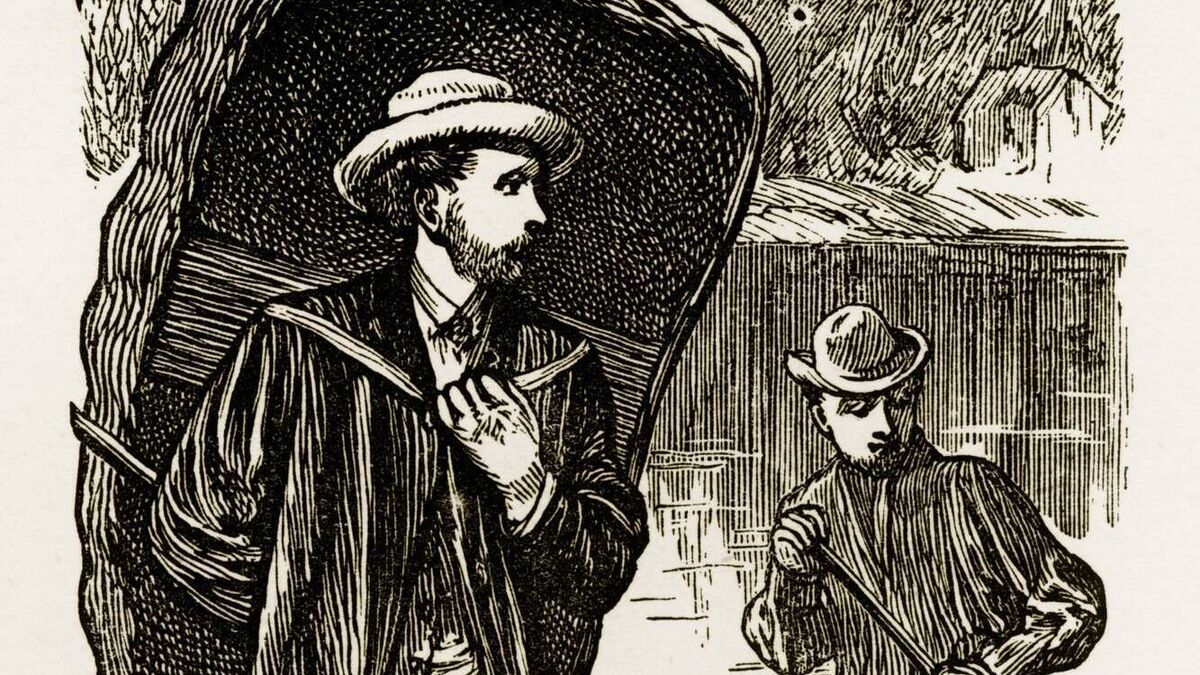
UNDER the green and rolling hills of Scotland, a young man lay buried for four thousand years, until he was discovered in the last century.
Around him were the remains of a wicker coracle, like those used on these islands into the 20th century.
He was buried in his boat – perhaps his most prized possession, like someone today might be buried in their Rolls-Royce.
A few things about this: first, before ancient Babylon, there were Scots, and their cousins the Irish.
Second, the boat was woven from wood as one would weave cloth from fiber. Also, those same boats have been woven here continuously for four thousand years, and possibly much longer.
Wicker boats – essentially baskets lined with hide and waterproofed – have been used by humans around the world.
Tibetans floated in Ku-Drus of woven wood and yak-skin; eskimos lashed sealskin around their long umiaks, and the Celts – Irish, Scots and Welsh — had an amazing variety of coracles for fresh waters and curraghs for the sea.
Who first thought of it we don’t know; the first basket fragments we have were about 13,000 years old, but we have circumstantial evidence that humans might have been weaving baskets the size of boats almost four hundred centuries earlier.
Not four hundred years four hundred centuries.
You see, early humans first appeared in Australia about 50,000 years ago, and even with the ice age lowering sea levels, you still can’t walk there.
To get there from Asia (presumably, because anything else would be even stranger) they would have had to set out on the ocean — whole families in boats, not knowing if there was land out there.
Obviously, they floated on something, and we know of no other kind of boat-making technology for tens of thousands of years to come. Even if they only lashed logs together to make rafts, as you see in castaway films, they would have had to use the similar technology of weaving fibres into knots.
Coracles had the basic shape of a bowl, and its users needed practice to avoid tipping over.
The advantage, however, was that once the user reached shore, the small and lightweight craft could be lifted and carried on one’s back.
An English poet in the 1600s described “salmon-fishers moist, their leather boats begin to hoist,” looking like turtles as they walked away from the water carrying their boats upside-down across the countryside.
Fishing was not just a pastime for such people, but a matter of survival; the protein they brought in was precious, especially in Catholic countries where meat was forbidden part of the year. Coracles also proved useful in other ways; when shepherds washed their sheep, for example, coracle-men positioned themselves downstream to catch any sheep that might be carried away. And, of course, they offered simple transportation across a landscape lined with lakes, rivers and canals, and among many islands separated by the sea.
Each region had its own design – not just region as in “Europe,” but as in each local village or stream; small Welsh rivers like the Teifi, the Taf, the Wye, the Monnow, the Lugg, the Usk, the Dee and the Severn each had their own styles of coracle.
Irish coracles and curraghs were woven from willow or hazel and typically built upside-down. Locals here began by planting a row of hazel rods straight into the ground, continuing in a wide curve until the row came back to where it began.
Then, when the rods looked like the bars of a large cage, they wove withies – thin strips of wood – back and forth between the rods along the ground.
This would be the gunwale – the “rim” of the boat – when it was flipped over.
Then the hazel rods — the bars of the cage, as it were — were bent down across the oval to make a wicker dome, until the whole structure formed a large, solid basket.
Then a covering was lashed to the frame – cowhide was typical, although horsehide and sealskin were also used.
Finally, the cover was waterproofed – in recent years with tar or some other petroleum derivative, but originally with tallow or butter.
Such ingenious craft opened new industries, crafts and food sources for ordinary hunters or farmers, allowing them to traverse lakes and rivers easily and travel between islands.
They allowed people on islands or in remote areas to communicate and trade with the rest of the world.
They let people create their own craft for the unique conditions of their place, with nothing more than local resources, knives and skill.
In short, for tens of thousands of years human survival depended on such small and unlikely-looking creations.