Court dismisses Rathmines residents' action over school’s rugby pitch plan
High Court Reporter
The High Court has dismissed an effort by residents of Rathmines, south Dublin, to overturn a Dublin City Council finding that a local boys’ school does not need planning permission to make changes to its rugby pitch.
Judge David Nolan said he had a “significant degree of sympathy” for the residents of Kenilworth Square – noting that St Mary’s College’s redevelopment of its pitch “will be disruptive to the beautiful Square” – but ultimately found the council’s granting of a planning exemption to the school was valid.
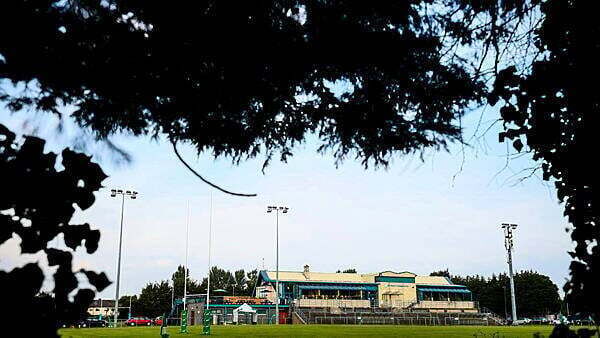
The proposed redevelopment at the Victorian-era square involves changing the existing grass surface to an artificial all-weather surface, changing the orientation of existing pitches and installing a fence around the reconfigured pitch.
In August 2024, the local authority granted the exemption for the works to St Mary’s College, a fee-paying school on Rathmines Road.
Following the council’s decision, local campaign group Protect Kenilworth Square and Kenilworth Square resident Martin Joyce initiated judicial review proceedings seeking to overturn the decision.
It was the residents’ case that the proposed redevelopment at Kenilworth Square should not be exempt from planning permission. They also claimed that the council’s decision should have been overturned because it failed to adequately consider the environmental impact of the development.
In a judgment published on Wednesday, the judge said a key issue in the case was the interpretation of the class of planning exemption relied upon by the council, namely, a development “consisting of the laying out and use of land ... for athletics or sports”.
The residents argued that this class of exemption is limited to “two-dimensional surface works”. The residents argued that the proposed development would involve “major” excavation with heavy machinery at the square, and could not fall under this class of exemption.
The judge disagreed with this point, and, with regard to the definition of the terms “development” and “works” under the Planning and Development Act 2000, said subterranean works are permitted under the exemption class.
The judge also rejected the residents’ argument that the planning exemption can only apply to “minor or insignificant” developments.
In the context of the relevant legislation, the works are not significant and fall squarely within the parameters of the exemption regulations.
“I appreciate that from the [residents’] perspective the works are significant and, no doubt, are not what the original developers or planners of the Square had envisaged,” he added.
The judge also dismissed the residents’ argument that the council’s decision was invalid because it failed to consider the environmental impacts of the proposed works.
The judge found that the works did not require an environmental impact assessment (EIA) because the development is not an “infrastructure project”, as defined under the planning exemption regulations.
The judge noted that “sadly”, the square is not a protected structure, nor is it owned by the residents. Rather, the square is private property owned by the school since 1948, who have used it for sporting facilities since then.
“In this day and age of environmental protection, this is a sad state of affairs, nonetheless it is the case,” the judge said.
The judge said he would dismiss the application to quash the council’s decision. He said that based on the material before the council, the decision to grant the exemption was open to it.
“Notwithstanding a significant degree of sympathy which I have for the [residents], in circumstances where I have no doubt that the proposed development will be disruptive to the beautiful Square, in more ways than one, I am of the opinion that the decision made by the Council is not one which can be overturned by way of certiorari (an order to quash a decision),” he said.