Further incidents on Kildare's 'Road to Nowhere' after safety works completed
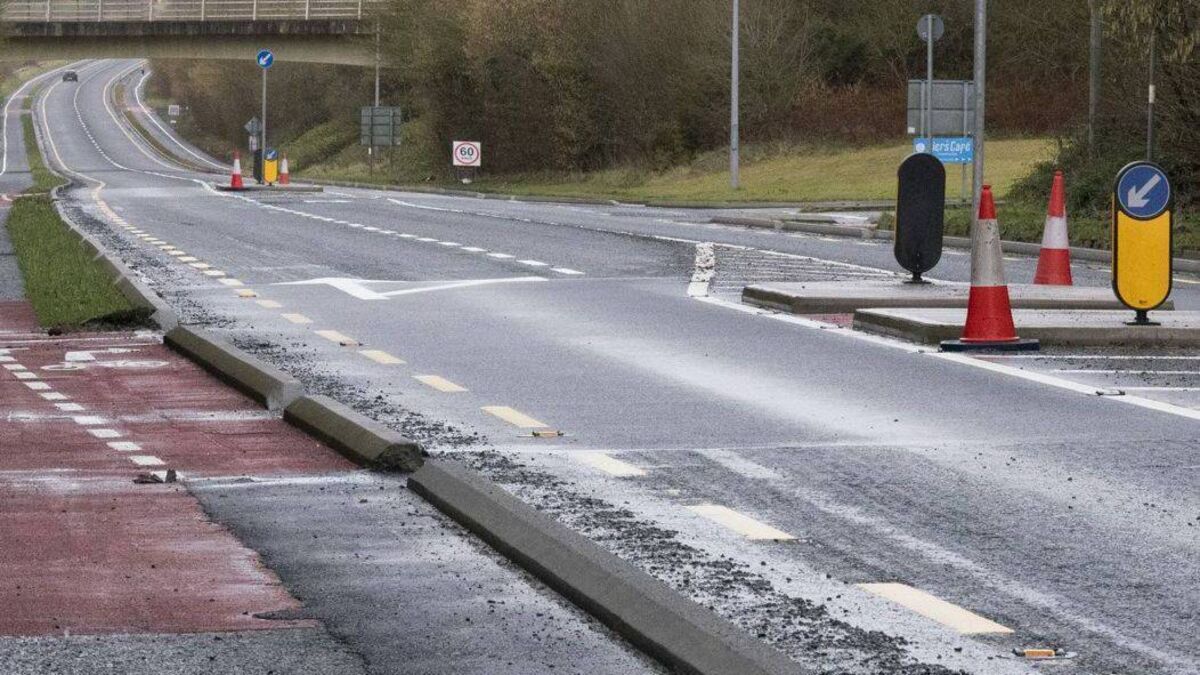
The controversial Moone/Timolin Cycle Path
A YEAR on, millions of euro spent and countless dangerous incidents later, the local community remains as concerned about the controversial cycle lane on the R448 between Moone and Timolin.
The National Cycle Network pilot project, which was delivered by Kildare County Council in partnership with Transport Infrastructure Ireland (TII), introduced approximately 3km of cycle infrastructure along the former hard shoulder of the R448, along with traffic-calming measures and changes to the road layout.
Works to address road safety issues have been completed and the speed limit has returned to 100kph.
However, campaigners from Moone-Timolin Positive Action Group report further incidents involving vehicles and renewed calls for changes to the road layout.
The project was set to cost an estimated €2 million but the council has not disclosed a final figure and it is suspected the cost is now greater.
One of the latest incidents occurred in the early morning at the Moone end of the project and involved a lorry travelling towards Dublin Port.
According to Ms Kenny, the lorry was fitted with a safety system designed to detect potential obstructions and respond automatically, and explained that the system can override the driver by braking and moving the lorry away from the obstruction.
She said the lorry detected the island structure as an obstruction.
“The lorry driving to Dublin Port was suddenly halted due to the lorry detecting the island as an obstruction,” she said.
According to Ms Kenny, the vehicle moved towards the edge of the road before coming to a stop.
“The wheels dragged the lorry left and hit the kerbs at pace until it eventually ground to a halt. The tyre marks are very visible.” She said the vehicle was damaged but remained capable of being driven, and that the issue demonstrates ongoing concerns about how the road layout interacts with modern vehicles.
“If the road remains at 80/100km or whatever it is now this is going to happen with modern lorries.” An incident box has been set up by the community at the local Piers Café in Moone, where road users can submit their incidents, which have occurred on the 3km stretch of road.
Ms Kenny said the group has recorded 140 incidents since last October involving vehicles interacting with the new road structures.
A separate incident reported by the campaign group involved a combine harvester clipping one of the islands, resulting in a damaged tyre.
The incident report stated that the harvester clipped the island and burst a tyre. The reported damage caused was €1,100.
Ms Kenny said the incident created additional difficulties for farmers during a busy period.
“Farmers do not have the time during harvest season to be dealing with this.” She said the group believes the current design continues to create problems for road users.
“This structure is causing so much damage to vehicles that common sense has to prevail and remove these islands urgently.” Campaigners have previously raised concerns about the visibility of the islands, the road width and the ability of different types of vehicles to safely use the route.
Ms Kenny said that measures introduced to improve visibility have not resolved the issues being reported.
“The reflective paint on the islands has had no impact, the bollards are physiologically damaging to the user.” She said the group believes removal of the islands is the immediate solution.
Chairperson of the Positive Action group, Mark Hilliard, marked the one year anniversary of the pilot project, and said:
“Despite what a community says and despite what a community does, our betters decide what is good for us. Our betters decide that spending €3 or €4 million on something that a community neither wanted nor needed is the best course of action just because. And despite the cries of alarm and pleas to stop and think, the voices are never heard.” Since the project was completed, members of the local community have continued to raise concerns about the impact of the new design on motorists, farmers, pedestrians, cyclists and commercial vehicles.
Ms Florry and other local campaigners agree that the road’s speed limit is too high, at 100kph, for how narrow the road is.
“The only immediate solution is removal of the islands as it is way too narrow to cater for them.” Ms Kenny said the campaign’s wider objective remains unchanged.
“Our message stays the same ‘give us back our safe road and remove the whole structure’ as it is having a massive economic impact on the community as people won’t come into the area in fear of travelling on it and also leaving the daily users in constant fear for their lives travelling on it.” She also raised concerns about transparency around the cost of the project, saying the campaign group has repeatedly sought updated figures.
“To date, as much as the group have requested continuously, we still have not received an update on the current costings of the project, being told that they ‘haven’t got the figures to hand’.” Kildare County Council confirmed to this newspaper that works on the road have concluded, and said that the final costings for the project have not been submitted yet.
It also said: “Any queries in respect of the operation or assessment of the pilot should be directed to Transport Infrastructure Ireland (TII), which is responsible for managing this aspect of the project.” Local campaigners say they will continue to seek a review of the current road layout and are calling for a reduction in the speed limit and the removal of the islands installed as part of the scheme.