Giant Kildare wind monitoring mast gets green light
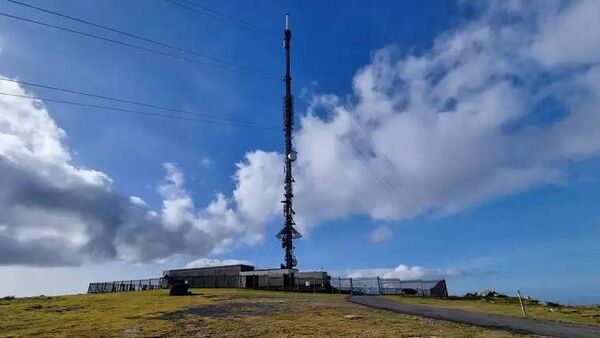
Picture shows the Mount Leinster array for context, which is just 2m taller than the proposed mast for Kilberry
THE tallest structure in Kildare is expected to be erected in a bog outside Athy before the end of the year, but will only hold the record for six years before dismantlement.
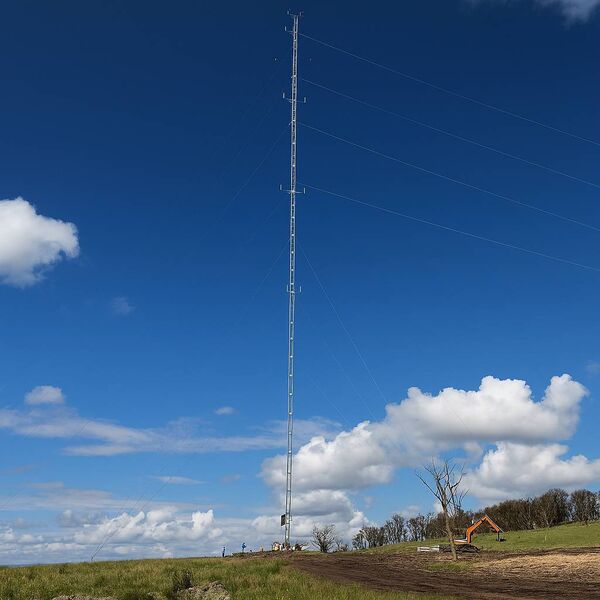
Just recently a joint venture from Bord na Mona and SSE Renewables has been granted permission to put up a 120m (390ft) wire-guyed wind monitoring mast in Kilberry Bog.
To put this height in context, this is the same height as the Spire on O’Connell Street, and only 2m shorter than the Mount Leinster broadcasting mast on the Carlow-Wexford border.
None of these, however, are even close to the tallest structure in Ireland - the Strabane Transmission Station in Co Tyrone - which is the only man-made entity on the island over 1,000ft. (1,002ft – 305.5m).
The purpose of the Kilberry Mast is to assess the suitability of the surrounding area for further wind development, and it will require its own independent auxiliary power unit (APU), consisting of a small solar array, a 5m heigh turbine, and a battery enclosure within the 1.1Ha (2.7ac) site.
Despite 30 local submissions concerned mainly with the visual impact, the avian environment, and light flicker, there were no appeals to An Coimisiún Pleanala.
Initially for the application – submitted this time last year – the Department of Defence (DoD) voiced “some concerns”, but reverted to policy.
“As a matter of practice, the DoD does not provide observations or advice on such matters, except where relevant parties have been directed to do so by a Planning Authority”.
However, this subsequently happened after Kildare County Council demanded “significant further information”, but were satisfied with the consortium’s efforts on “how the mast can co-exist with the DoD”.
Further information was also required with the lack of public notices for the additional APU, as well as requests for a photomontage of the proposal, and Environmental Impact Assessment (EIA), and an Appropriate Assessment (AA).
In the planner’s Report, it was established that the additional requests for further information that “the mast represents a manageable obstacle for low-flying training”, the EIA suggested “no significant effects”, and the AA would only lead to “a small amount of habitat loss…and the ecologist was satisfied with the report”.
Thus, the planners ruled the applicant’s response to these matters was deemed “significant”.
They concluded that “this is acceptable for the temporary period requested” therefore, “it is recommended that permission be granted”.
The total weight of the mast will be just 3.5 tonnes, thereby not requiring any substantial foundations, but will be erected on a steel plate that will sit on railway sleepers bedded in imported stone. The mast is expected to be erected shortly.