Kildare librarian working in living history
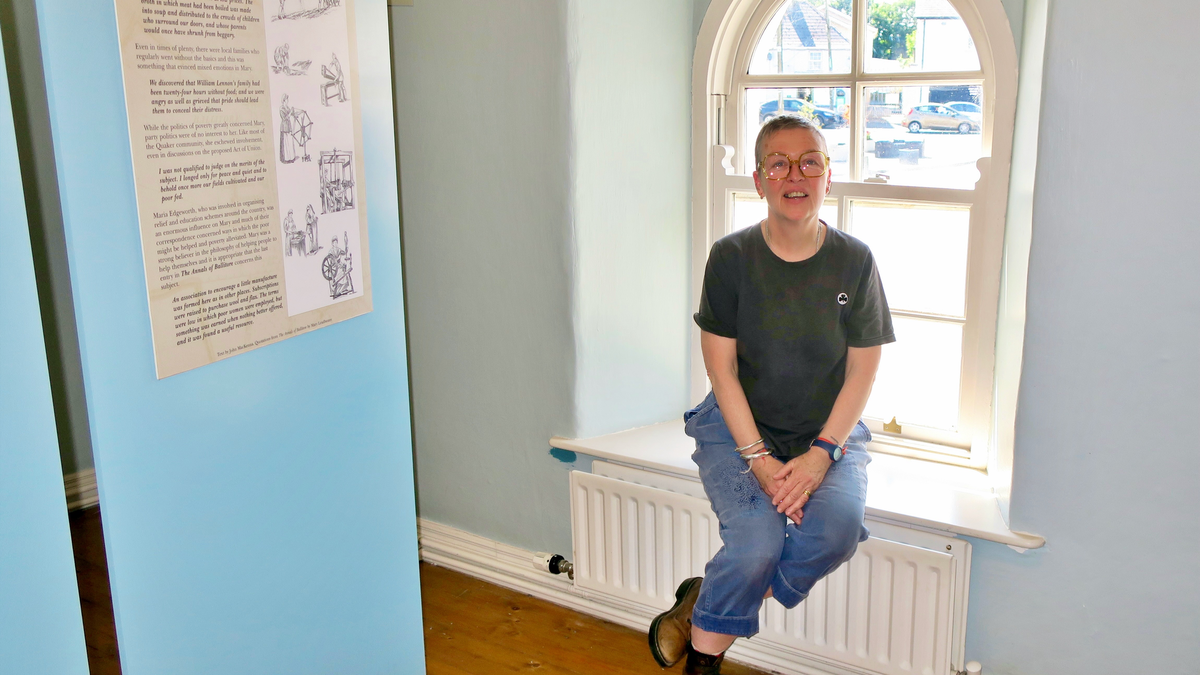
Ballitore librarian Pauline Fagan, in the window where Mary Leadbeater observed local life 200 years ago
AS A librarian, Pauline Fagan works amongst the ghosts of a 200-year-old heritage.
It's not a haunting so much as an ambience, and she considers Ballitore Community Library to be one of the best places in the world to work.
It was also the workplace of Mary Leadbeater, whose 18th-century diaries offer unrivalled commentary on both the rural life in the Quaker village and the effects of politics of her time.
"This was her writing room," Pauline says, sitting in the window of the upstairs space in the former Meeting House of the Society of Friends, which houses both the library and a museum dedicated to the area and the era.
"It's from this window that she would have watched all of life going on, and the events of 1798 as well.
"This place is lived experience, of a woman, her writing, and the Quaker values of service, and we don't often have such opportunities."
It's a simple room, low-ceilinged, with a small fireplace and a writing desk and chair that visitors often assume are Mary Leadbeater's original furniture.
"No, they're not," Pauline says with a laugh. "But they would be similar."
Three display boards show extracts from an introduction to the Annals written by local writer John MacKenna, long fascinated by the Mary Leadbeater heritage — he led the recent celebration of her 200th anniversary in the library's garden.
"He is also writing a piece for performance in this room, in October, for the 2026 Kildare Readers Festival."
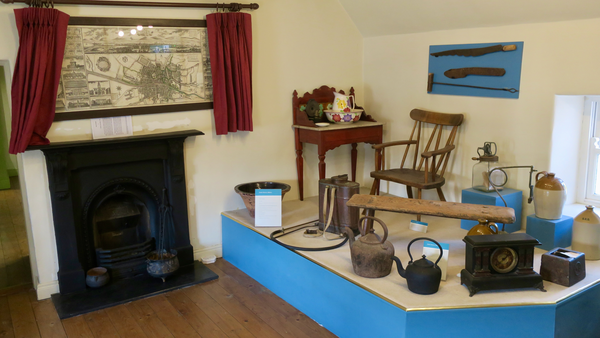
There are two other rooms in the museum, one dedicated to what Pauline calls a "mixum-gatherum" of folk life items and artefacts from the local heritage.
They include old photographs of the village, some with groups of people happy to stand for the camera, in a time when that was not an everyday thing.
Local furniture pieces, earthenware jugs, everyday agricultural and trade implements, and housewares. These items are familiar from our folk memories of yesterday, no longer part of our today.
Pride of place in that room is an original copy of the Charles Brookings Map of Dublin published in 1728.
With superb cartouches of prominent buildings of the time, this one used to hang in Mary Leadbeater's grandfather Abraham Shackleton's home, which was also the school he founded when he arrived in Ballitore from Yorkshire.
Donated to the Ballitore Library and Museum in 2006 by the Shackleton-Chinn family, it's referenced in Mary's Annals.
"When the family were donating it, they were told a copy would be displayed and the original kept in a safe place," Pauline said. "But they said they wouldn't give it if that was the case. So we have the original, and to my mind it's quite extraordinary that we should have it."
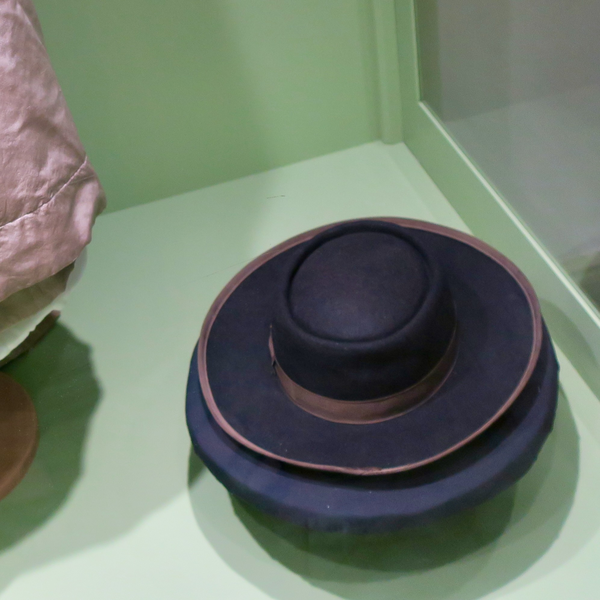
Another treasured exhibit is a 19th-century gent's fedora hat, worn by Irish peace activist and author Charles Lamb when he went to Timahoe in north Kildare in 1970 to protest the visit of US President Richard Nixon at his Quaker maternal family graveyard there.
"The Quaker community had turned their backs on the visit because Nixon was promoting the Vietnam War. But Charles, then a young man of 27, went and held a one-man picket denouncing it.
"The Secret Service people said he couldn't be there, but he said he was making a legitimate peaceful protest, and the media covering the visit all went to him and his protest was reported around the world."
Charles, now in his eighties, still visits the museum — "and he still cuts such a dash," Pauline adds.
There are exhibits of women's clothing as worn by Quakers in Mary Leadbeater's time, including an 1853 wedding dress owned by a lady from nearby Burtown House, built by Quaker Robert Power in 1810.
A pair of ladies' bonnets are not to Pauline's personal taste, but they are of their time.
"Quakers thought life was a serious business and didn't do fancy decoration. But if you look closely at the detail in the bonnets, you see how beautifully they were made."
The Ballitore Library and Museum is very small in the nature of such places, but it has its own fascination, and in June some 600 visitors passed through.
Recommendations from the new Shackleton Experience in Athy are also bringing more people.
Pauline describes it as a "calm and quiet little spot", which allows for really wonderful conversation when people come.
"I always work on the principle that people know far more than I do, and there's always a possibility that they'll know something that I don't. American visitors call the museum 'cute'. I think they mean it's small, but I tell them it's actually deeply historical, and is considered a point of origin for a lot of American Quakers as well."
So what is it like working in a place with so much history, and has it had an impact on Pauline herself?
"Oh, wow! I feel hugely privileged. I suppose being so close to the Quaker values of service to others, it has made me reflect on my own values. Then, when school groups come in, I tell them about Mary Leadbeater and her diaries, which are so unique. She was a woman, she was married, she was a Quaker, and she was a voice of her time that we don't often hear. So when the small ones come in, I'm saying: what you have to offer is yours alone, and only you can be you, and to value your unique voice."
The Quaker population is tiny among the religiously affiliated people living on this island, barely 1,600 people. But like the tiny museum to some of their own in a tiny Kildare village, the impact of their beliefs goes far beyond their numbers.
And is arguably never more needed in today's scrambled world.