Man accused of Parnell Square attack unfit for trial due to brain injury, says defence lawyers
Alison O'Riordan
Riad Bouchaker, who is charged with assaulting a care worker and attempting to murder three children on Parnell Square in Dublin, is suffering from a mental disorder and is unfit to stand trial, his lawyers have argued before the Central Criminal Court.
A consultant forensic psychiatrist also said on Thursday that the accused man, who has a complex medical history, had suffered a brain injury "in the course of members of the public intervening" on the day of the alleged offence and had surgery on his brain some years before.
The defence expert witness said that, should the accused be deemed unfit to stand trial by the court, he would be reviewed on a six-month basis by the mental health criminal law review board.
Mr Bouchaker (51), of no fixed abode, is charged with the attempted murder of two girls and one boy, as well as with assault causing serious harm to a care worker. He is also charged with three counts of assault causing harm to two other young children and a passerby, who had intervened to assist, as well as one count of the production of a knife.
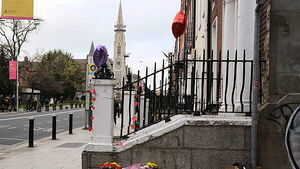
The incident occurred at Parnell Square East on the afternoon of November 23rd, 2023.
At the outset of today's hearing, Karl Finnegan SC with Carol Doherty BL, prosecuting, told Mr Justice Tony Hunt that the defence had brought an application as to the fitness of Mr Bouchaker to stand trial.
Counsel said there was a divergence between two expert witnesses in the case as to whether the accused is fit to stand trial or not.
CCTV footage
Counsel said there was CCTV footage showing what appeared to be an attack on a line of children who were about to progress to their creche. He said when the creche manager became aware of the alleged attack on the children, she had shouted and moved to protect them, but suffered a stab wound.
Mr Finnegan said four children had suffered stab wounds that day, and one of them had life-altering injuries. He said the scene was "one of chaos" at the time, and emergency services were called.
Counsel said the court would hear that Mr Bouchaker had a brain injury from a benign brain tumour some years ago. He said the accused was also found to have suffered a brain injury "in the course of members of the public intervening" on November 23rd.
A knife, the barrister said, was recovered from the scene, and the accused was brought to the Mater Hospital, where he remained for 28 days. Mr Bouchaker was arrested on December 20th, 2023 and interviewed by gardaí.
Following this, a senior counsel acting for Mr Bouchaker asked the court to renew the District Court order, where legal representatives for the accused were prohibited from being named.
Mr Justice Hunt made that order and further outlined that the identities of the doctors giving evidence were also not to be named in media reports.
The judge added: "In the circumstances of this case, I don't want to run any risk of anyone coming to misguided harm because they are doing a job that someone has to do."
A lawyer for Mr Bouchaker said it was agreed between the parties that no one is canvassing for the defence of not guilty by reason of insanity.
Forensic psychiatrist
A consultant forensic psychiatrist told Mr Bouchaker's senior counsel that she had interviewed the accused man on five occasions over the last two years in the presence of an Arabic interpreter. She had access to the accused's substantial medical records, including those from the Mater, Beaumont and the National Rehabilitation hospitals.
During their meetings, Mr Bouchaker told the psychiatrist that he was born in Algiers in Algeria and that his father suffered from mental health difficulties.
The doctor said that the accused had a complex medical history including epilepsy, a left temporal lobe brain tumour and total blindness in his right eye.
She said the accused had surgery for a benign brain tumour in 2021 and a bone flap was removed a few months later due to infection. The witness said this meant that a section of his skull is missing, so he doesn't have a layer of protection over his brain, part of which is exposed. She said his seizures were due to non-compliance with medication.
During the interviews, the doctor said it seemed to her that Mr Bouchaker "didn't have the capacity to understand the serious nature of the charges or the matters before the court."
The doctor found that Mr Bouchaker was unable to focus on questions asked of him. His judgment is impaired, and his speech can be erratic, inconsistent and difficult to understand, she said.
The psychiatrist said the accused had moderate dementia due to a combination of a brain injury and a brain tumour. She said the head injury was sustained on November 23rd, 2023 and that surgical treatment had been carried out on his brain some years prior to this.
She said the accused had developed epilepsy, and his left temporal lobe was affected prior to November 2023. She found no evidence for epileptic automatism.
The psychiatrist said the accused suffered a traumatic brain injury from a physical altercation on the day of the alleged offences on November 23rd.
She said the trauma of the head injury was on the site where part of the accused's skull is missing, so he did not have any brain protection from the skull. "The trauma is on the tip of the site where his skull was already removed from previous surgery," she added.
She went on to say that doctors said the accused presented on November 23rd with a sustained head injury from a physical altercation with an associated loss of consciousness.
The psychiatrist noted that at the time of the offence, the accused met the criteria for mild cognitive impairment, but on assessment, he now has a moderate mental disorder as defined in the Criminal Law Insanity Act 2006.
Regarding the accused's fitness to stand trial, the doctor said he is suffering from a mental disorder and is unable by reason of that disorder to plead to the charge, understand the nature and course of the proceedings, instruct legal representatives, mount a defence, understand evidence or to challenge a juror if needed.
The doctor said the accused was unlikely to improve significantly over time and likely to remain highly dependent on doctors, nurses and treatment.
She agreed that Mr Bouchaker's only possible destination in the medium-to-long term would be the Central Mental Hospital (CMH).
The psychiatrist said that if the patient is admitted to the CMH in these circumstances, he would be treated by a multidisciplinary team.
The defence expert witness said if the accused is found unfit to stand trial, he would be reviewed on a six-month basis by the mental health criminal law review board.
The hearing was adjourned until January 19th next year, and the accused was remanded in custody until that date.