Officials warned tax break for apartments could cost €120m a year
Ken Foxe
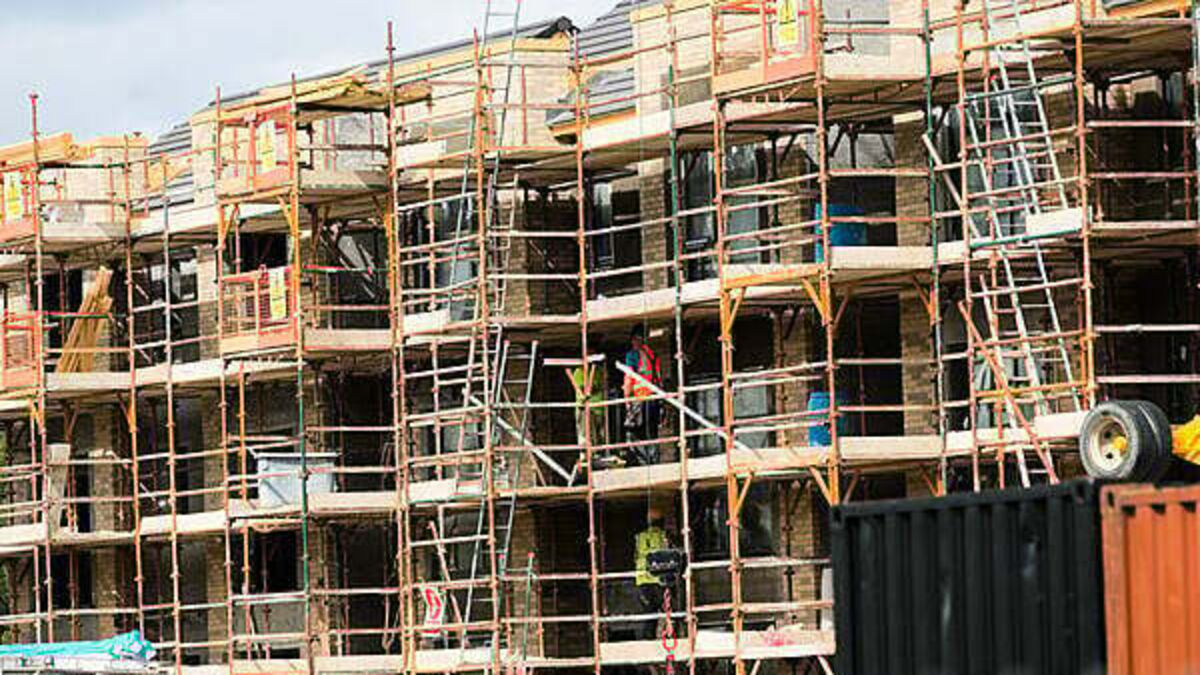
Government officials warned a new corporation tax break for apartments could cost up to €120 million a year while delivering a saving of just one per cent on development costs.
In internal advice prepared for Budget 2026, civil servants said the enhanced deduction could end up functioning as an indirect subsidy for property investors.
They were also worried about how many developments it would actually apply to because of “commonly used structures” for financing apartments through investment funds or charities.
Department of Finance officials said that if targets for construction were met, it would lead to savings of €6,000 per unit across 20,000 apartments.
However, the briefing said this figure was an upper limit, and it was in reality likely to be “significantly lower.”
The same briefing highlighted a slowdown in the translation of housing commencement notices into actual completions.
In it, officials suggested that there may have been a “frontloading” of commencements in 2024 and “at least some [were] likely speculative.”
The document added: “A total of 7,384 homes were commenced nationally in the year to July 2025, down 80 per cent on the corresponding period of 2024.”
It explained how this trend had been noticed in the spring of 202,4 with a “marked slowing” in commencements being completed.
“The analysis points to either an unlikely spreading of productive capacity across projects, or that a greater share of [commencement notices] have not materialised,” the submission said.
The enhanced corporation tax deduction was included in Budget 2026 in an attempt to address the “cost-based viability challenge” of delivering apartment schemes.
Its objective was to improve the feasibility of development projects by cutting construction costs through reducing corporation tax on profits.
However, its impact was considered uncertain by officials at the Department of Finance.
It said modelling was based on a builder or developer operating as a trading company with only “one layer of profits.”
The submission said: “It is understood that this would be unusual in practice, particularly for larger developments.
“The Department’s Housing and Fiscal Analysis division advise that there is no market currently for speculative individual sale and buy-to-let apartments, and builder/developers are now building for Approved Housing Bodies (AHBs) and investors.”
It said this was likely to complicate who would actually benefit from the scheme with a risk of giving an “indirect subsidy” to investors.
There would also be cases where there was no profit to apply the corporation tax deduction to, meaning no benefit at all for some schemes.