Retrial ordered for man accused of Cameron Reilly murder
Ryan Dunne
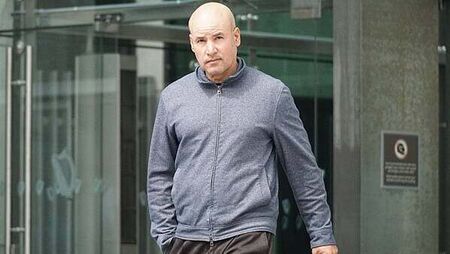
The Court of Appeal has ordered the retrial of Aaron Connolly, who spent three years in jail before his conviction for murdering teenager Cameron Reilly was quashed due to remarks by the trial judge that the jury may have perceived as "mocking" the defence case.
At the Court of Appeal on Thursday morning, counsel for the Director of Public Prosecutions, Dean Kelly, said it was the director’s view that a retrial should be ordered.
The application came after the court found last month that the trial judge's charge to the jury lacked balance and, in parts may have been seen as “advocacy” for the prosecution's case and "disparaging" of the defence case.
At the three-judge court today, Judge John Edwards said he was disposed to direct the retrial.
He remanded Connolly in custody to appear before the Central Criminal Court on Friday morning, where he is expected to apply for bail.
The trial jury in 2022 heard that Connolly, who is now aged 26, initially denied that anything sexual happened between him and Reilly on May 25th/26th, 2018, and had told gardaí that he was "straight".
However, on the seventh day of the trial, Connolly made admissions through his lawyers that he performed oral sex on Cameron Reilly on the night he was killed.
The accused said that when he left, Reilly was still alive and standing up.
Friends of Reilly gave evidence to the trial that he had confided in them that he was bisexual shortly before his death.
Evidence was also heard from a witness who said he and Aaron Connolly had sexual relations on numerous occasions when they were teenagers. He said Connolly would tell people he was “straight”.
Reilly, a DKIT student, had been part of a group of around 15 young people who gathered in a field on the outskirts of the town on the night of May 25th, 2018.
Alcohol and cannabis were consumed by some of those present, although Reilly’s best friend told the trial that Cameron never took drugs. The group went to a local takeaway to get food shortly after midnight.
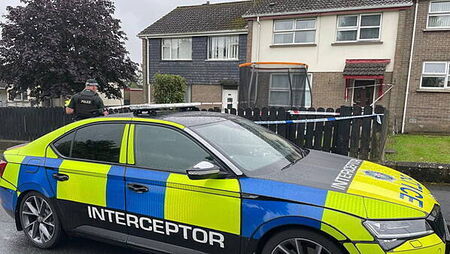
Reilly’s body was found in the field the following morning by a man out walking his dog. Chief State Pathologist Dr Linda Mulligan told the trial the teenager’s cause of death was asphyxia due to external pressure on the neck, with no other contributing factors.
Connolly, of Willistown, Drumcar, had pleaded not guilty to the murder of 18-year-old Cameron Reilly at Shamrock Hill, Dunleer, Co Louth on May 26th, 2018, but was found guilty by a unanimous jury verdict in December 2022 and received a mandatory life sentence.
In launching an appeal against the conviction last June, Michael Bowman, representing Connolly, said Judge Tony Hunt had sought to reduce the defence case to the possibility of a “peeping Tom” who had come out of the bushes aroused or angry and killed Reilly.
“That is nothing if not denigrating of the defence case,” he said.
He asked the three-judge court to look at the possibility that “a line had been crossed” and amounted to “a deconstruction of the defence closing and thereby of its defence”.
Last month, the Court of Appeal ruled that “such were the stridency and emphasis” of comments made by Judge Hunt while he charged the jury, “there is a real possibility the jury could have perceived that he was personally convinced of the guilt of the accused and that implicitly he was pressing them to deliver a guilty verdict”.
While acknowledging that Judge Hunt gave the jury “impeccable instructions as to the applicable legal principles” involved, Judge Edwards said that some of the trial judge’s comments were capable of being perceived as “disparaging” and “mocking” of the defence case.
Judge Edwards said that the trial judge’s remarks that he had “formed bits and pieces of a view about bits and pieces of the evidence” were unwise, as they may have invited speculation among the jury as to what views the judge had formed.
He said the conviction was therefore quashed, with the Director of Public Prosecutions to decide whether to apply for a retrial of the accused.