Athy's housing revolution
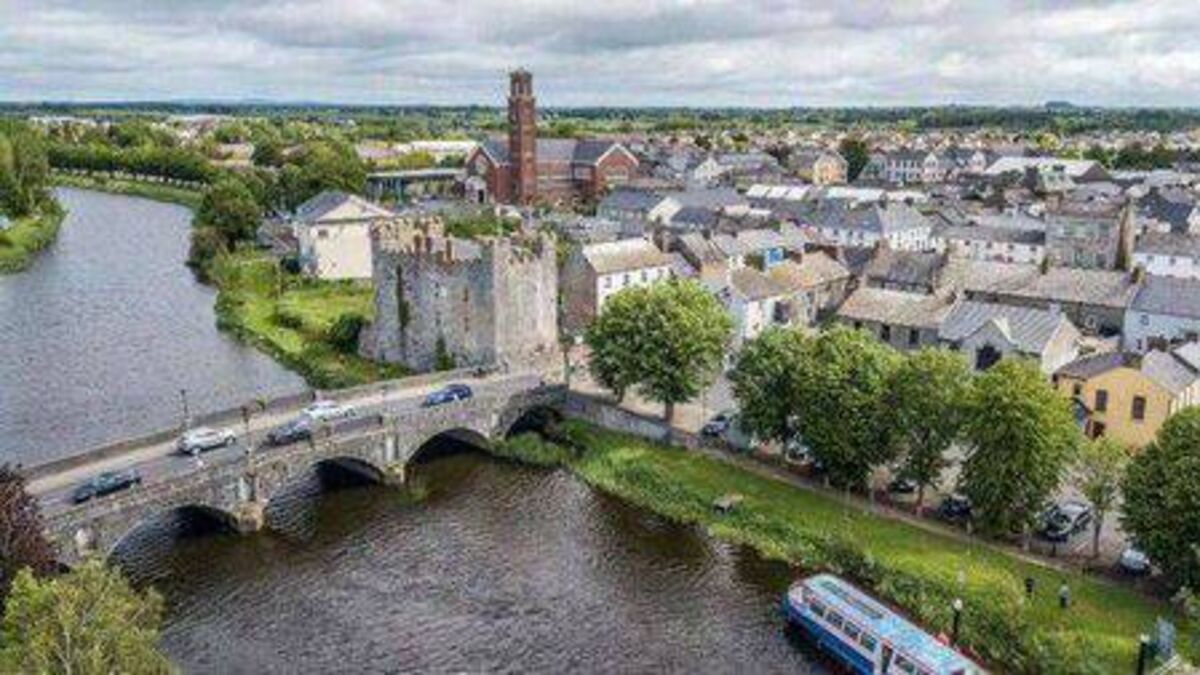
Photo for illustrative purposes only
A SECOND Slum Clearance Order was made by the Minister for Local Government in September 1935 affecting 195 unfit houses at New Road, Offaly Street, Rathstewart, Woodstock Street, Higginson’s Lane, Nelson Street, Convent View, St John’s Lane, The Bleach, Canal Side, James’s Place, Upper William Street, Blackparks and Woodstock Street.
In November 1935, the council engineer PJ Sheehan reported on houses owned and rented by a number of Landlords ‘in all cases with the exception of three houses owned by H. St. John, the houses were old and dilapidated and in bad condition … no sanitary conveniences being provided nor was water supply laid to the houses … the houses in most cases are provided with small yards and are fronting laneways so that in the case of Barkers Row, Nelson Street and Woodstock Street, the houses in density of house per acre is as high as one hundred’.
The housing submission by the town council in relation to further housing projects resulted in the building of houses at Clonmullin and upper St Joseph’s Terrace which were completed in January 1936.
The Clonmullin houses were named Convent View. The 20 houses in Convent View and the 24 houses in Upper St Joseph’s Terrace were allocated to tenants of houses included in the Council’s first and second Slum Clearance Orders.
What surprised me was how many tenants of unfit houses failed to take up tenancies of the new council houses. Eight families living in unfit houses in Rathstewart, Offaly Street, Mount Hawkins and St John’s Lane refused to move to St Joseph’s Terrace while one tenant of an unfit house in Chapel Hill declined the offer of a tenancy in Convent View.
Inability to pay the rent fixed by the council which was based on construction costs rather than a tenant’s income was the likely cause at a time when unemployment was so prevalent.
In November 1936, the council housing scheme at Blackparks was completed and as work was about to commence on the building of the new Asbestos factory, the council agreed to allocate thirteen of the new houses, in what is now known as Plewman’s Terrace, to tenants of Canalside houses.
However, only eight of those tenants accepted. The rest of the twelve Plewman’s Terrace houses were allocated to tenants of Blackparks, the Bleach and Upper William Street.
At the same time, twelve houses now known as Minch’s Terrace were allocated to tenants of Higginson’s Lane. When in 1938, the OPW accepted the council’s offer to pay a yearly rent of twenty-five pounds for the old RIC Barracks in Barrack Lane subject to the two existing tenancies, the council appointed four tenants to the Barracks complex. Twenty-five new council houses at Geraldine Park were let to tenants at a rent of 5 shillings and 7 pence per week in August 1938.
During the 1930’s, Athy UDC increased its housing stock from 30 houses to 269 houses representing what was the greatest decade of house building in the history of Athy.
Another twelve years were to pass before the Council’s next housing scheme. That was the 94 unit housing scheme named Pairc Bhride which the council let in 1953 at rents of up to 18 shillings per week in addition to four shillings per week for rates and water charges.
Immediately afterwards, Athy UDC embarked on another big housing scheme. 58 houses were built in Holland’s field later to be named McDonnell Drive. Those houses were officially opened by the Minster of Local Government on 24 September 1953.
Four years later, the County Medical Officer, Dr Brendan O’Donnell, reported that 85 unfit houses in Athy were occupied. In December 1962, contracts were signed for the building of 36 houses at Woodstock Street which on completion were named St Dominic’s Park.
In 1969, the council embarked on the building of 52 houses at Townspark, later named Tom Carbery Park in memory of the late town and county councillor.
In August 1971, Athy UDC accepted a tender for the construction of another 32 houses at Townspark.
These houses were completed and allocated to tenants before Christmas 1972. At the same time, a 72-house scheme including six houses for the elderly at Townspark were nearing completion and the council agreed to name the estate. Castle Park.
In January 1974, the National Building Agency submitted plans for the building of 50 houses at Greenhills. These houses were completed the following year as the Council were approving revised plans for a 148-housing scheme at Clonmullin, the first stage of which was opened in 1981.
Athy UDC succeeded in replacing the unsanitary accommodation once so prevalent in Athy with modern local authority housing.
The slum clearance programmes of the 1930s resulted in the council’s most successful housing drive and brought about enormous changes in the living conditions of many families in Athy.
The clearance orders made by the council effectively changed the appearance and the layout of the side streets and laneways of our ancient town.
Gone and disappeared forever were the laneways in which the homes of so many Athy families were once located.
Under the first clearance order, Kelly’s Lane, Shrewleen Lane, Newgardens, Janeville Place and Garden Lane were lost to us and in the second clearance order New Row, Higginson’s Lane, James’s Place and Blackparks were lost forever.
The speed and ease with which Athy UDC in the 1930s and later were able to adopt housing plans was I suspect due to the absence of the County Management system which was not standardised throughout Ireland until the 1940s.
Up to and including the local elections in 1934, 15 local councillors were elected and invariably included a number of businesspeople and workers representatives.
They apparently made decisive decisions, free of administrative control at county council level and subject only to the approval of the Department of Local Government which did not appear to be overly restrictive. Decision making today is so different.