Times they are changing in Athy
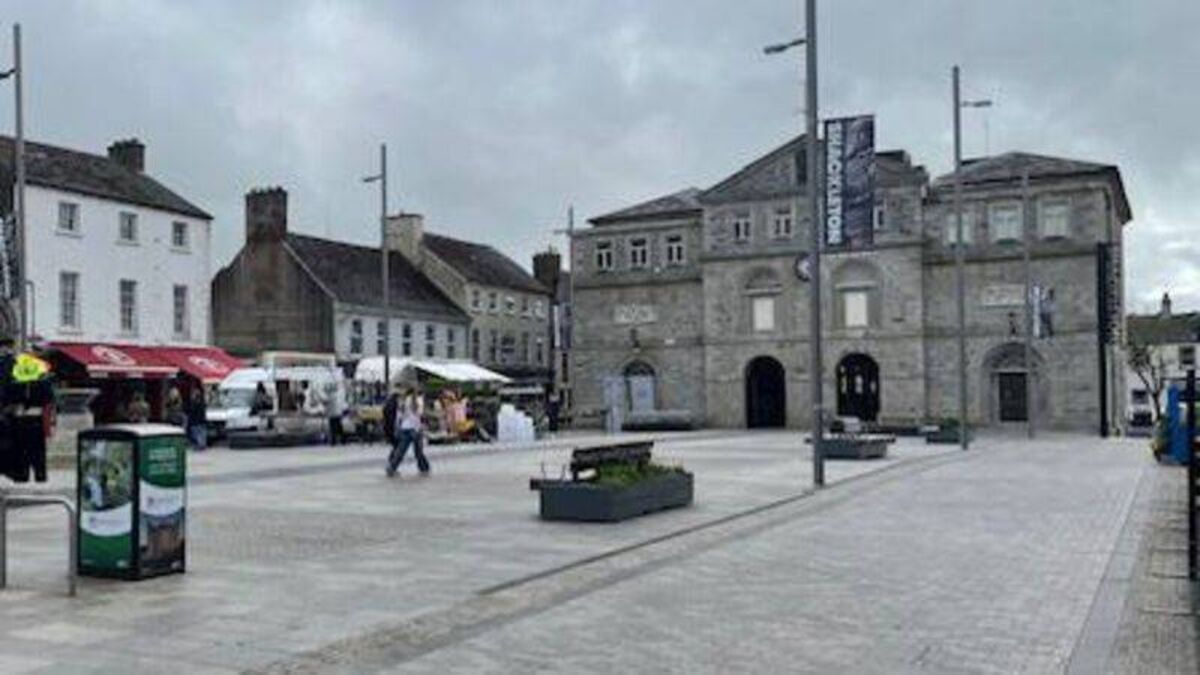
When did you last see a member of the Garda Siochana on patrol in the streets of our town?
AS I sat down to write this weeks Eye on the Past, I heard news concerning a local business which brought to mind the off repeated phrase ‘times they are a changing’. Changes indeed reflect what is happening to Athy businesses at the moment and for a number of years past.
The closure of so many public houses at a time when the town’s population has more than doubled is a sharp indicator of changes in Irish attitudes to civil and personal responsibility.
I am satisfied that the explosion in work related travel by people who moved to Athy to avail of what is deemed to be cheaper housing than found elsewhere, is the reason why a vastly increased population supports fewer public houses than a generation or two ago.
There is now a great inclination to stay at home and perhaps have a drink while watching television, unlike the pub user of thirty or forty years ago who made a frequent if not a daily visit to his local pub.
Times indeed have changed when it became apparent that females in particular are making purchases online and not making local purchases as in the past.
I am not aware of the extent of online shopping but this new shopping phenomena is now receiving extraordinary coverage to claim substantial usage apparently by the younger generation.
Is this I wonder why many businesses in Athy seem to be under pressure?
It is not just businesses in Athy which are not doing as well as similar businesses in the town forty or fifty years ago.
I can remember when I was a teenager in the 1950s how the town was busy and Saturday evenings offered a particularly important shopping experience as the principal drapery shop opened until 10pm or thereabouts.
Farmers and their wives travelled to Athy on Saturday evenings and business flourished. I am uncertain as to whether the reduction in local shopping in what was once the busiest market town in Leinster is due to the widespread ownership of cars and access to neighbouring towns or the development of modern line shopping.
I have noticed many changes in local shopping habits since I returned to Athy in 1982 after an absence of 21 years away from the town in which I grew up.
The changes I have witnessed are not only to do with businesses but also the peoples and organisational response to attitudinal changes.
When did you last see a member of the Garda Siochana on patrol in the streets of our town?
I have not witnessed any gardaí on patrol and indeed the only time I have seen gardaí is when they walk from the local garda station to the courthouse on court days.
What is the reason for their absence from the streets? Is it because of the additional work imposed on them by court orders which require them to furnish inter alia copy statements etc. in advance of Court hearings.
Undoubtedly complying with disclosure orders involves more work for present day gardaí compared to their colleagues’ workload of forty or fifty years ago.
However, I am not satisfied that it justifies the absence of gardaí from our streets.
Neither does it justify the gardaí’s lack of response to complaints filed in the garda station either personally, by letter or by phone.
I have discovered to my surprise that, for some time past, that letters written to garda officers in Athy Garda Station are not responded to. This I feel is most unsatisfactory.
My father, who was sergeant in Castlecomer where I was born, sought a transfer when the eldest of his five sons reached secondary school age.
He was transferred to Athy in June 1945 and my brother Jack started in the Christian Brother’s School that same September.
All five Taaffe brothers completed their education in the Christian Brothers’ school Athy.
My father was second-in-command to Sergeant Duggan and took over as sergeant-in-charge when Sgt Duggan retired in the 1950s.
I remember my father, the senior garda in Athy, went out on patrol in the town every evening.
Petty crime in those days was apparently limited to bicycle stealing and after hours drinking in the local pubs.
There was little or no serious crime as we have today. Yet the local gardaí are no longer visible on our streets.
Why I ask?
And why is the garda barracks closed at 10pm each day when in my father’s time it was open 24 hours a day with a garda acting as a barrack orderly at night time?
One element of town life which has changed for the better is provided by the many modern associations and societies working in Athy to improve the social, cultural, sporting and historical life of its members.
The only societies I remembered in the 1950s was the Social Club in St. John’s Lane, The St Vincent de Paul Society and the sporting clubs catering for soccer, rugby, Gaelic football, hurling, tennis and golf.
I might be missing some other associations but those working today to improve living in Athy are simply far greater in number and with a greater outreach than those of four or five decades ago.
Athy has changed. The greatest change is in the population numbers which has more that doubled in the last twenty-five years.
Many of the new townspeople will in time emerge as Athy men and women of note even if they are presently limited in their contact with the social life, history and heritage of Athy.
Athy will continue to grow in terms of population numbers. What we must strive to do is ensure that the commercial and industrial life of the south Kildare town keeps pace with the surging population.
On Thursday 26 November at 6.30pm Athy Historical Society will host a lecture by historian and author Chris Lawlor on the 1798 Irish rebel ‘Michael Dwyer the Wicklow Chief’. Admission is free.