Magical year for Kildare hurling
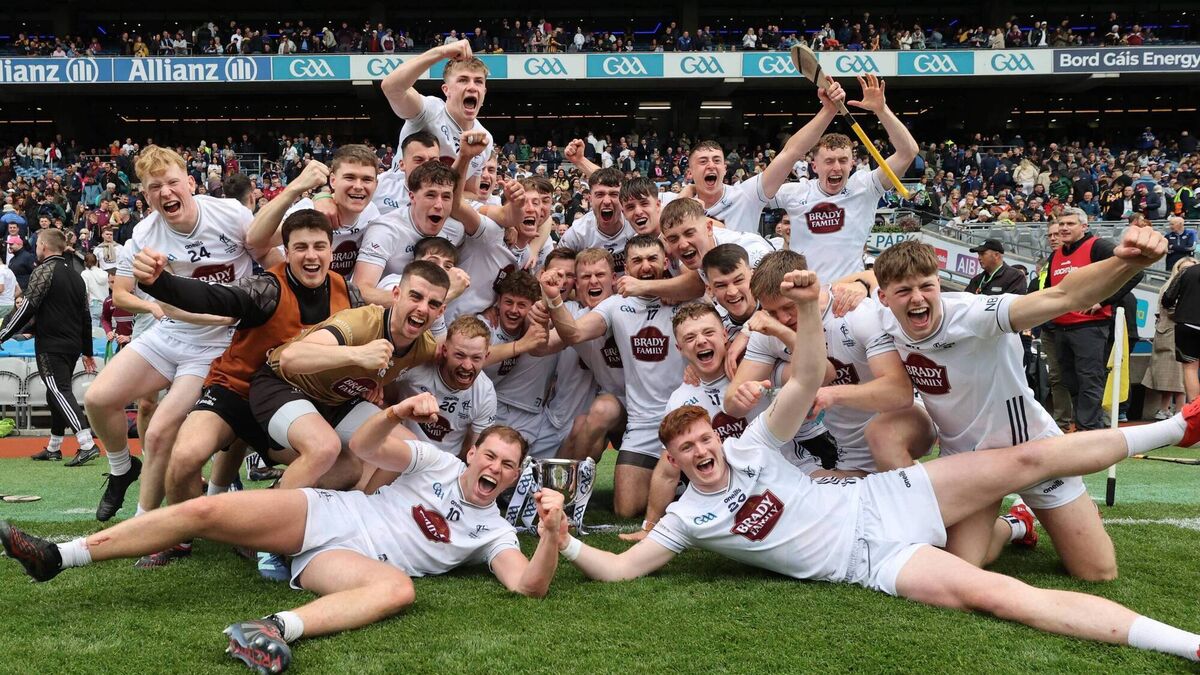
The Kildare team enjoy the moment after their famous McDonagh Cup win Photo: ©INPHO/Bryan Keane
It might be scoffed at by those in the traditional small ball counties, but the rise of Kildare was truly the story of the inter-county season. Perhaps sharp-shooter Jack Sheridan summed it up best after that momentous Joe McDonagh Cup win.
“I was saying to Gerry Keegan inside, we went to play Roscommon in the first round of the Christy Ring Cup in 2019 and lost by three points and that put us on the back foot straight away. Here we are, however many years later, and looking forward to playing in the Liam McCarthy, it’s just unbelievable,” Sheridan told the Kildare Nationalist that afternoon.
In a preview in January, I wrote that manager Brian Dowling would “feel he has enough at his disposal to target promotion in the league and consolidation in the McDonagh Cup.” Whatever his own thoughts on the matter at the time, you’d have found few hurling supporters, journalists or pundits tipping the Lilywhites to go the whole hog in what turned out to be the most successful year for the county team in half a century, dating back to the ‘glory days’ of the mid-1970’s (Dunney, Carew, Walsh et al).

Come the end of January fewer still would have foreseen Kildare jigging around Croke Park to The Curragh of Kildare less than five months later. There are easier ways to start a season than a trip to Ballycran and Dowling’s side came unstuck as two early goal concessions and a strong finish from Down saw them go down by three points to start their Division 2 campaign on a ‘downer’ (pun intended). Ten first half wides and a missed penalty didn’t help their cause.
It’s hard to credit it now but that second game against Kerry took on huge significance. We felt beforehand that Kerry were a transitional team but Kildare needed to put them away in St Conleth’s if they were to have any hopes of promotion. Kerry indeed turned out to be weak, with eight debutants and Kildare won comfortably by seventeen points, with Simon Leacy having a stormer and David Qualter shooting 1-13.
Up and running then and predicable wins over Ulster teams Derry, Donegal and Tyrone were largely comfortable, the margins accumulating to 58 points with Qualter, Sheridan, Darragh Melville and James Dolan (the Celbridge version) getting among the goals.
Meath’s win over Down in their penultimate match meant Kildare needed to glean at least a draw from a trip to Trim and it proved a nerve-racking affair before a well-worked goal from Sheridan finally burned the Royals off and clinched promotion to Division 1B where Kildare will rub shoulders with the likes of Clare, Dublin and Wexford in 2026.
The least said about the Divisional final the better. The venue chosen by the GAA, Inniskeen in Monaghan, is a fine facility for its type but it flew in the face of a supposed desire to develop ‘weaker’ hurling counties. A penny for the newly appointed Willie Maher’s thoughts on that one. The 65-metre line wasn’t even marked out. Enough said.
Kildare coughed up an eight-point lead to lose once more to Down, but the main task, promotion, had been completed.
Three weeks later Kildare were opening their McDonagh Cup ‘consolidation’ bid, or so we thought. It seemed crazy to consider higher goals considering a record of eight losses in eight games in the competition prior to that.
Unfortunately, Kildare mirrored their league start, underperforming completely on the big day against Kerry. “Kingdom break Kildare hearts with late win,” read the headline, Dowling’s side producing their worst display of the year as Kingdom captain Oisín Maunsell fired over a late winner.
Remarkably Kerry would not win again as they slipped down to the Christy Ring tier and Kildare would not lose again in a remarkable turnaround of fortunes for both.
The chips were well and truly down for the Lilywhites at home to Westmeath a week later. The hurling was crisp and the performance full blooded. But still it looked like the same old story as experienced Westmeath reeled in a thirteen-point deficit to level matters at 2-20 apiece with five minutes remaining.
This time they wouldn’t be pipped at the death. A Cian Boran point got them moving again. Sheridan landed a free from his own half and James Burke added 1-1 in the dying minutes to secure a famous win and blow the McDonagh hoodoo to smithereens.
Seasoned McDonagh Cup (and Leinster Championship) campaigners Carlow and Laois lay in wait however, but everyone connected to Kildare hurling were in dreamland as those trips to Dr Cullen Park and O’Moore Park yielded victories that should be talked about for decades to come, no matter what Dowling and his troops achieve from here on.
On a sizzling day in Carlow, an all-action Cathal Dowling was instrumental in a highly impressive six-point win over the hosts as it dawned on us that this team might be set for something more than mere consolidation.
That was confirmed a week later in Portlaoise as four goals flew past Laois (Sheridan 2, Qualter and Cathal McCabe) and Kildare had now dumped the three favourites for the competition on their you-know-whats.
Laois would draw with Carlow in the final round to clinch their own place in the final, but it was Kildare who topped the group, exacting revenge on Down with a straightforward twelve-point win in Newbridge.
Despite their momentum, Kildare went in as slight underdogs against Laois in the final in Croke Park. In our preview piece in this paper, we tried to build an argument for a Lilywhite triumph. It needed tigerish defending, it needed goals, and it needed Burke and Dowling fit. On all counts, Kildare delivered.
The first half was a tense affair with Kildare ahead for most of it but Laois hitting back to go ahead before Qualter levelled it at half-time. Admit it, it was a case of “oh, here we go” when Ben Purcell batted home a rebound shortly after the restart but resilient Kildare stuck to the task and hit the front again with a Paul Dolan point on 46 minutes, though Laois goalkeeper Cathal Dunne made a superb double save to deny McCabe and Sheridan.
Dunne saved again from Sheridan, but substitute Jack Travers was on hand to smash home with his first touch. That put Kildare truly in command with a six-point gap and Sheridan put the icing on the cake with his own well-deserved goal, the 57th of his Kildare career, four minutes from the end, his side clinching the title on a day of days by 2-24 to 1-19.
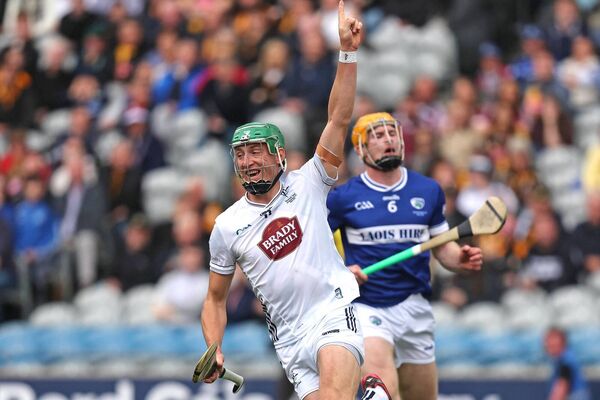
Youngster Cian Boran, moved from attack to defence this year with brother Conan out injured, was man-of-the-match in the final and player of the year, joining brother Rian, Leacy, McCabe, Burke, Qualter and Sheridan on the McDonagh team of the year.
The step up to an All Ireland Preliminary Quarter Final with Dublin in Newbridge six days later proved a step too far, too soon, but it gave Kildare great insight into what lies ahead of them in 2026. That’s for another day. For now, we can bask in the reflected glory of Kildare hurling’s greatest year.