Dangerous sex predator' argues jury shouldn't have heard kidnap victim's 40-min 999 call
Fiona Magennis
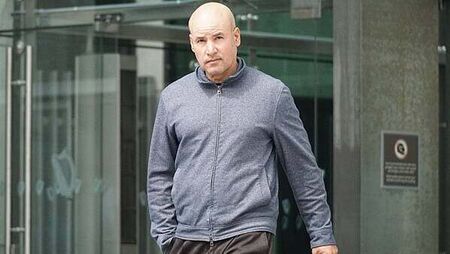
'Dangerous predator' Denis O’Donovan, who kidnapped a woman from her own home and sexually assaulted her, has argued that a 40-minute 999 call made by the victim following the ordeal should not have been played to the jury in his trial.
His lawyers told the Court of Appeal on Tuesday that playing a call of such “substantial length” was unnecessary and introduced material that was “irrelevant” and “prejudicial” to the accused.
O’Donovan (39), from Ballyryan, Donohill, Co Tipperary, had pleaded not guilty to five offences. He was convicted of false imprisonment, assault causing harm and two counts of sexual assault but the jury failed to reach a verdict on one alleged sexual assault.
The sentencing court was told that O’Donovan, who had 39 previous convictions, was on bail at the time for an aggravated burglary at another woman’s house.
O’Donovan was sentenced to seven years in prison with six months suspended by Judge Dermot Sheehan at Limerick Circuit Court in June 2024.
The trial heard that on January 17th, 2020, O’Donovan attended at the woman’s house, which was located in a rural area of Limerick, unannounced.
When she went outside to investigate who was there, she was pulled into O’Donovan’s car and brought to a nearby lane where he sexually assaulted her by inserting his fingers into her vagina whilst choking her with his other hand.
999 call
The woman managed to escape the car and, after climbing through a ditch and tearing her arms, she hid whilst she could hear O’Donovan’s car driving up and down the road. She believed he was looking for her. The victim later made her way home and called 999.
“He is a dangerous sexual predator and everyone should know his name,” the victim told the sentencing judge.
Launching an appeal against conviction today, O’Donovan’s barrister, Timothy O’Leary, argued the sentencing judge erred in ruling the entire audio of the emergency 999 call admissible and in permitting it to be played to the jury.
Counsel said the call ran to approximately 40 minutes - a “substantial length” of time. O’Leary said the complainant in the case had given direct evidence and the contents of the call was “all extra over and above” her testimony.
He said the evidence didn’t “put matters any further” and only introduced material that was “irrelevant" or "prejudicial” to O’Donovan.
O'Leary said it was accepted that some of the 999 recording should have been played to the jury, but argued that the call should not have been played in its entirety.
“I’m saying it’s not fair to my client, simple as that,” said counsel.
O’Leary submitted that during their deliberations, the jury asked a question relating to the absence of analysis of forensic samples taken from the vehicle and when the defence became aware that no analysis had been carried out.
The judge told the jury that the samples had not been analysed and instructed them that they should not speculate about what the results might have been.
Counsel argued that the judge made an error in not going further and advising the jury that if they considered the absence of forensic testing left unanswered questions, then they were entitled to take that into account when deciding the case.
In response, Lily Buckley, for the Director of Public Prosecutions, said that while the defence didn’t like the extent of the 999 call evidence, it was “probative”, “relevant” and “admissible”.
Counsel said the victim lived in a remote location and was in a “blind panic” at the time the call was made because she was afraid the accused would return.
Incident
She said the woman was recounting the incident on the phone. Buckley said the woman “effectively fell out a back door” of the vehicle before she “scrambled over briars and a ditch” in trying to get away from Donovan.
The victim had described cutting herself on thorns as she was trying to pull herself over the ditch.
“The defence took a tactical approach and made an assessment that it would be more damning if the boring bits were taken out,” she said.
In relation to the question from the jury regarding the analysis of forensic samples, Buckley said the judge’s directions to the jury that they must deal with the evidence before them and not go beyond that was “entirely appropriate”.
“He reminded them about the limits of their work,” she said. “It was the evidence, nothing else and he left it at that.”
Justice John Edwards said the appeal court would reserve judgment and deliver its decision at a later date.