‘Every loss matters’: Athy event aims to break the silence around baby loss
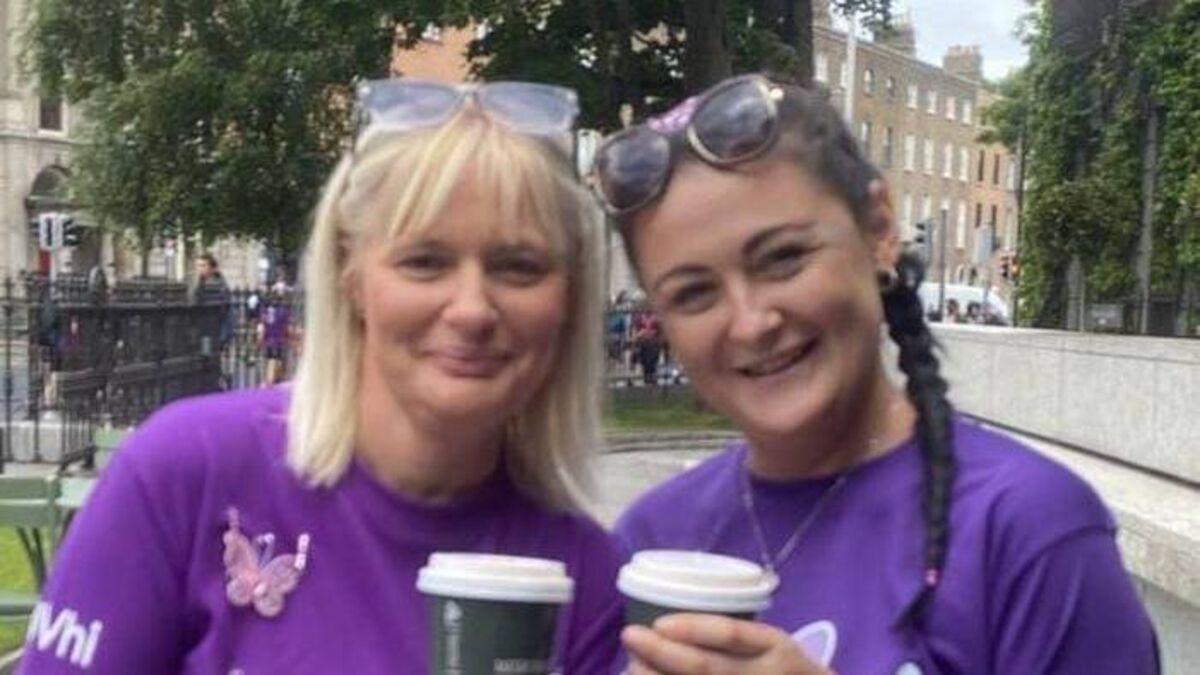
Selina Meinen and Jayne Sherlock
THIS OCTOBER, Athy Community Family Resource Centre is hosting a Wave of Light event, inviting mothers, fathers and family members who have experienced pregnancy or baby loss, to come together in remembrance of their babies.
The event is being put together by Parents Plus Facilitator and Athy resident, Selina Meinen and Family Support & Community Development Worker, Jayne Sherlock – a local mother who has been navigating her own grief since losing her baby girl, Maci, who was delivered stillborn in January.
The Global Wave of Light takes place each year on 15 October at 7pm. It is an event which invites participants around the world to light candles in memory of babies who have died during pregnancy, at birth or shortly afterwards.
Those who gather at Athy FRC on the night will be invited to light a candle to honour their baby, while the building is lit up in pink and blue.
Tea and coffee will be provided, as well as a candle and a ribbon for each participant, all kindly funded by Athy Lions Club.
For Jayne, it was important to put the event together, both for herself and for other affected families. After her own experience back in January, she wanted to highlight the profound impact of pregnancy and infant loss – not only on mothers, but on fathers, siblings, and wider families.
Since Jayne’s experience, infant loss awareness has strengthened within Athy FRC, particularly with her colleague Selina.
She said: “It just made me more aware of how much of the stigma is around it, how much of a taboo subject it actually is, and how traumatic it really is, not just for the mother.”
Both Selina and Jayne explained that people who experience miscarriage or stillbirth can sometimes face an expectation that, after a short period, they should simply return to normal life.
But grief does not have an expiration date, certainly not after five days – which is the statutory paid leave for women who experience a miscarriage before 23 weeks of pregnancy.
“You're going through all of the stages of grief, you know, the loss of your baby, what the future now looks like,” said Selina.
“You're not just grieving and processing the trauma that you've just endured, but you're also grieving a lifetime of our first day at school. We're going to get our nails done. All those types of things as well.
“People think small life, small loss. And it's actually quite the opposite.” Both Selina and Jayne agree that there remains a gap in Irish legislation around statutory leave associated with miscarriage and baby loss.
Currently, mothers who have delivered a stillborn child after 23 weeks are entitled to full maternity leave.
In Jayne’s case, she was not entitled to that leave because her baby was delivered at 21 weeks.
“My husband went back to work after a week because at the end of the day, we had two little boys in our home. There wasn't money coming into the house,” she said.
‘The forgotten parents’ A central aim of the event is to remind people that those who have lost babies are still parents.
The organisers described bereaved parents as “the forgotten parents” or “the invisible parents”.
“They are still a parent, but it's not in the typical way that you would normally present,” said Selina.
The team wants to encourage a broader understanding of what parenthood and family can look like, while creating opportunities for people to speak openly about experiences that may have remained private for years.
They also hope to identify gaps in existing services and develop a stronger network of community-based support.
For Jayne, the event is particularly significant because it will provide an opportunity to remember her daughter, Maci.
“She was really small,” said Jayne speaking about Maci. “She was perfect. And she brought so much love and still does now.
“My two boys speak so beautifully about Maci. She's a part of everything that we do as a family and in very different ways to what we had envisioned for her physical presence to be.” Giving people a place to belong The event is intended to bring together people who have experienced similar losses and allow them to recognise their experiences in one another.
“It brings people together who have experienced a similar trauma, and they can actually open up about it and be like, ‘Oh, yeah, that happened to me too.’” That sense of recognition can be particularly important during the early stages of grief, when people can feel isolated or question whether their reactions are normal.
Peer support, the organisers said, can help people realise that they are not alone.
“There's such a huge empowerment piece to be able to join other parents who are saying things that you thought you were weird for thinking or strange for thinking.” The long-term ambition is to develop a protected community space in Athy where parents and families can connect, with the possibility of sharing that model with other community organisations.
The organisers are also placing a strong emphasis on accessibility.
The centre will be arranged to provide different ways for people to participate, recognising that a traditional group event will not suit everyone.
A one-to-one room will be available for people who do not feel comfortable in a group setting, while the centre's play therapy room will be transformed into a sensory space for children and siblings.
The team is also working to make the environment neuro-affirming and accessible to neurodivergent families.
“We wanted to really ensure that whatever we were putting on was available and accessible to everybody, with as many as we possibly can.” For parents who do not want to attend the main gathering, there will also be opportunities to visit the centre separately and light a candle privately with their family or on their own.
The centre plans to open for two evenings to facilitate this one-to-one engagement.
‘Your baby's name matters’ Remembering and naming babies will be central to the event.
Families will have the opportunity to have their baby's name displayed and to participate in the candle lighting, while white ribbons will also be available for people whose pregnancy ended before they knew the baby's sex.
The organisers want families to have the choice of taking part publicly or privately.
“They don't want to come on the evening themselves. At least they have the option to know that their baby has still been included and honoured on that whole week then as well.” “Your baby's name matters, say your baby's name,” said Selina.
The organisers said people often worry about saying the wrong thing when speaking to someone who has experienced baby loss.
But they believe acknowledgement is more important than finding the perfect words.
“Sometimes there's nothing that you actually can say other than, ‘I'm so sorry for your loss.’” Avoiding someone because you are uncomfortable, they said, can make a bereaved parent feel even more isolated.
“You don't have to understand somebody's pain, loss, trauma to validate.” They also urged people to be sensitive around everyday conversations about babies and pregnancy, recognising that seemingly ordinary situations can sometimes trigger painful memories.
For Jayne, the decision to speak publicly about Maci is part of finding a way to live with her loss while helping others.
“It's either put my pain into purpose and how I can now move on and help and support other people who are going through this through my experience because the other alternative is I crumble,” she said.
The organisers hope the Wave of Light event can be something that benefits the wider community.
The centre plans to provide information and signposting to specialist organisations, including Féileacáin and other pregnancy and infant loss services.
Féileacáin provides support to people affected by the death of a baby during or after pregnancy.
The event has also received funding support from the Athy Lions Club, which organisers said was crucial to making the evening possible.
They are continuing to welcome support from local organisations and businesses that may be able to contribute.
Ultimately, the organisers want the event to send a message to parents who may have experienced a loss recently or decades ago: your baby has not been forgotten.
“We want to raise awareness, we want to open conversations, and we want to be able to signpost and support people to say you're not alone,” said Jayne.
“Every baby matters. Every loss matters.”