Kildare brewery expansion to double output
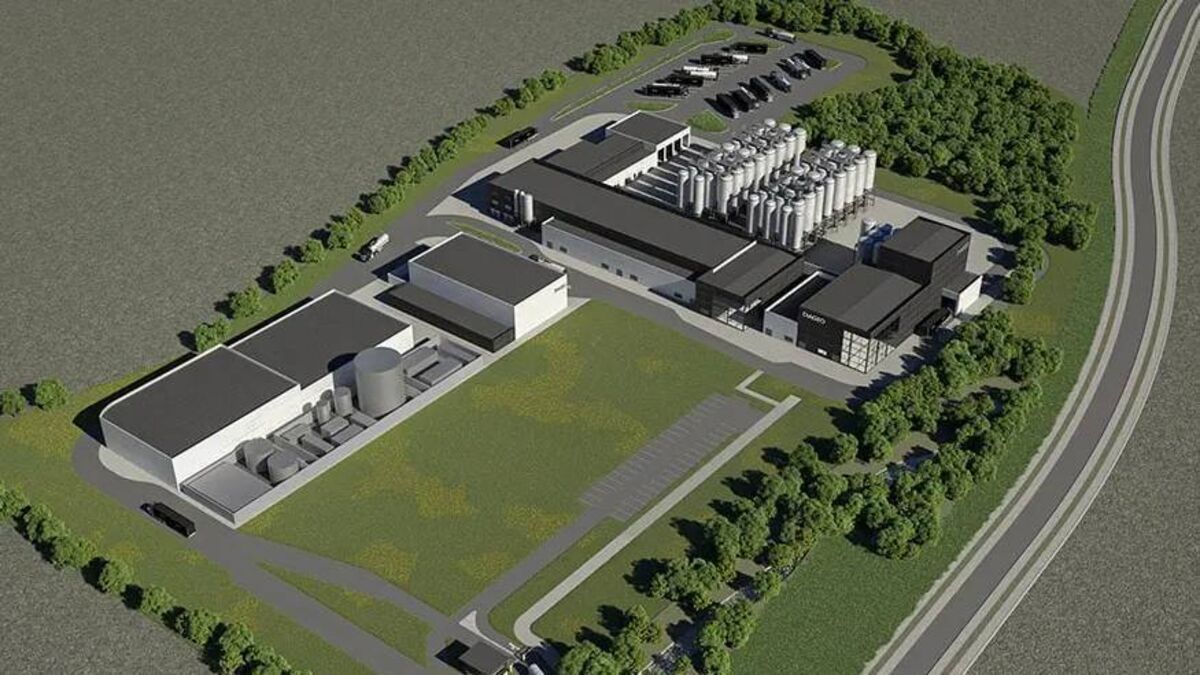
Artist's impression of the new Diageo brewery for Newbridge
DIAGEO has been granted planning permission to expand its operation in Littleconnell, Newbridge with a second brewery with a floor area of more than 9,300sqm to an overall total of just shy of 15,000sqm.
This will allow the firm to more than double the overall capacity to 450 million litres per annum, or approximately 2.32 million pints a day in drinkers’ terms.
The initial €200m ale and lager brewery broke ground in the summer of 2024, and is on-track for its first brew some time this spring.
The planning application was submitted in November, despite its size and complexity, was given the green light within four months.
This will include 36 new storage tanks each 23m tall, three more grain silos, with a new tanker filling facility under canopy, with overall capacity for 58 trucks.
The plan also calls for a new, four-storey roaster building, almost 1,300sqm of yard space, and a water recovery and treatment plant.
This expansion will require its own 10Kv substation, and a new fire suppression system capable of providing 35 litres of water every second for a minimum of one hour.
Having begun construction in July 2024, there has been more than 700,000 hours of work safely completed, by approximately 580 workers on-site daily.
At peak construction phase, the Littleconnell site had 13 cranes, 12 excavators and 10 dumpers on site per day — all to support the building of Diageo’s new brewery that will support the global growth of some of the company's largest Irish brands including Rockshore, Harp and Smithwicks.
It will be the second largest brewery in the country, second only to St James’s Gate brewery in Dublin 8 which produces a staggering 700m litres of beer a year.
Despite a vocal call in January 2024 to relocate to Athy — the hops centre of Ireland, and with the Barrow as a source — the brewer chose to stay on the banks of the Liffey and continue being fed with the granite waters of the Wicklow mountains for the last quarter of a millennium.
“Littleconnell has been designed with energy and water efficiency at its core, and once operational, it will set a new standard as the most energy and water-efficient brewery in both Ireland and Diageo’s global network,” said Diageo’s global head of beer supply, Colin O’Brien.
In addition to the production of lagers and ales, Littleconnell will become a production hub for Guinness and the Guinness 0.0 growth in emerging markets.
St James’s Gate will remain the heart of Guinness, continuing to brew for its largest and most established markets, including Ireland, the UK and the US.
Mr O’Brien added: “While the realisation and timings of this expansion will depend on a number of external factors, it reflects Diageo’s long-standing commitment to Ireland and reinforces the country’s position as a strategic base for sustainable export-led growth.
“This planned expansion at Littleconnell is designed to position us for future global growth opportunities for Guinness and Guinness 0.0.
“By increasing our capacity, we can better serve emerging markets while strengthening Ireland’s position as a leading market for beer exports.
“It’s a significant step forward in our commitment to sustainable brewing and will be an industry gold standard for energy and water efficiency.” Diageo announced their plans for the €200m brewery in Littleconnell, Newbridge in July 2022, and were given permission to build it by Kildare County Council in March 2023.
This was appealed to An Bord Pleanála (now known as An Coimisiún Pleanála), but the permission was upheld in December 2023.
The firm broke ground last June, and the construction of the nearly 10,000sqm plant is employing over 1,000 construction workers for the two years, expecting a first pour sometime in 2026 with a permanent workforce on site of 70 brewers.
The 21.36Ha (53ac) site will be located in the IDA Business and Technology Park, near the Lidl Distribution Centre the facility will top out at a max height of just under 25m (c.81ft).
Diageo plan for the building to be a carbon-neutral facility and expect to save up to 15,000 tonnes of carbon emissions annually.