Kildare firm leading the way in making construction sector more environmentally friendly
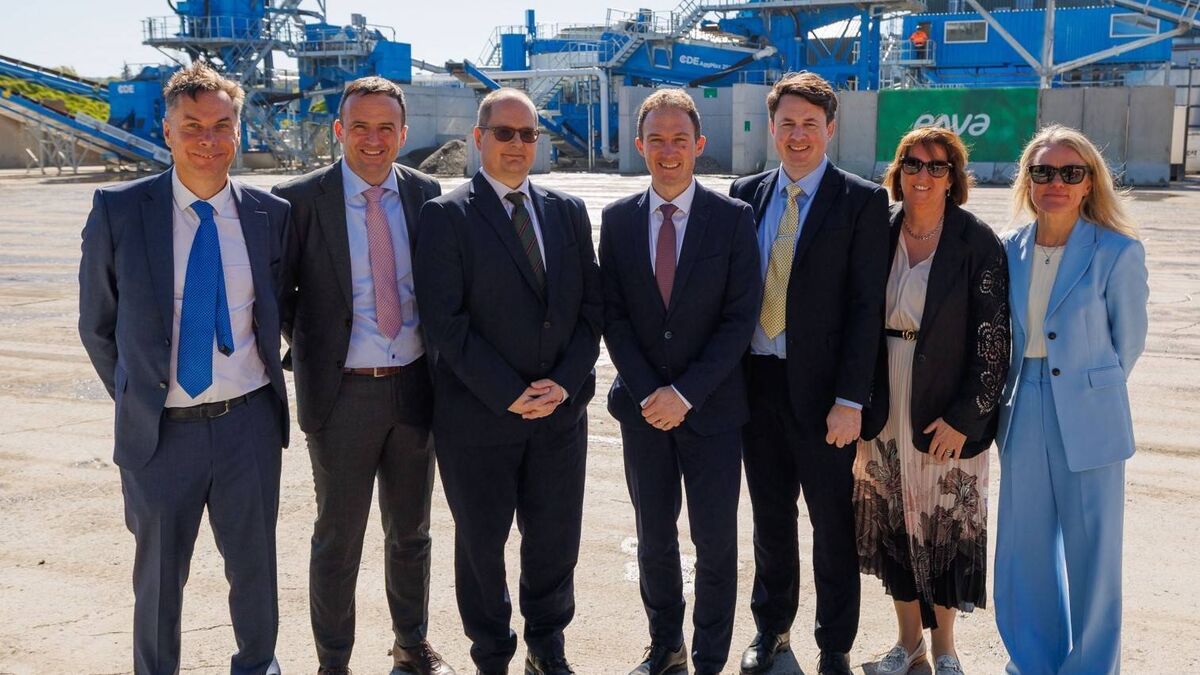
l-r Jason Ashton & Roger McDermott of Enva, Philippe Lenoble, I Squared Capital, Minister Alan Dillon, Richard Kennedy, Enva, Siobhan Bailey, I Squared Capital, Sofia Ysewyn, I Squared Capital
IRELAND’S first wash plant for the reclamation of excavated materials received a ministerial visit last week (28 April).
Enva's Walshestown Resource Recovery Facility welcomed Alan Dillon, Minister of State at the Department of Climate, Energy and the Environment with responsibility for the Circular Economy, to highlight how private sector investment is helping deliver the infrastructure needed to support Ireland’s housing, climate and resource ambitions.
Located just south of Punchestown, the facility is designed to recover high-quality recycled sand, soil and aggregate products into valuable secondary materials, reducing reliance on virgin resources and lowering the carbon footprint of construction and infrastructure projects.
Operating under EPA licensing the facility processes up to 330,000 tonnes per annum on its 44Ha (100ac) site, and returns around 70 per cent of incoming material into reusable aggregates, reducing landfill dependency and supporting a more resource-efficient construction sector.
With over €100 billion in planned infrastructure investment and a target to deliver 300,000 homes by 2030, Ireland faces growing demand for materials while construction continues to be its largest waste stream. Meeting these challenges requires domestic circular infrastructure at scale.
Walshestown provides a clear example of how circular solutions are being delivered in practice, supported by stable regulatory frameworks that enable long-term investment in environmental infrastructure.
Alan Dillon, Irish Minister of State at the Department of Climate, Energy and the Environment with special responsibility for the Circular Economy, stated: “Construction and demolition waste makes up half of all waste generated in Ireland, with 75% sent for backfilling. Our strategy sets to reduce this by 12 per cent by 2030."