Kildare Park & Ride facility stalled
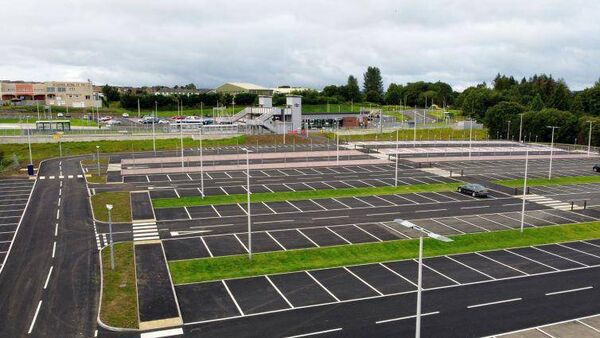
Photo for illustrative purposes only
KILDARE commuters are in desperate need of park and ride facilities, as daily travel along the M7 and surrounding routes has become “mental torture” for thousands of workers.
Speaking in the Dáil, Kildare South Labour TD, Mark Wall, highlighted the pressures facing commuters across Kildare towns and villages, where many residents are leaving home as early as 5.30am in an effort to beat traffic.
A central issue raised by Deputy Wall was the lack of adequate park-and-ride facilities across Kildare, which he sees as one of the most practical short-term solutions. While proposals have been discussed for locations like Sallins and Kill, progress has been slow, and these projects remain years away.
A park and ride facility at Kill was to provide 500 parking spaces, while one at Sallins-Naas train station was to provide 1,000. The work for these two projects have seemed to stall recently as “problems arose with the land developer”.
In response, he was told by Marian Harkan TD, Minister for State, that work is being done to advance proposals for a 500-space bus-based park and ride facility at Kill, but the project remains at the preliminary design stage for the landlord “having withdrawn from negotiations”.
While as for the proposed Sallins facility, it has been listed as a priority project within the NTA’s greater Dublin area transport strategy, which will link in with the DART+ programme for services to Sallins and Naas train station.
Deputy Wall highlighted commuter frustrations in the Dáil that day, including that some commuters arrive to work early to wait in their cars for work to start – all to beat the busy roads.
He described key roads such as the N7–M7 corridor as effectively functioning as “car parks” with Kildare residents bearing the brunt of the congestion.
The impact, he stressed, is not just logistical, but personal, with long hours on the road eating into family life and affecting overall wellbeing for Kildare commuters.
“One cannot contemplate the mental torture that is putting on people coming in every day,” he said. “They are not getting home in time to see their families and they are stuck in traffic every day.”
Meanwhile, fast-growing commuter areas such as Castledermot have been left without any formal plans, despite clear demand, according to Deputy Wall.
In these areas, informal park-and-ride behaviour has already emerged. Roadsides and local meeting points are being used as unofficial hubs, with dozens of cars left parked daily as commuters continue to Dublin.
“As I came to Dáil Éireann this morning I passed 11 cars parked at the Ballitore interchange, which is a daily occurrence,” he said.
“It is a similar situation at the Castledermot interchange on the M9 where 20 cars could also be parked.”
Even existing facilities in Kildare are struggling to cope. At Kildare town’s train station, a recently expanded car park is already reaching capacity early each morning. For Deputy Wall, this illustrates a broader failure to match infrastructure with demand, despite government commitments to transform commuting.
Deputy Wall argued that current strategies are not addressing the immediate needs of commuters. Without faster delivery of park-and-ride options and other short-term measures, he warned, pressure on roads will only intensify.
He also called for stronger policies to support remote working, noting that many workers are being required to return to Dublin offices despite having the ability to work from home. It was Deputy Wall’s belief that if more people were granted the option to work from home, a considerable relief would be given to commuter routes each morning.