Prosecution says family 'operated without sexual boundaries' in abuse trial
Eimear Dodd
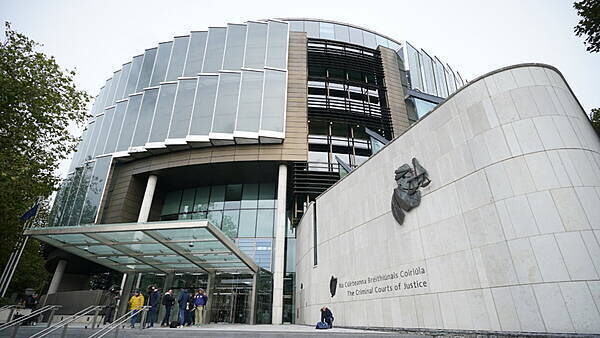
The prosecution in the Central Criminal Court trial of six men accused of familial abuse has told the jury this was a dysfunctional family operating without intergenerational sexual boundaries.
The six men, aged between 32 and 55, face a combined total of 20 charges – 16 of which pertain to the main complainant, who is deaf. They are her three uncles and her three younger brothers.
One of these brothers (Accused C) is charged with four counts pertaining to the sexual abuse of two other sisters. All men have denied all of the charges against them.
The abuse is alleged to have occurred over 19 years, between 1995 and 2014. None of the parties involved can be named for legal reasons.
Continuing her closing speech on Wednesday, prosecuting senior counsel Roisin Lacey told jurors their role will involve assessing “the credibility of the complainants, all three of them,” using their combined life experience and common sense.
She said they must complete their work clinically and forensically, without pity or sympathy.
She brought the jury through an overview of the evidence heard during the trial in relation to the allegations against each accused man.
Ms Lacey submitted that all three complainants are “credible and believable”.
Ms Lacey said there was “clear and unequivocal” evidence from the primary complainant that she did not consent to engage in sexual acts with the accused men.
She suggested there was a “distinct theme” of the accused men trying to distance themselves from the primary complainant. “Practically to a man this theme continues…I know nothing about [the primary complainant]”.
“It seems the people who have something to lose by knowing [the main complainant’s name], by being in her company, don’t seem to know her at all,” Ms Lacey said, later describing this as “extraordinary”.
She submitted that “this was a highly dysfunctional family” without sexual boundaries between siblings and which “operated without those sexual boundaries on an intergenerational basis”.
She suggested the children also lived a nomadic life, staying in the family home or with other relatives.
Ms Lacey said the primary complainant was vulnerable, adding that the other two complainants were also vulnerable at the time they were allegedly abused.
She noted the primary complainant said she made a complaint to her mother about Accused C anally raping her, and her mother told her no police.
Ms Lacey also pointed the jury to the garda interviews with Accused A, who said the primary complainant told him and his sister that she had been abused by her stepfather. He said he told his sister to tell the girl’s mother, whose feedback was that the main complainant wanted it.
The stepfather is not on trial, and the jury heard he died in December 2025.
Ms Lacey said the prosecution say that the primary complainant’s mother was aware there were allegations of sexual abuse in the family and did nothing.
“[The primary complainant] essentially had no voice, her mother did nothing,” Ms Lacey said.
She referenced evidence given by the primary complainant that Accused F “learnt to rape”.
She noted that the primary complainant first made allegations of abuse in 2017, which led to her speaking to gardai.
She suggested the process of speaking to the woman in 2017 was “unreliable”, noting that garda and other witnesses said they were unsure if the woman understood the questions and if they fully understood her answers.
Ms Lacey said the primary complainant was cross-examined about what she said or didn’t say in 2017, and confirmed what she said.
She said the prosecution say this doesn’t make her answers from 2017 any “more accurate or reliable” and that as the process was stopped and never completed, the woman did not get the chance to tell her full story at that time.
Ms Lacey suggested there are similarities between the allegations made by the three complainants against Accused C, but told the jury they must consider each separately.
She submitted that if jurors were satisfied beyond reasonable doubt of the complainants’ truthfulness, they could then consider if each cross supported the other.
She said that they must be satisfied there is no collusion or contamination, noting that the primary complainant’s evidence was she was unaware that Complainant 3, her younger sister, was a participant in this trial.
The trial continues before Ms Justice Caroline Biggs and the jury.
If you have been affected by any of the issues raised in this article, you can call the national 24-hour Rape Crisis Helpline at 1800-77 8888, access text service and webchat options at drcc.ie/services/helpline/ or visit Rape Crisis Help. In the case of an emergency, always dial 999/112.