Kildare artist’s powerful exhibition shines light on those with disabilities
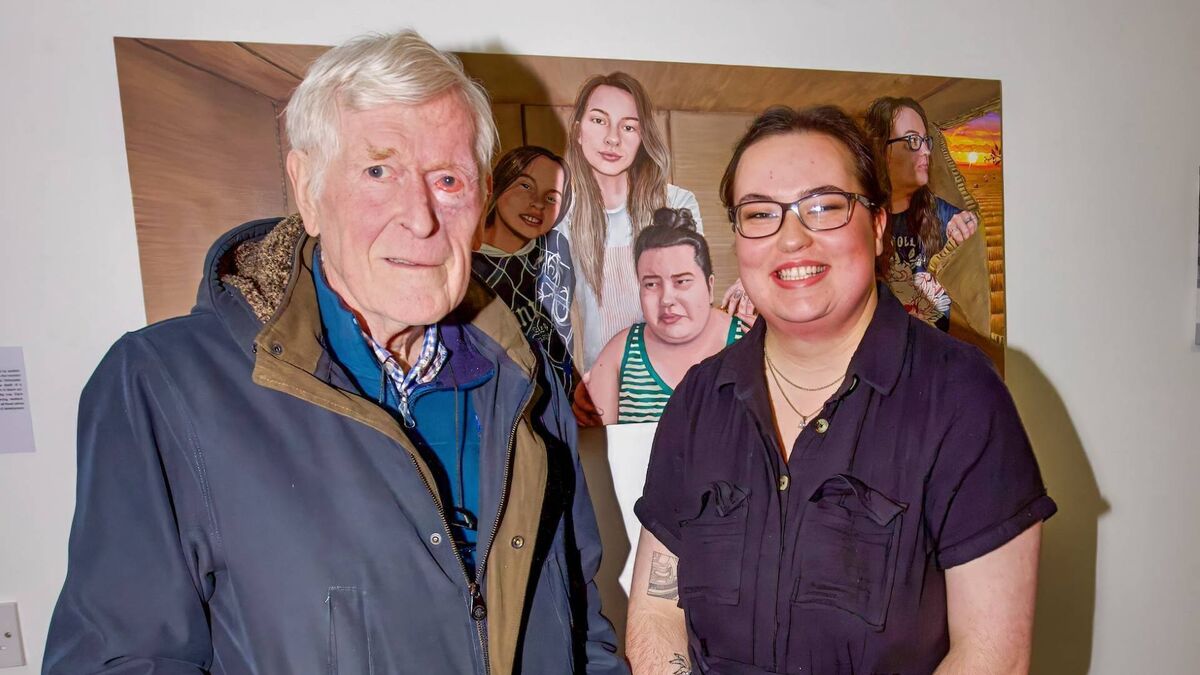
Rebekah Roche and Frank Taaffe at the launch of her powerful exhibition
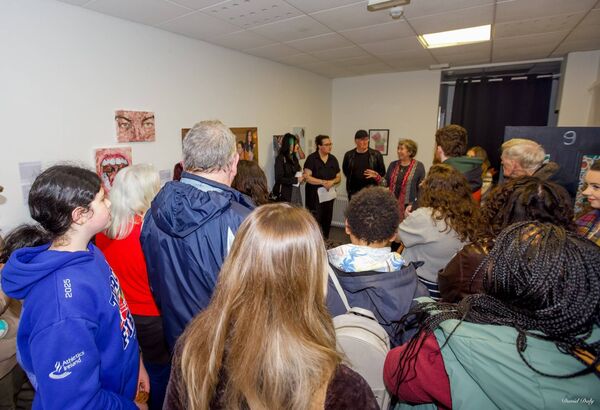
WHEN young Athy artist Rebekah Roche opened the doors to her first solo exhibition she was met with a packed room, a queue out the door, and an overwhelming sense that her work and her voice had finally been heard.
“It was exhilarating,” she said. “But I was so nervous beforehand. I felt like I didn’t know what I was doing.”
Athy artist, Rebekah Roche’s art exhibition ‘Despite It All’ launched on Saturday, November 15 at the Art House in Athy, and explores her incredibly personal experience with POTS, medical misogyny, disability, grief and empowerment.
POTS (Postural Orthostatic Tachycardia Syndrome) is a disorder of the autonomic nervous system, affecting functions the body is meant to perform without conscious effort. For Rebekah, it means dramatic spikes in heart rate, dizziness, near-fainting episodes and difficulties with mobility triggered even by simple tasks such as sweeping the floor or standing up.
For a very long time, her illness left her housebound which had a harmful effect on her mental health.
Diagnosed at 20 after years of being dismissed by doctors, she said the condition transformed her life in ways she still struggles to articulate. Her exhibition attempts to do exactly that.
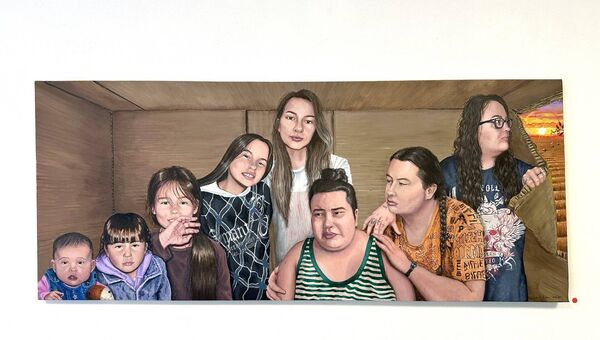
The centrepiece, a large-scale painting titled “I’m Every Age I’ve Ever Been,” captures slices of her life from childhood to adulthood, juxtaposing her vibrant youth with the drastic decline that came when she became ill.
“I wanted people to compare what my life was like before and after,” she said. “You need to see the difference to understand the impact.”
The painting sold almost immediately.
Rather than medicalise her experience, Rebekah chose to portray the subtle, domestic realities of life with chronic illness, the everyday scenes that no one talks about.
“Google can tell you what a disability is, but not the nuances,” she explained. “I wanted to show the real, everyday things.”
She said many visitors with chronic illnesses or disabilities found solace in seeing their experiences finally reflected back at them.
One of the themes resonating most strongly with visitors was something deeply woven into Rebekah’s story: how women are treated in healthcare systems.
For two years, she says, doctors dismissed her symptoms as hormonal or related to her menstrual cycle.
“They kept telling me it was normal for a woman. I was losing my vision and hearing, about to pass out, that’s not normal,” she said. “If I had been a man, half of what I went through wouldn’t have happened.”
It was only when she finally saw a female doctor that she received proper referrals and a diagnosis.
Visitors have echoed her experience in messages and conversations at the exhibition. “Women everywhere are going through this,” she said. “It’s an epidemic, and nobody is talking about it.”
The exhibition also carries a quiet undercurrent of grief. Rebekah lost her mother, who she described as her “crutch” during her illness, just months before she was diagnosed.
“I relied on her so much. We understood each other because she had health issues too,” she said. “Losing her was like being kicked while I was already down.”
One piece, ‘A Stitch in Time,’ features a framed, unfinished knitting project her mother had begun before she died. Rebekah found it on Mother’s Day while searching for wool for a first attempt at crocheting.
“It felt like a sign,” she said. “Her life ended suddenly, unfinished. And here was this unfinished piece. There was a story in that.”
The opening night was emotional, cathartic, and above all, validating for Rebekah.
“It was jam-packed,” she said. “After so long not being heard by doctors, having a room full of people listening to what I had to say… it was surreal.”
At the launch, speaker Danielle Day, who is diagnosed with PCOS, shared her own experience of years of dismissal, highlighting how widespread medical misogyny remains.
Curator Anthony Haughey also got up to say a few words, and Athy artist Cathy Callan, who Rebekah met during an earlier Arthouse workshop, spoke at the launch, a moment she described as “full circle”.
While commissions have been Rebekah’s “bread and butter,” the success of her exhibition has shifted her ambitions.
“I’m not done. This is only the start,” she said. “I spent so long stuck inside my house staring at four walls, now I’m grabbing every opportunity.”
She currently works from home and shares her work on her social media channels: @bekah.roche.art on Instagram, TikTok and Facebook. She also runs a website where she sells prints, Rebekah ends with advice for anyone living with disability or chronic illness, or for those who love someone who does.
“Know when to push yourself and when to rest. Don’t say no so much that you stop living. Don’t say yes so much that you hurt yourself. You know your body better than anyone. Advocate for yourself.”
“And for people without disabilities? Ask questions. Don’t be afraid. Understanding comes from talking.”