Homes worst impacted by Storm Éowyn dealing with constant power cuts
Kenneth Fox
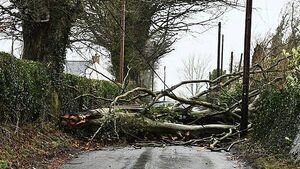
The homes that were most impacted by Storm Éowyn last year have been dealing with consistent power cuts as communities look to rebuild after a historically damaging storm.
As The Irish Times reports, Joan Comer from Dunmore in Co Galway counted 20 power cuts since Storm Éowyn. “We haven’t got any explanation as to why it happened. It could be for an hour or a day.
"We don’t know if it is a demand. Maybe it is because we are in a not-so-remote place in rural Ireland – we seem to have been forgotten about. Whatever damage was done has not been properly repaired.”
The highest wind speed ever recorded in Ireland – a 184km/h gust in the early hours of January 24th last year – was noted at Mace Head, Co Galway.
Storm Éowyn divided the country into two. On the east coast, the damage was short-lived, and people returned to normal living within two days; along the west coast – from Galway through Mayo, Roscommon, Leitrim and Sligo – a trail of devastation ensued.
At the peak of the storm, 768,000 electricity customers were affected. According to ESB Networks, approximately 10 per cent of customers (about 75,000) were left without power for more than a week.
In its annual review, Met Éireann stated that the strength of Storm Éowyn was partially down to climate change and that more powerful storms could be expected in the future.
Many people still bear the psychological scars of Storm Éowyn. It was a time when hundreds of thousands of people were stripped of the necessities of modern living, and many for prolonged periods of time.
Electricity, heating, water, internet and telephone connections all went down.
The well-known broadcaster and Connemara resident Máirín Ní Ghadhra was trapped in her home for three days, with trees down on both laneways. She couldn’t get to work in Raidió na Gaeltachta or even text the station to say she couldn’t come in.
“It was quite literally a perfect storm. People did not understand after the fact why more help did not come quicker. It took off the blinders for many of us,” she says.
“We hear local politicians regularly saying that not enough has been done. Where are the emergency hubs we have been promised?”
The Government is drawing up plans for 400 such emergency hubs across the country capable of keeping communities going during extreme weather events.
A pilot programme was put in place during Storm Amy (October 3rd, 2025), when eight hubs were established in Donegal.
Every local authority has been furnished with a guide to community support centres, and the Government will be putting plans in place with all local authorities in March. These hubs cannot come quickly enough for communities fearing the next big storm.
One of the worst-affected places was the village of Carna in Connemara. During the night of the storm, the roof of Maureen Folan’s house blew off. In an exercise in digital Meithéal, a GoFundMe account started by a friend raised more than €100,000, and the house is now being rebuilt.
Kevin Igoe of Igoe Agri and Engineering in Castlerea, Co Roscommon, discounted his last remaining generator before Storm Éowyn because he could not get it sold.
“If I had 250 of them, I could have sold them,” he says. “After two days, I gave up jotting down names. You don’t even need a storm. The power is going out regularly around us.”
One of the worst-affected counties was Leitrim. Some homes were without electricity for 20 days. Much of the blame for the extended outages was put on the proliferation of commercial forestry in the country.
It comes as every household in the State is to receive a booklet in the next few weeks advising how to prepare for extreme weather emergencies and loss of essential services.
The “household resilience” booklet has been prepared by the Office of Emergency Planning in the Department of Defence.
It was a recommendation of the review group that examined the response to Storm Éowyn that hit Ireland a year ago today.
The review group said households should have a checklist of actions to take to keep safe, warm, fed and hydrated in the event of loss of power, water and communications for up to 72 hours.