Athy's religious shift
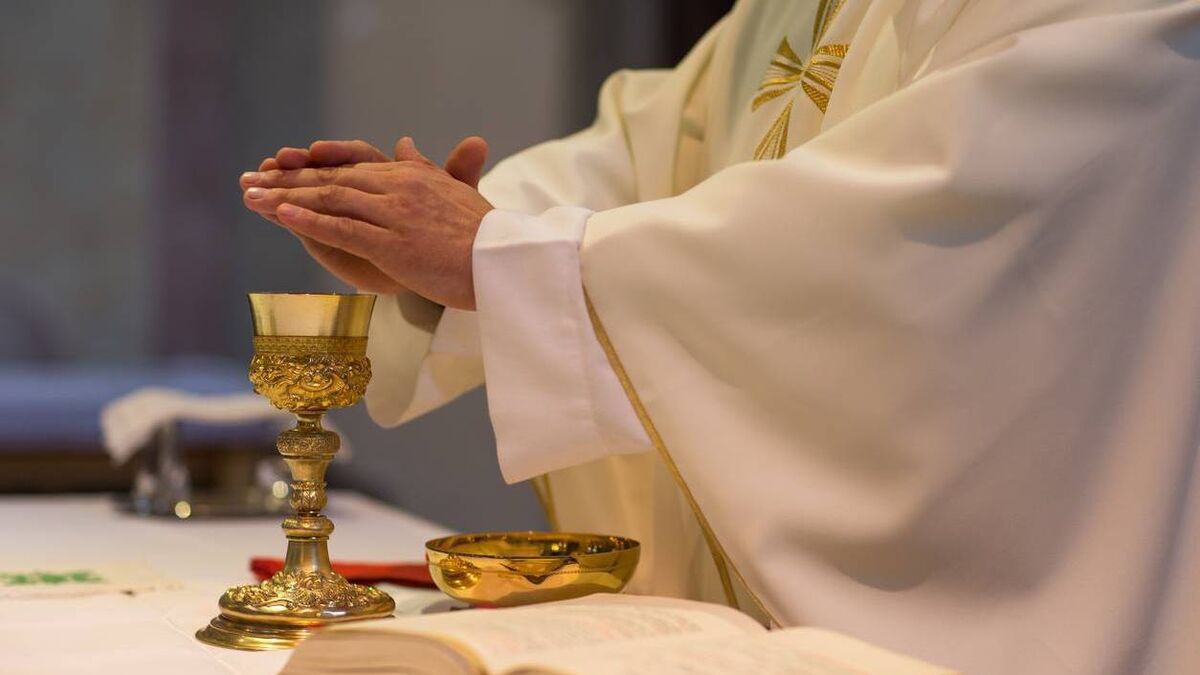
Mass attendance was a typically strong Irish tradition in the 1950s and St Michael’s Parish Church was then invariably pretty well full for the Sunday Masses
CAN you remember the religious fervour which was part and parcel of our lives in the 1950s? I was a teenager then and lived in Offaly Street with my parents, both of whom were of rural stock. My mother was from Mayo and my father from North Longford and both came from Catholic backgrounds.
I remember the late evenings when my parents, together with myself and my younger brother Seamus, knelt down to say the Rosary in our kitchen. It was a tradition which had been passed on by their parents, but one which sadly I did not pass on to my children.
My explanation lies in my transfer from the family home at 18½ years of age to digs in Naas when I started work with Kildare County Council. When I came back many years later to start my own family, the practice of the Rosary was long forgotten.
My parents in the meantime continued with their long-established practice of attending daily Mass. My father was the local Sergeant in the Garda Barracks, who everyday served 10 o’clock Mass in the Dominican Church. I recall a press report of a criminal case in which Sergeant Taaffe’s questioning of a suspect was adjourned while the sergeant attended Mass in the nearby Dominican Church.
My mother during her 80th years walked every day to St Michael’s for morning Mass.
Mass attendance was a typically strong Irish tradition in the 1950s and St Michael’s Parish Church was then invariably pretty well full for the Sunday Masses. The tradition of attending Sunday Mass has waned, even though on my recent attendance at the 10.30am Sunday Mass I was pleasantly surprised at the largish congregation I found there.
That morning my attention was drawn to the attendance of women inside the altar rails which was not allowed in the 1950s.
Three women were expertly and efficiently distributing Communion at the Mass, which was again something not allowed in the 1950s.
The recent ruling from Rome that women could not be ordained as deacons effectively ruled out the possibility of any female ordinations to the priesthood in the near future.
Times certainly have changed as regards the position of the altar which now allows the priest saying Mass to face the people and to use English rather than Latin.
As a youngster, I was sent to Mass every Sunday, also to every evening Benediction and the monthly Sodality Mass. The men’s Sodality Mass drew a large crowd with a separate sodality Mass for the womenfolk.
These Masses seem to have disappeared from the Church calendar, why I do not know. As for Benedictions, I’m not aware why they are no longer held in Athy. Are the confession boxes still used for hearing confessions in St. Michael’s?
I ask this because general absolution is often available at one Sunday Mass and some of the confessionals are now apparently used for storage.
One of the great Catholic ceremonies of the past was the annual Corpus Christi procession which we local Catholics celebrated with a procession from St Michael’s Parish Church to the Dominican Church and back again to St Michael’s.
It was a huge coming together of the local people which helped to maintain a sense of community. There was always a beautiful gesture as the procession passed Shaws Department Store to see outside its front door a lovely religious stall which the Methodist owners of the shop put together to celebrate the Catholic Corpus Christi Day.
I am not aware of why the Corpus Christi procession is now no more, but I can understand why one long forgotten Catholic Church ceremony is no more.
It’s the ‘churching’ ceremony, which was once required of married women who gave birth. I wasn’t aware of it during my life in the 1950s, but I am told that it’s continued existence in the Galway dioceses into the 1950s and later meant that women after birth had to attend their parish church to be ‘cleaned’ before attending Mass or any other church activities.
What an appalling practice this was, obviously devised by a male-dominated Church which continues to underplay the part that women can play in reviving the dying life of the Catholic Church.
One other matter which puzzles me is the failure of the Archbishop of Dublin to attend St Michael’s Parish Church in Athy to preside over the annual confirmation ceremony.
This was something John Charles McQuaid always did, and his attendance was a great boost to our rural parish and was looked forward to by the youngsters receiving confirmation and by their parents.
Other changes since the 1950s saw the disappearance of headscarves as once worn by women attending Mass and no longer the requirement to abstain from meat on Fridays.
Catholic Church practices have changed enormously since the 1950s. The religious fervour of 70 years ago is no more. I accept that our clergy are now of an older generation than we had in the past.
It is a difficult time for the Catholic Church in Ireland as religious practices have fallen to new lows and the aging diocesan clergy must find it more difficult than before to cater for an increasing population in every parish.