Fit Focus: No reason for 'women-specific' exercises
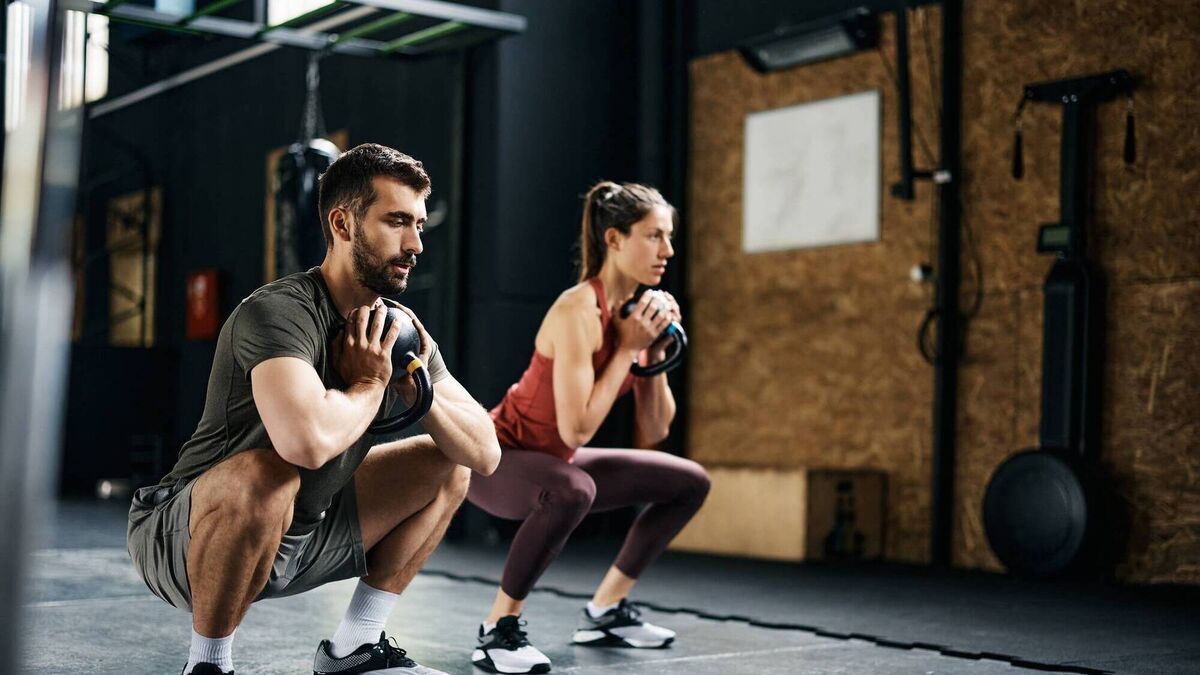
Both sexes get stronger, fitter, and healthier by applying the same training principles
THE fitness industry is saturated with marketing campaigns targeting female audiences with "women-specific" training protocols. From "toning" programs to hormonal-phase training, the message is often that women require fundamentally different exercise stimuli than men to achieve results.
However, a critical examination of the exercise science literature tells a different story: while there are undeniable physiological differences between sexes, the adaptation to exercise training — the process by which the body becomes stronger, fitter, and more resilient — is remarkably similar. The notion that women require distinct training programs is largely a commercial construct rather than a scientific necessity.
Perhaps the most compelling evidence comes from research on muscle growth (hypertrophy). A 2025 systematic review with Bayesian meta-analysis examining sex differences in resistance training concluded that relative increases in muscle size are similar between males and females.
While men may show slightly greater absolute muscle growth largely due to higher baseline muscle mass and hormonal profiles—when expressed as a percentage increase from baseline, women demonstrate the same capacity for muscle growth.
This finding is corroborated by a 2020 meta-analysis published in the Journal of Strength and Conditioning Research, which found no significant difference between sexes for and no significant difference for lower-body strength gains.
Interestingly, this analysis found a significant effect favouring females for relative upper-body strength improvements, suggesting that women may have a higher capacity to increase upper-body strength than men in some contexts.
The HERITAGE Family Study, one of the largest investigations into exercise training responses, provides valuable insights into endurance training adaptations. While men exhibited higher absolute VO2max at baseline, women demonstrated greater relative improvements following a 20-week endurance training program (+20 per cent vs +16 per cent). However, the study also revealed that men showed greater reductions in body fat percentage and visceral fat, as well as larger improvements in insulin sensitivity.
This highlights an important nuance: while both sexes adapt positively, the pattern of adaptation may differ in specific physiological systems.
Research examining mixed-sex military training programs — where men and women undergo identical training — reinforces the conclusion that relative improvements are similar. A systematic review of physical performance changes following military training found that while women often started at lower baseline fitness levels, their relative improvements tended to be greater than or equal to men across most outcome measures.
Crucially, few statistically significant sex-by-time interactions were observed, indicating that both sexes respond to the same training stimulus in fundamentally similar ways.
Emerging research at the cellular level adds further depth. A 2025 study on cardiac adaptations to marathon running found that both sexes experienced transient cardiac remodelling, though some sex-specific patterns emerged—men showed a greater tendency for left ventricular ejection fraction reduction post-marathon.
Animal research has suggested that female rats may exhibit greater improvements in cardiovascular autonomic modulation and oxidative stress profiles in response to training.
These findings do not suggest that different training programs are needed, but rather that the magnitude of adaptation in specific subsystems may vary.
The critical distinction is between individualisation — which is essential for all exercisers — and sex-specific programming, which implies fundamental differences in training requirements.
Men and women absolutely require individualised approaches based on their starting points, goals, and movement competencies.
A sedentary woman beginning resistance training will benefit from progressive overload, proper exercise selection, and adequate recovery — exactly the same principles that apply to a sedentary man.
The variability within sexes is often greater than the average differences between sexes.
Some women will respond better to higher volumes, some to lower volumes; some will thrive on power-focused training, others on hypertrophy-focused work. These individual differences transcend sex.
Why, then, does the "women's training" industry thrive? Marketing exploits perceived differences. The terms "toning" (rather than building muscle), "lengthening" (rather than strengthening), and "hormonal synchronisation" appeal to women who may feel that traditional strength training is "for men."
This narrative persists despite evidence that women benefit enormously from heavy resistance training, progressive overload, and the same foundational principles that govern male training.
For the average exerciser, the takeaway is that women do not need special programs.
They need well-designed programs that apply fundamental exercise principles.
A woman seeking to improve her strength should train with progressive overload; a woman seeking better cardiovascular health should accumulate consistent aerobic exercise; a woman seeking muscle growth should eat in a slight surplus and lift challenging weights. These recommendations are identical for men.
The scientific consensus is clear: while sex differences exist in baseline physiology and the precise magnitude of adaptation in specific systems, the response to exercise training is fundamentally similar between women and men.
Both sexes get stronger, fitter, and healthier by applying the same training principles.
Claims that women require fundamentally different training approaches are not supported by evidence and serve primarily to sell products. Good training is good training — regardless of sex.