Living Greener: Challenging myths about the past
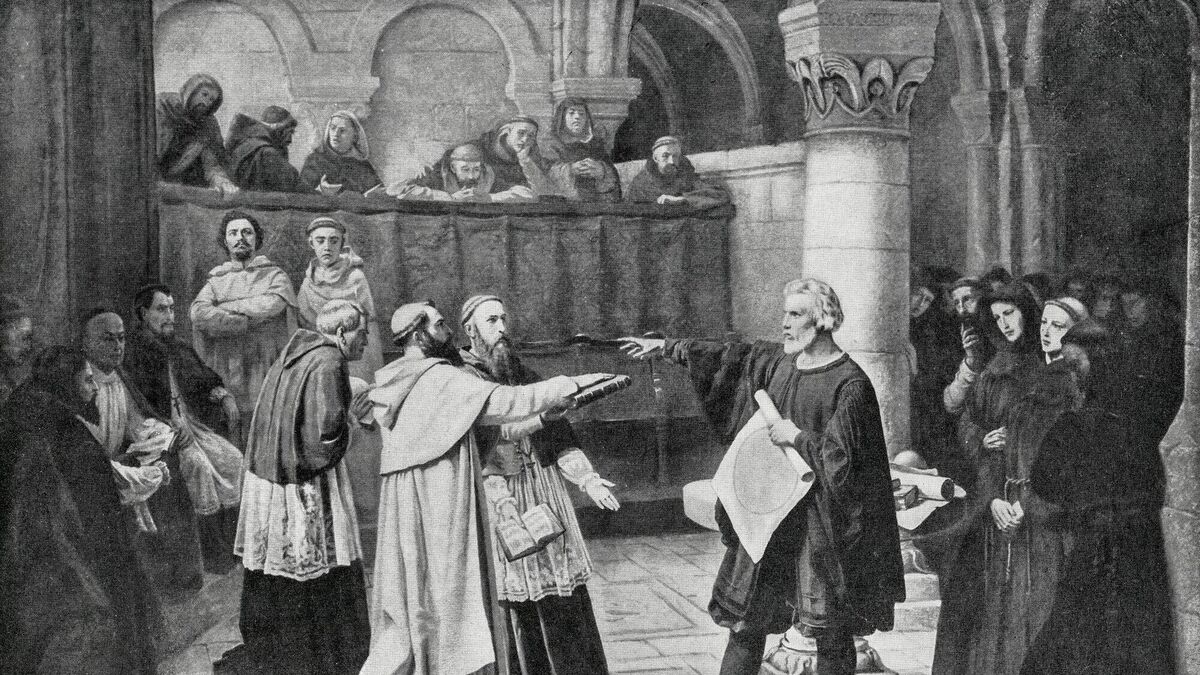
We think of the Inquisition as the ultimate byword for fundamentalist tyranny, but they were a much more rational and tolerant organisation than we imagine
WHENEVER I talk about living more sustainably or ecologically, or want to get people to join together with their neighbours as a community again, I get some surprisingly hostile reactions from people who insist that they don’t want to go back to the days when everyone was miserable.
What days were those, I wonder? I get that we now have laptops and plane flights, and our grandparents didn’t, and that’s great. Some things are better. What I find fascinating, though, is how forcefully people insist that everything today is better, that everyone in the past was bigoted or stupid or unhappy.
That doesn’t match what I read in writings from a century or two ago, or with the memories of elderly Irish that I talk to. I don’t find young people more tolerant either. On the contrary, most were raised with a deep hatred — not against other races, but against their own past.
When I ask people about the Middle Ages, for example, they all tell me the same few stereotypes – supposedly no one bathed, everyone threw waste into the street, no one could read, and they thought the world was flat, the Spanish Inquisition, burned witches and used barbaric torture devices like the Iron Maiden.
Of course, those things are mostly untrue. We have many records and illustrations of people bathing throughout the Middle Ages. Cities like London had regulations against throwing waste into streets, and harsh penalties for offenders. About half the population could read and write, wrote Seb Falk in The Light Ages. Medieval people knew the world was round long before Columbus.
Most of the torture devices and chastity belts we now see in museums were hoaxes invented centuries later to wow tourists.
We have the literature, science, philosophy and theatre of the Greeks and Romans today because generations of Christian monks kept them alive, mostly in Ireland and a few other places.
They actively taught them to students, sometimes including girls, leading to the first universities.
We think of the Inquisition as the ultimate byword for fundamentalist tyranny, but – aside from the fact that they appeared after the Middle Ages, in the Renaissance – they were a much more rational and tolerant organisation than we imagine.
They were the court system of the Spanish Empire, and most of the cases they tried were for real crimes, like murder or robbery.
They allowed the accused time to prepare a defence, defence arguments, alibis and character witnesses.
They stopped a great deal of witch hysteria, demanding that accusers present evidence of witchcraft, which of course was usually non-existent.
They acquitted most people who came before them, or gave only light punishments; they actually executed fewer people per year on average than the state of Texas does today, even adjusting for population, and far fewer than any Middle Eastern country today.
Of course the Middle Ages saw invasions and plagues, but we forget that they took place over a thousand years.
It would be like thinking of the Nazi Holocaust, the Muslim extermination of Armenians, the bombing of Hiroshima, the genocides of Stalin and Mao and the September 11 attacks as all taking place in a single year, to the same people.
We could take similar myths in every other era up to our own.
Feminists didn’t burn any bras in the 1960s.
Few or no people actually panicked during the War of the Worlds broadcast in 1938.
Stockbrokers didn’t actually jump out of windows when the Great Depression hit. There were few bloody gunfights in the Old West.
Turns out, people in any era just aren’t that stupid.
Of course, one can cite many examples of injustice in the past, for the past outnumbers the present by something like a million to one, and injustice is by definition what history records.
If it’s not tragic, we don’t hear about it.
Yet most people’s lives, most of the time, don’t consist of death and violence any more than our lives do – if they had, our species would never have survived. “Civilization is a stream with banks,” historian Will Durant once said. “The stream is sometimes filled with blood from people killing, stealing, shouting and doing the things historians usually record, while on the banks, unnoticed, people build homes, make love, raise children, sing songs, write poetry and even whittle statues. The story of civilization is the story of what happened on the banks. Historians ... ignore the banks for the river.”