Living Greener: Maintained hedgerows are a work of art
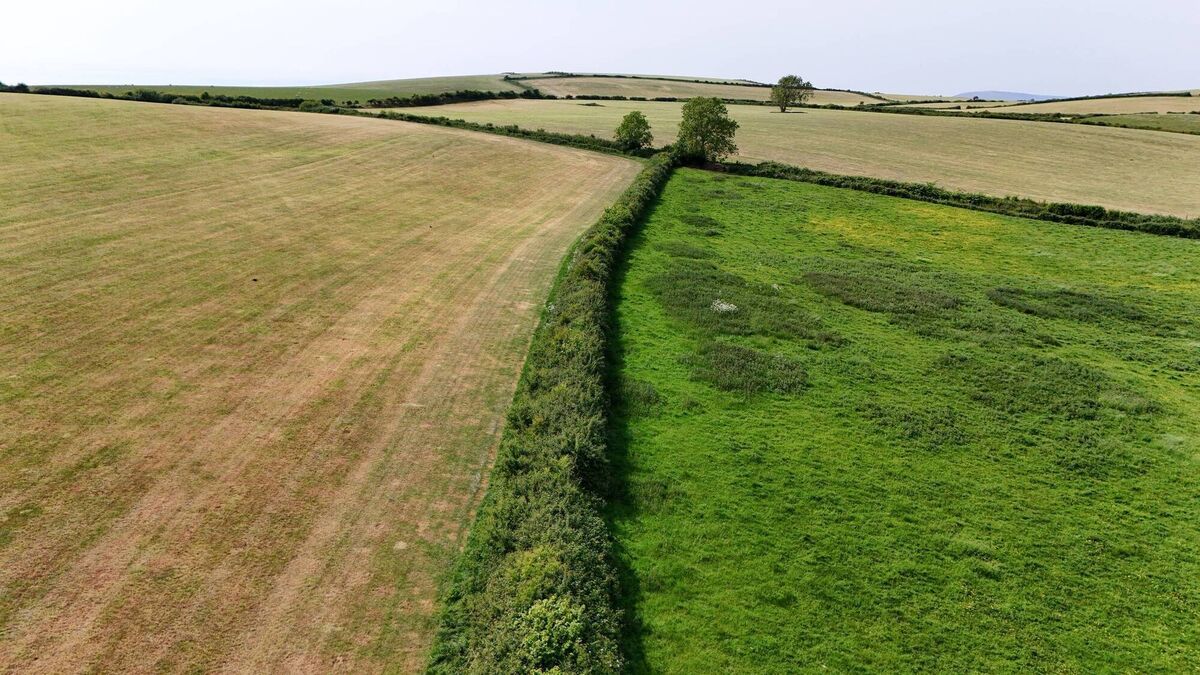
Hedgerows offer fields a needed balance
IF there is one thing that distinguishes modern spaces from traditional ones, it would not be the yards and fields themselves, but the boundaries.
Modern spaces are surrounded by chain-link fences, giving every school or building a distinctive penitentiary look.
Of course, the steel chains are not edible, nor do they grow thicker and stronger over time, nor do they cast shade over your land in the summer sun, nor do they thin out in winter to let in precious light.
The chain mail does not make the soil more fertile, nor protect it from being washed away by the rain, nor offer a home to wildlife. Hedgerows, however, do all of these things.
They add variety to fields that would otherwise go sterile.
Each plant adds its own chemicals and removes its own nutrients from the soil, so fields of monoculture need to be continually fertilised. Single crops provide our bodies, too, with a single set of nutrients, and only at certain times of year.
They also encourage a glut of certain animals, like pests that eat our crops, and offer no homes to the birds and insectivores who would eat the pests.
Hedgerows offer fields a needed balance, a wild river through human land that can soak up our excesses and give us a reservoir of food and fuel for lean times.
They give your garden a third dimension, a vertical salad bar that middle-aged and elderly can reach with a minimum of back pain.
Unlike field crops, they provide food for much of the year; hawthorn shoots, dandelions and nettles in early spring, linden leaves and daisies in late spring, rose hips and elderflowers in summer, sloes and blackberries in the autumn.
Many hedgerows have not been maintained and have become just strips of woodland – which is useful in itself – but maintained hedgerows are a work of art built over years.
In the first year, the hedge-layer plants a row of willow or hazel saplings and lets them grow. The second winter, they cut each one at the base – but not all the way through, so the sapling remains alive.
Instead, the hedge-layer bends the sapling to the ground, interweaving it with the other saplings.
Then they do the same to the next sapling, and the next, until there is a row of interwoven saplings laid on the ground, still growing but intertwined like a basket.
Typically, farmers would do this around the feast of St Bridget, before the new shoots begin in spring.
The next year, the sapling sends up shoots and keeps growing, and the next winter, the hedge-layer does the same to them.
The trees keep growing upward, but each winter they are woven back into this gradually rising fence. The trees also get thicker over time, until they are an impenetrable barrier of living wood.
Anyone can do this with the edges of their property, and with a day or so of work per year can get a barrier for animals and robbers without an electrified fence or barbed wire.
More broadly, the vertical garden aspect of a hedgerow could be applied to many structures. Your house or apartment building has sides, as do your sheds, shops, schools, churches and highway overpasses.
Not far away, you likely have telephone poles, fences, walls, signs, gates and, of course, trees, any of which might be covered in productive garden plants.
Such a project could transform ugly and dilapidated sprawl, insulate buildings, soak up rain and protect walls from the elements.
If I could recommend one single thing that suburbanites could do to make their lives better, it would be to cover every vertical surface with the means of production.
Beans and peas might make a good start – they grow easily in many temperate regions, make beautiful flowers, add nitrogen to the soil, and offer a high-protein, easily stored crop.
Brambles, roses and other thorny plants not only provide shoots, flowers and fruits, but a natural security fence against human or animal intruders.
Everyone lives in a different situation – a farm, a flat in town, a suburban house – but most of us have some opportunity to experiment with three-dimensional farming. Look around your neighbourhood and try to imagine what it could be.