Living Greener: Send your kids outside to play
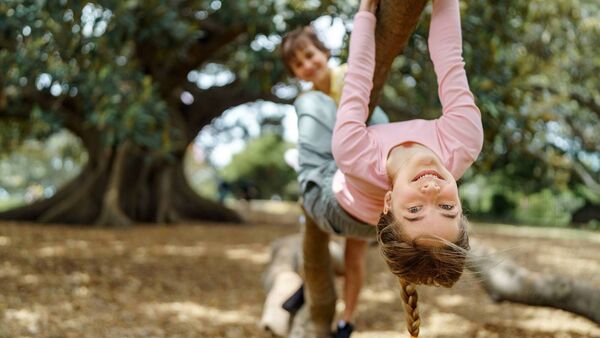
“The whole village was our playground when we were young,” said Bill Bergin, who wrote a book about his life growing up in Kill
FOR many years I interviewed elderly people who grew up before Ireland was modernised, before it became a land of unhappy people staring at screens and strangers to each other.
I’ve also spent years reading and listening to hundreds of other interviews -- local library records, town archives, old radio archives, Irish television documentaries, books and history journals – and have been amazed at how much traditional childhoods all have in common.
The same holds true of people who grew up before modern media around the world – as different as New Guinea tribes or 1950s American kids might seem on the surface, their childhoods would have much in common with each other, in ways that would be completely alien to children today.
Take, for example, playing – most children today grow up surrounded by mountains of toys, games and gadgets, rarely seeing the outside world.
A few generations ago, though, children had virtually no toys and didn’t need them; they ran barefoot through fields, climbed trees and peeked into birds’ nests, picked wildflowers and looked under logs, took shovels to dig to China and tramped paths in pursuit of pirates or dragons.
They jumped streams, swam to islands in a river, explored their new lands, became kings and queens of their new domain, and double-dared each other to explore the limits of their growing strength and courage. They fought, made up, swore eternal friendship, and engaged in the feral joy of a hunter-gatherer childhood.
“The whole village was our playground when we were young,” said Bill Bergin, who wrote a book about his life growing up in Kill.
He described how he and his friends spent their days making up their own games, turning scrap wood into push-cars to race down hills, making their own boxing rings and camp-fires, and on winter days, pouring water over frosted hills to make ice-slides.
“There were very few motorcars on the road in those days and this made it perfectly safe to play games like these on the road.” “With games and occupations that spanned the four seasons, we never had a thought for such phrases as ‘I’m bored,’” said one elder. “We hadn’t enough hours in the day for all we wanted to do.”
Only the winter nights kept children inside, and of course these children had no electric lights. Yet even here they remember spending their evenings around the fireplace, playing board games, telling stories or hosting neighbours who came over with musical instruments and stories.
The lack of store-bought equipment, or money to buy anything, did not slow the children for an instant. My neighbour Angela said she might see two cars on the road in a whole day, and the whole road was a playground for kids, who rolled old bicycle wheels up and down the road with a stick.
When they wanted to play hurling, another elder remembered, “we unravelled a sock not fit for darning, and we batted the threadball around with a sally crook (willow branch), similar to hurling. We played hurling all through childhood but few of us have the hurley that people do today. You cut a sally with a crook or even pulled a furze-bush with a crook out of a ditch.”
Those children wouldn’t need to be told that outdoor sports and free play improves children’s development, but of course it does – their brain development, their navigation and survival skills, self-confidence and intellectual focus, even their digestion.
Such studies prove what we know in our bones to be true and right, but since scientific research necessarily involves test numbers and are written for adults, the resulting headlines often portray children’s play as a tool adults can use to give their children an edge, a “hack” for getting your child to score above normal.
In fact, children playing in lots and fields is what normal looks like, and remains so even when entire generations grow up obese and enclosed, like caged animals conditioned to recoil from sunlight.
Scientists are ethically forbidden from experimenting on children, yet in the last few generations, most of us non-scientists have done such an experiment, finding out what happens when we give children toys and screens rather than sending them outside to play. It’s time we ended the experiment.