The man who set up his own religious group in Athy
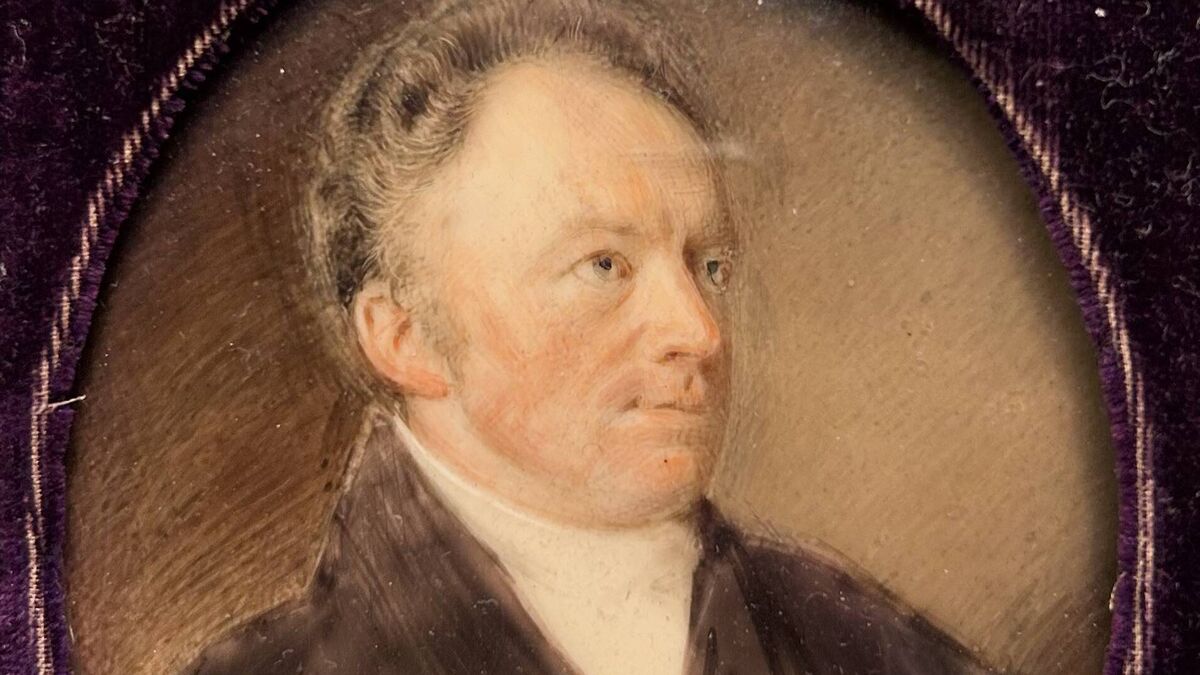
A portrait of Thomas Kelly. Image supplied by Frank Taaffe
ONE of the many persons I admire for their contribution to life in Athy in the 19th century was a man whom I first encountered over 30 years ago.
He was Thomas Kelly, born 1769, son of a Ballintubbert man who was a judge of the Court of Common Pleas.
I cannot remember how Thomas Kelly first came to my attention, but over the years I have mentioned his name in several columns.
Mr Kelly is now largely forgotten but was remembered a few years ago when a Made of Athy plaque was unveiled in his honour at what was once the side entrance to his chapel in Athy.
For Thomas Kelly led a complicated life following his ordination as a priest in the Anglican Church in 1792. He had originally studied in England to become a lawyer but instead took on clerical studies before being ordained for the Church of England.
He returned to Dublin where he became a popular preacher until the Dublin Archbishop, Dr Fowler, took alarm at what he perceived was Mr Kelly's ‘methodistical activities’ forbade him from preaching in churches of the Dublin archdioceses.
Apparently, Kelly's style of worship was recorded as similar to that of the early Methodists and his emphasis on biblical readings attracted congregations larger than those attending the regular Church of England services.
There is uncertainty as to whether Kelly thereafter returned to live in the Kelly family home in Ballintubbert, but it is known that he held services in Athy's Anglican Church which was then located in the back Square.
How or why, he was able to disregard the archbishop’s direction is unclear, but certainly he used the Athy church at least until he decided to start his own religious group the ‘Kellyites’.
He founded 'Kellyite' churches not only in Athy, but also churches in Cork, Blackrock in Dublin, Kilkenny, Maryborough, Portarlington, Waterford and Wexford.
During that time, he was a friend of Robert Walker who founded the ‘Walkerites’ in Dublin and was also a friend of John Nelson Darby who founded the Quaker group in England.
Church records for 1834 indicate that the Kellyites in Athy numbered between 30 and 40 and met every Sunday for a prayer service in their Duke Street meeting house.
The for 1844-'45 confirmed the continued existence of the Kellyite meeting house. Indeed, it will remain in use by the Kellyites until shortly after Thomas Kelly's death in 1855.
The meeting house was sold the following year after the local Kellyites disbanded, with many of Kelly's followers rejoining the local Methodist or Church of England congregations.
Thomas Kelly was a hymn writer of considerable merit and during his lifetime he published eight editions of his hymns entitled .
The first edition in 1804 contained 96 hymns and the final edition, which appeared nine years later, had a grand total of 765 hymns, all written by Thomas Kelly. The compositions reflected the personal piety of the author and in so many of them praise is a marked feature which warranted the description of Kelly's hymns as hymns of praise.
Thomas Kelly's best hymns are to be found in the 1820 edition of his published work. is one of the comparatively few hymns of the early 19th century which are included in modern hymnals. It is regarded as one of the finest hymns in the English language.
Another Kelly hymn is another admirably written hymn and is generally to be found with the previously mentioned hymn in Anglican hymn books in England and elsewhere.
Recently, I discovered that is included in the St Michael hymnal used in St Patrick’s Cathedral in New York.
Kelly was also the author of several pamphlets, including ‘A letter addressed to the Roman Catholics of Athy occasioned by Mr. Hayes’ seven sermons’. Another pamphlet of special interest to Athy folk was published in 1809 with the title ‘Some Account of James Byrne of Kilberry in the County of Kildare addressed principally to the Roman Catholic inhabitants of Athy and its neighbourhood’. Byrne, apparently dissatisfied with Catholicism, sought answers from Rev Kelly and joined the Kellyites.
I was prompted to write this article on Rev Thomas Kelly because I was given as a Christmas present a miniature portrait of the Reverend gentleman painted by John Comerford, the Kilkenny-born artist who died in 1832.
The portrait is dated 1814 and is the earliest recorded image of Kelly. For a reason which I need not explain, I retain copyright in the image.
I am conscious of the New Year and of the passing of 2025.
Quite recently I wrote of the passing of my friend Ned Conway and mentioned that I visited Ned and my friend John in St. Vincent’s Hospital for many years prior to Covid and my own illness.
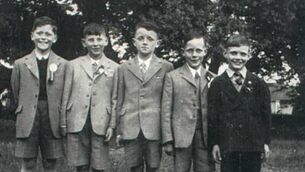
Within weeks of Ned’s passing my friend John Mealy has also died. We were friends for almost 80 years, ours being a friendship born in St Joseph’s School and revived when I returned to Athy in 1982.
John left school at a very young age to train as a baker in Bradbury's. He started work at 4 o’clock in the morning, working under Paddy Hayden of St Patrick’s Avenue. John was a good humoured man whose friendship I treasured.