Athy mother launches free autism workshops to support families
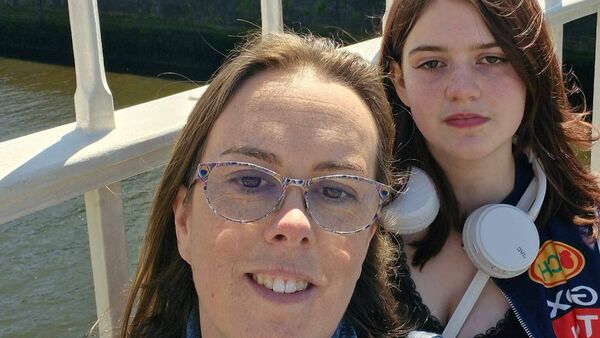
AnnMarie Walsh and daughter Erica Walsh
AN ATHY resident and autism awareness advocate is hosting a series of free workshops this June aimed at supporting families of autistic and neurodivergent children, as well as autistic adults, after her own family’s experience with school avoidance and autistic burnout.
AnnMarie Walsh lives in Athy with her husband, two children and their dog Eevee, and has spent recent years working voluntarily with parents and caregivers to help them better understand neurodiversity and everyday challenges faced by autistic young people.
Her work focuses on promoting acceptance and practical supports rather than trying to “change” autistic children.
“I’m particularly interested in promoting acceptance of our children for who they are,” she said. “They don’t need to be changed.” All of her courses are provided on a voluntary basis, with no charge for those attending.
The upcoming workshops at Athy Community Family Resource Centre were inspired by her family’s own difficult experiences. Both of her children are neurodivergent, with diagnoses including autism, ADHD and Pathological Demand Avoidance (PDA), while her son is also Situationally Mute and lives with Generalised Anxiety Disorder (GAD).
She said both children experienced traumatic burnout linked to Emotionally Based School Avoidance (EBSA).
“When this first occurred, we were lost,” she said. “We didn’t know where to turn or what to do. We felt very alone.” Five years later, she believes many parents are still facing the same uncertainty.
“The events came from a combination of frustration and seeing a real gap in accessible information,” she explained. “Many parents, educators and even adults themselves were looking for clearer guidance around topics like late diagnosis, school anxiety and burnout.”
AnnMarie described autism as “a different way of seeing the world” and a neurodevelopmental difference that presents differently in children and adults.
“In children, autism might show up through developmental differences like delayed speech or differences in play – though there is no wrong way to play,” she said.
She added that many adults, particularly those diagnosed later in life, may have spent years masking autistic traits through learned coping strategies.
The advocate said early signs of autism in children can include differences in communication, sensory sensitivities and repetitive behaviours, though some children may not display obvious characteristics at all.
She warned that masking – where children suppress autistic traits to appear socially acceptable – can have a significant impact on mental health.
“Children are often praised for masking because they are doing something deemed ‘appropriate’ or ‘correct’, when in fact they are hiding their true selves out of fear or confusion,” she said.
She noted that autism in girls is frequently overlooked because diagnostic criteria historically focused on boys. Girls may be more likely to mask, mimic social behaviours or develop interests viewed as socially typical.
Discussing undiagnosed autistic adults, she said many experience lifelong feelings of difference, chronic overwhelm and repeated burnout.
“Some were misdiagnosed with bipolar disorder or various other mental health conditions,” she said. “Others became substance abusers to cope with feelings of inadequacy.”
She described autistic burnout as “when everything just stops” — a state of intense emotional, physical and mental exhaustion caused by prolonged stress and unsupported environments.
Warning signs can include withdrawal, exhaustion, heightened sensory sensitivity and loss of interest in activities once enjoyed.
“My son stopped speaking,” she explained.
Recovery from burnout requires patience, rest and reducing demands.
“Allowing for rest without guilt, and reconnecting with what feels safe and regulating, is essential,” she said.
The advocate also stressed the importance of flexibility within schools and prioritising children’s wellbeing above attendance targets.
“School didn’t work for my own children, even though they had amazing support from the autism class team in Athy College,” she said. “That support came too late for them, as it does for a lot of autistic students.” She believes schools must create inclusive environments where neurodivergent pupils feel understood rather than pressured to fit in.
“Training for staff and open communication with families are essential,” she said.
One of the most common misconceptions surrounding autism, she said, is the belief that autistic people lack empathy.
“That isn’t true. They often experience empathy deeply, but may express it differently,” she said.
She also criticised the continued use of terms such as “high functioning” and “low functioning”, describing them as misleading and unhelpful.
Another phrase she believes undermines autistic experiences is the suggestion that “we are all a bit autistic”.
“It is meant to portray understanding or sympathy, but it only diminishes the struggles the autistic community have endured,” she said. “We all have height, it doesn’t mean we can relate to the everyday life of someone seven feet tall.”
She is currently working with AUsome Training Ireland to help deliver neuro-affirming autism training programmes for school staff.
Her advice to parents concerned about autism or burnout is simple: trust your instincts.
“Listen to your child,” she said. “Even if they don’t use words, they are saying a lot.” She encouraged families not to wait for formal diagnoses before seeking support, particularly given long waiting lists and overstretched services.
“Support doesn’t have to wait for a formal diagnosis,” she said. “I can’t stress that enough.”
The June workshops will include practical guidance, neuro-affirming resources and lived-experience advice designed to help families feel less isolated while navigating autism, burnout and school-related challenges. She also had a workshop dedicated to adult autism for those interested.