Five continents represented in Kildare couple's Nativity collection
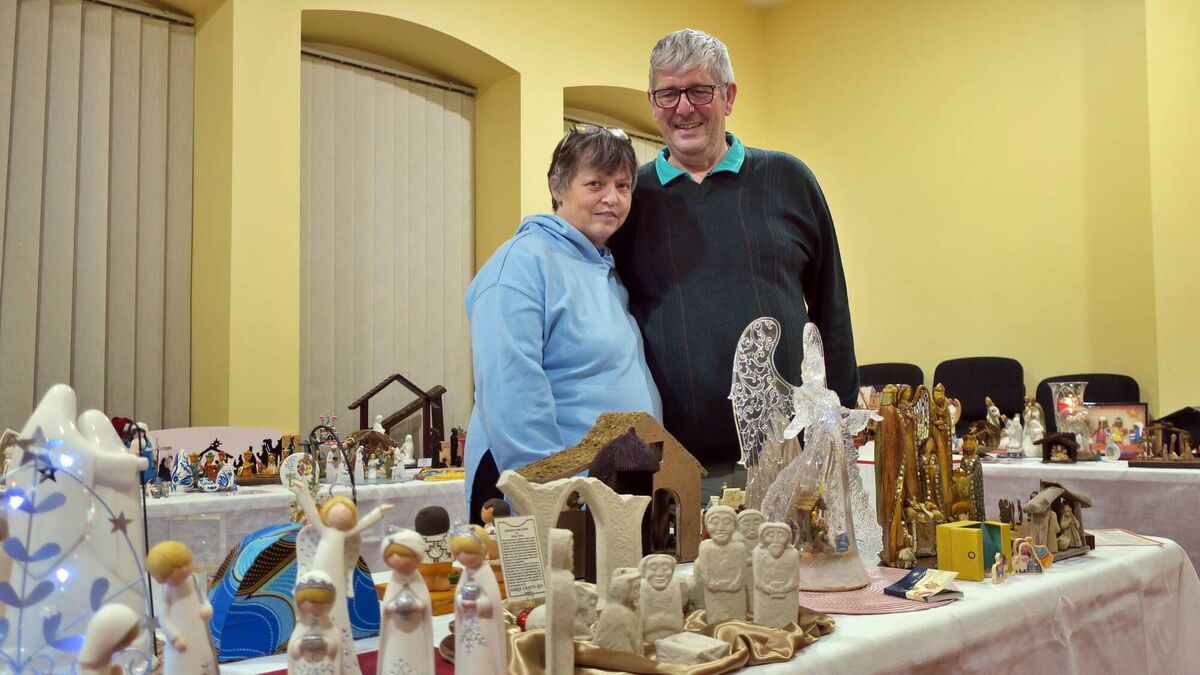
Ger and Lorraine Hegarty Kelly, amongst some of their more than 300 nativity sets
THE story of the birth of Jesus in Bethlehem may have been recorded only in two of the four New Testament Gospels, but the theme of the nativity, particularly at this time of year, is global today.
Just how much so was illustrated in a recent exhibition of more than 300 nativity scenes in Kilcullen, with representations from five continents.
The idea for the collection came in 2019, when parishioners Ger Kelly and his wife, Lorraine, visited an exhibition of Nativities in Blessington, comprising around 30 exhibits.
"We thought it would be nice to do something similar in Kilcullen," said Ger. "When we put the idea to Fr Niall Mackey, he agreed, if we could get together maybe 50 scenes."
At the time, Ger and Lorraine had just one nativity crib in their home, which they had bought in 2012 for their daughter's confirmation.
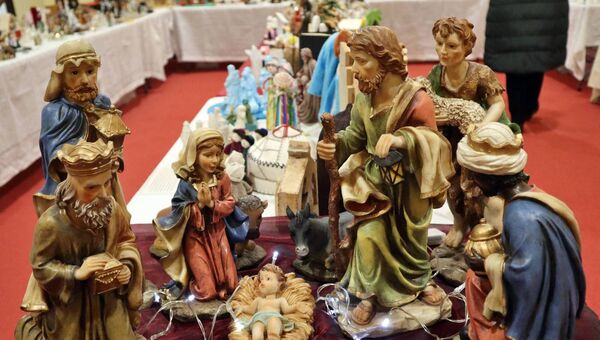
They searched around second-hand shops and online sites like eBay and spread the word amongst friends.
Even though Covid had arrived in the meantime, by Christmas 2020 they had gathered around a hundred scenes. It was a very successful event despite the pandemic restrictions.
In the years since, the pair continued collecting, and as word spread, donations from other sources increased; in several cases, people who had heard of the initiative commissioned pieces from local artisans.
In their travels, Ger and Lorraine always kept an eye out for something different — their most recent acquisition is also among their smallest, bought in Portugal, depicting Joseph lying on Mary's lap, holding the infant Jesus.
The imagination behind each nativity is a key factor in the collection's appeal. There are pieces made of palisander wood from Madagascar, with quilled paper strips from Cambodia, terracotta figures dressed in traditional frazada blankets that came from Peru, made of recycled snack bags in Honduras, clay figures from Mongolia, others in fabric sewn in Liberia, Inuit figures from Baffin Island dressed in polar bear hide and wolverine fur, and many more.
There's even a set made from rifle bullet shells in Tanzania, illustrating how a symbol of hatred can become something showing peace and goodwill.
Another from Kenya, made of ebony, depicts the local custom of the mother and father with their heads shaved.
Many of the pieces in the collection are displayed alongside the individual stories of their originators, which significantly enhances the visitor experience.
Some are heart-rending, from impoverished backgrounds; others are uplifting in the strength of the faith that inspired the piece.
In addition to many people who visited Kilcullen Parish centre for the three-day showing, many local school groups also came to see the set. Ger says that in many cases, the accompanying teachers were concerned about their charges handling the pieces and maybe damaging them, but he and Lorraine encouraged the youngsters to do so.
"We have never had a piece damaged over the years we've been doing this," he said.
Given the range of locations the exhibits originated from, the Kellys plan to provide a large world map next year, with pins indicating each exhibit's origin.
So that will be Kilcullen, Wexford, other Irish cities and towns, many European cities, villages and towns in India, North and South America, Africa, Asia, and ... oh, look, we'll simply have to wait for the map.
Each year, the exhibition has collected money donations, which went to charity and parish funds.