Monasterevin pub refit gets high praise from planners
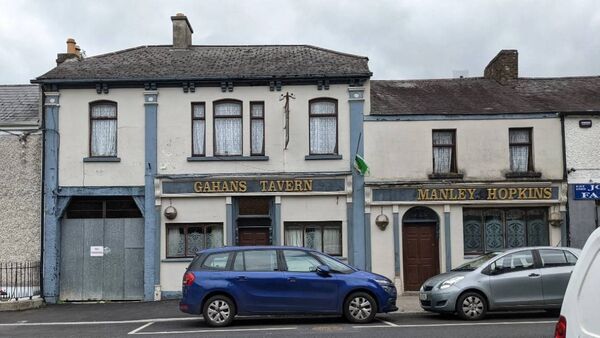
Gahan’s Pub and the Manley Hopkins bar on Main Street, Monasterevin
THE upgrade of historical pubs in Monasterevin continued last week, with the news that Gahan’s Pub and the Manley Hopkins bar on Main Street had been given permission to renovate their premises – just a fortnight after neighbours Finlay’s got theirs.
A local firm called West End Consulting applied to Kildare County Council on 30 May last to convert the first floor dining rooms into another three en-suite bedrooms, bringing their total from 13 to 16 rooms, as well as a staff office and toilet.
They also applied for retention for work done since their last permission in 2021, which has seen the Manley Hopkins side closed ever since for these renovations. This application was to change the layout of the downstairs kitchen and toilets, to remove a second staircase, raise the height of the lift, add a set-back door to Gahan’s shopfront, add a lean-to shed for a cold store, but, most importantly, to change the proposed cladding at the rear of the building.
Because the property is adjacent to the 350-year-old St John the Evangelist’s Church, this tiny site (0.095Ha, or 0.025ac) forms part of the Monasterevin Architectural Conservation Area.
Unsurprisingly, the only mild opposition from all the statutory and internal council sections (such as the fire officer) came from the council’s Heritage Unit, which only gave its approval on a 2-1 ‘split decision’.
However, the Heritage Unit seemed very satisfied with the applicant’s reply to its ‘Further Information’ request, for changing the outside cladding at the rear from a bare render to one of corrugated steel that resembles castellations and battlements at the top of the elevation.
“These frame the view [from the car park in Watermill Place to the rear] towards the protected structure and establish a deliberate, contemporary response to the historic church setting,” said the Heritage Unit.
“The success of this design lies in its intentional use of corrugated cladding, without which the building risks appearing as an ill-considered ‘back of the house’ structure, undermining the architectural integrity of the intervention … and is an essential component of its design strategy,” they continued.
In the end, the unit ruled: “It is considered that the proposal will not impact on the amenities of the adjoining properties; however … the corrugated cladding is an essential component of the design, ensuring the development is conceived as a 360 degree response appropriate to its highly sensitive and prominent setting within the Monasterevin Architectural Conservation Area.”