SIPTU seeks job alternatives for Newbridge employees
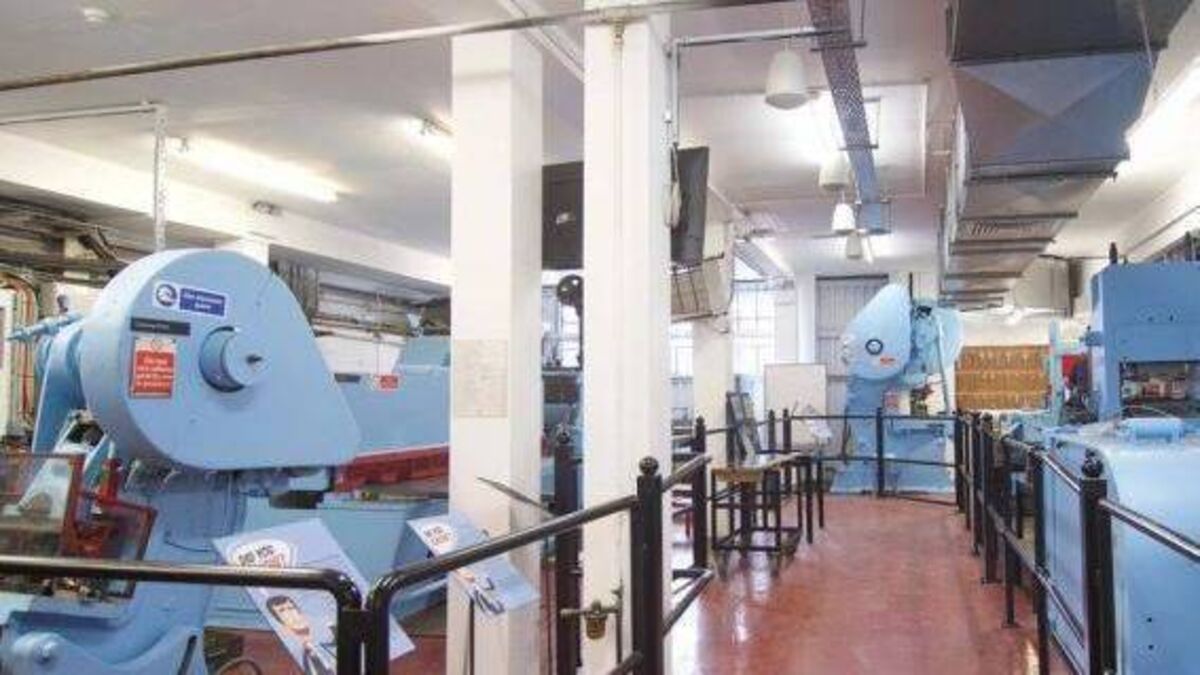
The production floor which in recent years had formed part of the Newbridge Silverware tour
NEWBRIDGE Silverware manufacturers Newbridge Cutlery Company Ltd confirmed that it will cease production of silver-plated cutlery and tableware at its Newbridge factory, placing 11 long-serving jobs at risk and bringing an end to almost a century of manufacturing at the site.
The company, founded in 1934, said production will officially end on 10 April 2026 following what it described as a comprehensive strategic review of a loss-making business.
A statutory consultation process is now underway, with SIPTU representatives having met management on Tuesday, for an update on the outcome for employees. This will be SIPTU’s second meeting with Newbridge Silverware management.
Workers were informed of the decision last Tuesday, 20 January after being called for a meeting. SIPTU organiser Richie Elliot said workers had no prior indication that a closure was being considered.
“They were requested to attend a meeting first thing in the morning when they arrived into work, and that’s when management informed them of the plan going forward,” he said.
“They got the bad news straight away. There was no inclination at all among our membership that this was coming.” Mr Elliot said he was unhappy with the timing of the company’s public statement, which he said appeared online while workers were still processing the news.
“In my opinion, it wasn’t handled properly. Workers should have been fully engaged with before any concern about getting something into the press.” The closure has sparked deep concern for the future of employees, many of whom have spent decades working at the factory.
According to SIPTU, the minimum length of service among the affected workers is 10 years, with some having given their entire working lives to the company. Mr Elliot recalled that one member of staff worked at the factory for 44 years.
“They're not just factory workers,” said Richie. “They're craft people who know their craft and are there a long time.”
He added that the loss of the working factory could also impact the wider visitor experience at Newbridge Silverware, where tourists regularly tour the production floor.
Newbridge Cutlery said the decision to close was taken with “deep regret”, citing several years of falling sales due to reduced demand for traditional silver-plated tableware, changing dining habits in homes and across the hospitality sector, and the decline of silver cutlery canteens as wedding gifts.
The company also pointed to a sharp increase in costs, noting that silver bullion prices have risen by approximately 150% over the past 12 months.
SIPTU said its priority during the consultation period is to retain as much employment as possible, including exploring alternative roles within the wider Newbridge Silverware organisation.
“We're in a consultation period now with the company and we'll be meeting them again to continue that, and we'll be meeting with our members as well to update them on how the discussions have gone so far. The company have to be seen to engage in that process as well,” said Richie.
“At this moment in time, our main position is to try and sustain as much employment as possible for the workers in there and specifically the members that we represent.” He continued: “We're pulling ideas across or trying to tell them, trying to come up with ideas regarding what sort of roles these workers could fill within the organisation outside of the normal duties that they do fill.”
“Is there going to be employment there for them in the future in a different role? That remains to be seen.”
Newbridge Silverware was asked about the future employment of workers from Newbridge Cutlery factory. It said: “A consultation process is underway with impacted employees, and we will engage fully with employees throughout that process. It would be inappropriate to comment on specific outcomes of that process at this stage.”