Solar eclipse: Concerns over 'knock-off' safety glasses
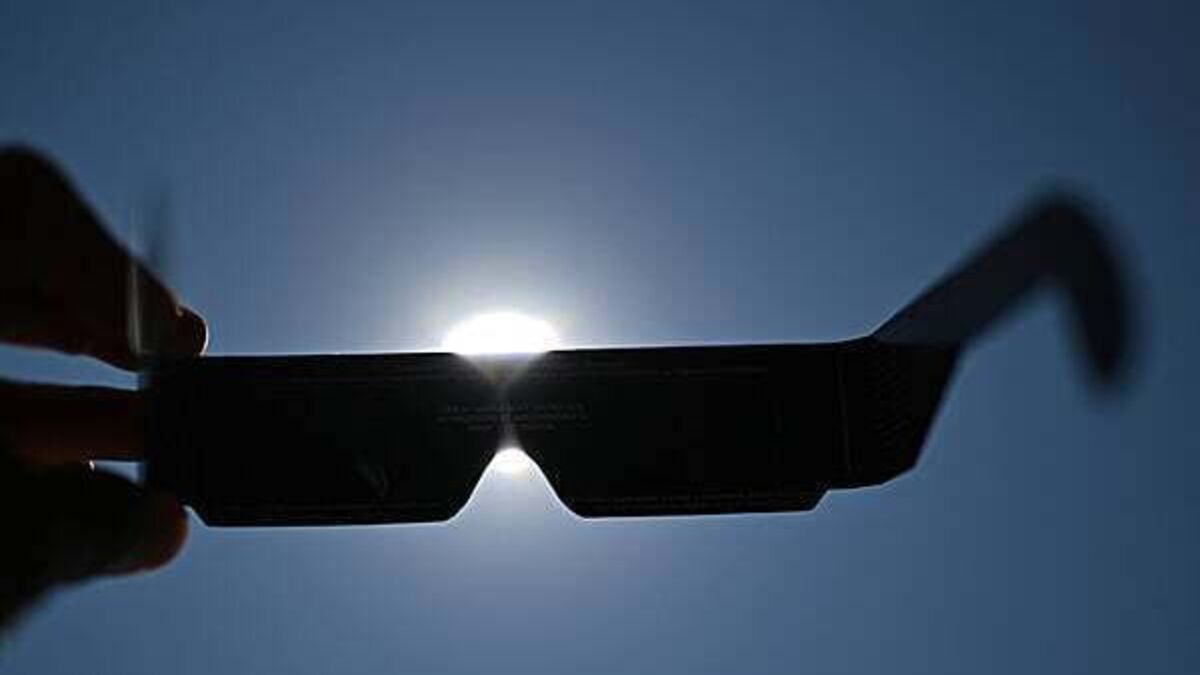
Concerns are being raised around people buying 'knock-off' safety glasses to watch this week's solar eclipse.
On Wednesday, at approximately 6pm, the moon will block the sun for around 2 hours.
Experts are warning people not to look directly at the sun without the appropriate protection, as it can cause lasting eye damage.
Safety officials remind observers to use ISO 12312-2 certified eclipse glasses during all partial phases of the eclipse. Regular sunglasses, cameras without proper solar filters, X-ray film, and other non-certified protection are unsafe.
Space expert, Dr Niamh Shaw says the eclipse will be amazing but is advising people to view it safely.
"The creepiest thing is that it gets quite cold within seconds when it reaches that maximum coverage," she told Newstalk. "It will get dark, like it's going to pour rain, it gets cold, and birds - if they are tweeting - will stop. The last time it happened was August 11th, 1999."
The path of totality will travel from Greenland across Iceland and northern Europe before reaching Spain, where millions of visitors and residents are expected to watch the rare celestial event during the peak summer travel season.

According to Nasa, totality will occur at midday in a remote region of northern Russia, while observers in Greenland and Iceland will see the eclipse in the late afternoon or early evening. In Spain, the Moon will completely cover the Sun shortly before sunset, creating dramatic views with the eclipsed Sun low on the western horizon.
For most locations along the path, totality will last less than two minutes, although the exact duration will depend on the observer’s location.
The eclipse will be especially significant for Spain: the last total solar eclipse visible from the Iberian Peninsula occurred in 1912.
The US and Canada will not experience totality from this eclipse and will see only a partial solar eclipse in limited areas.