The sad decline of the Tuesday market in Athy
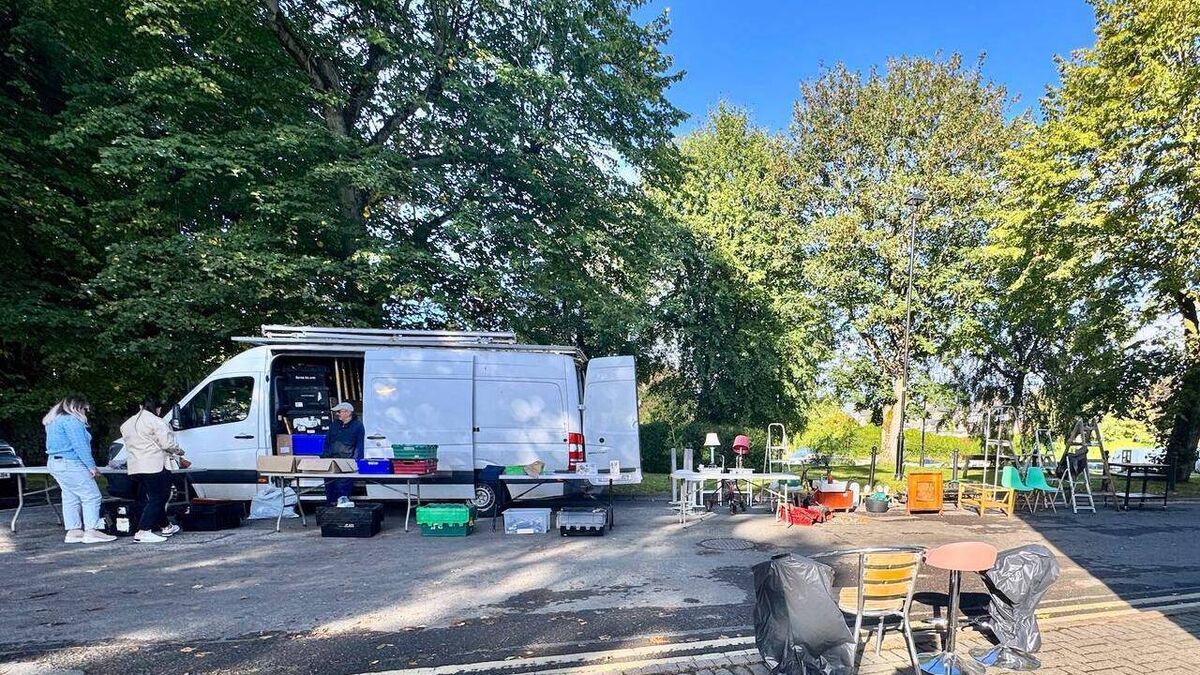
Tuesday market in Athy Photo: David Daly
THE late journalist and writer John Healy penned No One Shouted Stop, which chronicled the economic and social decline of his hometown of Charlestown, County Mayo, in the 1950s and 1960s.
The book was published in 1968 as Death of an Irish Town, but it was later reissued under the title No One Shouted Stop.
It is widely considered as a seminal work of social commentary and a lament for the erosion of rural Ireland.
The phrase has since become a metaphor for the failure to recognise and halt an obvious decline.
As I stood on Emily Square this morning the title of Healy’s book came to mind.
Driving down Meeting Lane, I was struck by the lack of cars in the back square and finding a parking space was no problem.
For as long as I can remember, with the exception of almost two years during the refurbishment of the Shackleton Museum, there would not be a square yard of space on either the front or back square on a Tuesday as traders plied their trade on market day, in a market town.
To say the front square was as empty as Old Mother Hubbard’s cupboard would be a little unfair, there were six stall holders set-up on the O’Brien’s side, but where stall holders had for years set up in the back square and along the Barrow Quay there was just the sound of the gentle river rolling on to Carlow.
Only four weeks out from Christmas the area that had once been a hive of activity on a Tuesday morning resembled a town after an air raid siren.
I got to talk to a few of the traders, who had been there from early morning setting up before the arrival of the Kildare County Council official arrived to ensure they were all compliant with the new regulations.
All said they were tax compliant, had spent €580 to take out public liability insurance and had made their contribution to the Kildare County Council purse to secure their trading permit.
One trader, who has been working the markets up and down the country for over thirty years, told me that it was hardly worth his while coming to Athy because people were not coming to the market.
“I know a man who comes to the market every week just to meet people; it is the only time he goes out in the week, the only time he gets to talk to anyone, just look around ya, the place is empty, who is he going to talk to now?”
He added: “People come to the market to socialise and to have a mooch through boxes of old tools and cutlery and stuff, never knowing what treasure they might find, but those traders have been run off the square because they do not have the required documentation.
For many of the sole traders who came to sell a bit of bric-a-brac or a few old books or cups and saucers it is not worth the cost, so they have left.”
I spoke to a regular visitor to the market who told me that a couple of weeks back people from social welfare, Revenue and gardaí had been in the market looking for people’s details.
I got the sense that the un-registered traders were not prepared to take the chance of a fine or worse, and so have stayed away.
As far as the traders who were there were concerned the die has been cast and Kildare County Council are not for moving on this.
There was a sense that Kildare County Council wish to confine trading to the front square and that the back square and Barrow Quay would no longer be available for trading. I hung around the square for an hour or so to get the opinion of a few people who regularly attend on a Tuesday and most expressed their disappointment at the lack of stalls and how the buzz had left the square.
“I have been coming here all my life,” one elderly woman told me, visibly upset.
“The first time I came was with my granny to see the turkeys at Christmas, and that wasn’t yesterday.”
One of the traders I spoke to believed that Kildare County Council are reluctant to discuss the matter further.
He said that at one stage there were up to 25 traders in Kildare on a Thursday, now there are five and the coffee shops and restaurants in the town are suffering from the lack of footfall on market day.
No one is shouting stop.