A fond look back at school days in Athy
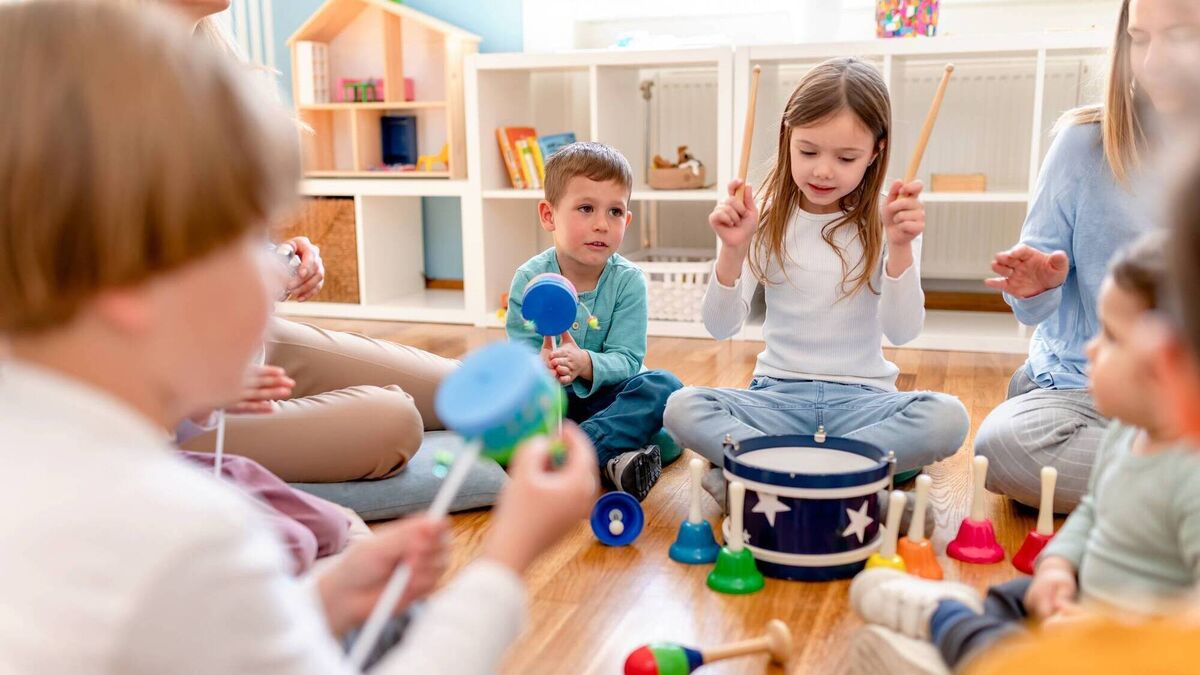
The recent emergence of gaelscoileanna have reawakened the drive for learning and speaking the Irish language.
MY YOUNGEST grandchild started primary school today after spending two years in preschool.
Hannah, named after her great grandmother who spent her adult life amongst the Irish speaking people of Connemara, is a pupil in the local Gaelscoil.
Given my difficult schooling days as regards the Irish language, it is a pleasant surprise to find in the ancient town of Athy, positioned just outside the English Pale of medieval times, a school committed to teaching Irish as a living language. It is even of greater significance for me that my grandchild follows her brother Ben, who is a senior infant student in the Gaelscoil and follows the example of three other grandchildren of mine who not only attended the Athy Gaelscoil, but subsequently attended the Gaelcholáiste in Carlow.
Their grandmother, a native of Fermoyle – located midway between Oughterard and Rossaveal in the western county of Galway – was particularly delighted to see some of her grandchildren learn to speak with proficiency their native language.
It is something, I must shamefully admit, that is beyond my ability. Indeed, Irish was my weakest subject as I prepared for my Leaving Certificate in the local Christian Brothers School. The Irish teacher throughout my years in the local Christian Brothers School was Brother Keogh, who was always referred to by the students as ‘Johnny Borris’ and who was slightly ineffective in teaching Irish as a spoken language.
My wife Breege, who walked and later cycled approximately six miles every day to and from her national school in Glenicmurrin, is a native Irish speaker. Extraordinary to relate that on her daily three-mile journey from Fermoyle to Glenicmurrin, she passed not a single house on her way.
It is the same today as one journeys through the Connemara landscape overlooking beautiful fishing lakes which are part of the local Costelloe and Fermoyle fisheries.
Looking back at my own early school days, I recall examining some years ago the roll books of St Joseph’s School, which I joined on 12 May 1946. That was the day I celebrated my fourth birthday, and I was promptly enrolled in St Joseph’s School, even though many of my young school companions had been together since the previous September.
I did not know it then but discovered a few years ago that my good friend of later years, Frank English, although almost a year older, had enrolled in St Joseph’s on the same day as myself.
St Joseph’s was a school of the Sisters of Mercy, a three-roomed building which stood for many years to the left of the entrance gate to the Sisters of Mercy’s Convent, now the Abbey Hotel, and was demolished during the building of St Michael’s Parish Church during the early 1960s.
I cannot remember my first day in school and wonder if Hannah, as she grows older, will remember her first day. I do have some memories of my first class, but my memories of my second class under Sr Brendan are treasured. The small Sister of Mercy was of advanced years even in the 1940s and, like so many other Sisters of Mercy in Athy’s convent, was from a county separated by a large distance from Co Kildare. A proud Kerry woman who during her time as a nun was never able to return to her Kerry home to visit her family, Sr Brendan was a wonderful person and almost 80 years later I still recall her as one of the most formative teachers of my life.
During my school days spent between St Joseph’s Boys School and the Christian Brothers School in St John’s Lane, there was no gaelscoil in Athy. Indeed, I was not aware of any gaelscoileanna in the 1940s other than Scoil Bride, founded in Ranelagh, Dublin in 1917. The recent emergence of gaelscoileanna have reawakened the drive for learning and speaking the Irish language.
When one looks back at the history of education in Ireland, how many of us will know that it was not until the later part of the eighteenth century that the prohibition on the teaching of Catholic children was lifted. That same period saw the relaxation of the Penal Laws which, in 1829, led to the passing of Catholic emancipation.
Before the Sisters of Mercy came to Athy in 1852, a parish school managed by the local parish priest had lay teachers who may have previously taught in local hedge schools. There was no compulsion for local boys or girls to attend school in those days. It was the arrival of the Sisters of Mercy and the setting-up of their school, followed later by the arrival of the Christian Brothers in Athy, which gave local families the opportunity to have their children educated.
Today, Athy has an extraordinary range of schools, both primary and secondary. The primary school children are catered for in the Model School, the Gaelscoil, the primary school founded by the Sisters of Mercy known as Scoil Mhichil Naofa and the primary school Scoil Phadraig Naofa founded by the Christian Brothers. All are now co-educational schools, unlike the primary and secondary schools I attended in the 1940s and 1950s.
Secondary education is based in Athy College, again with mixed students, as is the former Christian Brothers School and the former Sisters of Mercy school now combined and known as Ardscoil Na Tríonóide.
The changing landscape of the local schools offers a wonderful range of options to the town’s population, which is increasing year by year.
To Hannah, the young girl born in Cork city who now lives in Athy and started in school today, I give my best wishes for the future and I send good wishes to every boy and girl, whether primary or secondary pupils, who are now attending school in our great town.