Fit Focus: Use it or lose it forever
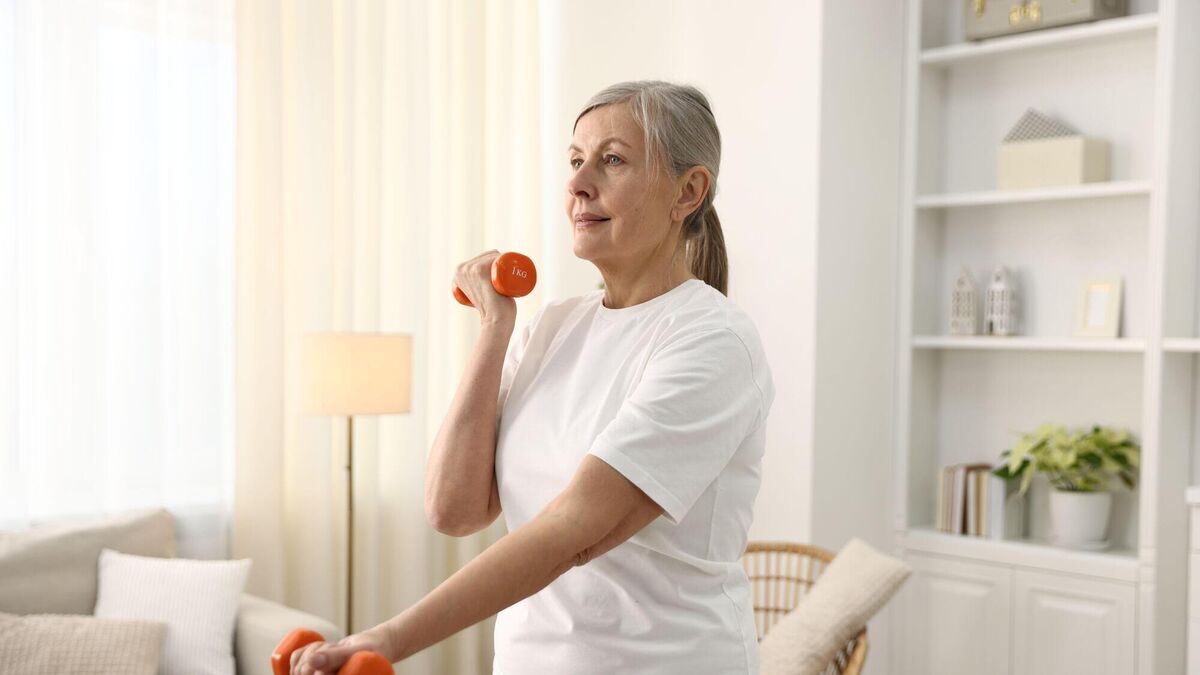
Slowing down is not a natural consequence of aging. It's a choice, and often a costly one.
THERE’S a persistent myth in our culture that aging and physical decline are inseparable — that once you hit a certain birthday, it's time to trade the barbell for the rocking chair.
Nothing could be further from the truth.
In fact, the science is clear: the older you get, the more important it becomes to maintain — and even push — your strength and power training.
Slowing down is not a natural consequence of aging. It's a choice, and often a costly one.
Muscle mass naturally begins to decline around age 30, a process called sarcopenia. Without intervention, adults lose roughly 3–8 per cent of muscle mass per decade after 30, accelerating after 60.
But here's the crucial nuance: much of what we attribute to aging is actually attributable to inactivity.
Research consistently shows that master athletes and lifelong lifters retain muscle mass, bone density, and strength levels that far exceed their sedentary peers—sometimes rivalling people decades younger.
The lesson is simple: your body doesn't deteriorate because of the calendar. It deteriorates because of disuse.
When you stop challenging your muscles, your body reasonably concludes it doesn't need them and begins dismantling them.
Resistance training is the closest thing we have to a fountain of youth.
It preserves muscle mass, combats osteoporosis by loading the bones, improves insulin sensitivity, supports joint health, and enhances balance — dramatically reducing fall risk, which is a leading cause of injury and loss of independence in older adults.
Equally important is the effect on independence.
Getting off the floor, carrying groceries, climbing stairs, lifting a grandchild — these everyday acts are strength tasks.
Maintaining strength well into your 70s, 80s, and beyond isn't vanity; it's the foundation of autonomy and quality of life.
Studies of adults in their 80s and 90s show that even at advanced ages, beginning a resistance program produces significant gains in muscle mass and function.
It is never too late to start, and it’s certainly never time to stop.
Strength is essential, but power — the ability to produce force quickly — is what protects us in the real world.
Power declines faster than strength with age, and it's the quality that helps you catch yourself when you trip or react quickly to a stumble.
This is where jump training, or plyometrics, earns its place.
Contrary to popular belief, controlled jumping isn't just for young athletes.
Modified plyometrics — low-level hops, box step-offs, medicine ball throws, and skipping — preserve fast-twitch muscle fibres, improve bone density, and train the nervous system to react explosively.
For older adults, this translates directly into better balance, quicker reflexes, and greater resilience against falls.
The key is progression and appropriateness.
Begin with low-impact variations — pogo hops, quick step-ups, and light medicine ball tosses — and build gradually under qualified guidance.
Jump training doesn't need to be dramatic to be effective; even modest ground-reaction forces send powerful signals to bones and muscles to stay strong.
When people stop training as they age, the consequences compound.
Muscle loss begets weakness; weakness begets inactivity; inactivity accelerates muscle and bone loss.
Add reduced balance and power, and the risk of falls and fractures climbs steeply.
The result is a downward spiral that can strip away independence faster than any birthday.
The prescription is straightforward: lift heavy things regularly, jump or move explosively within your capacity, and never assume that age is a reason to back off.
Work with a qualified coach, respect recovery, and progress intelligently — but keep progressing.
Aging is inevitable. Physical decline is largely optional.
The barbell, the medicine ball, and the jump box are not just fitness tools — they're investments in the person you'll be at 75, 85, and beyond.
Use it or lose it. The choice, quite literally, is yours.