Living Greener: Recycling the world quietly underneath our feet
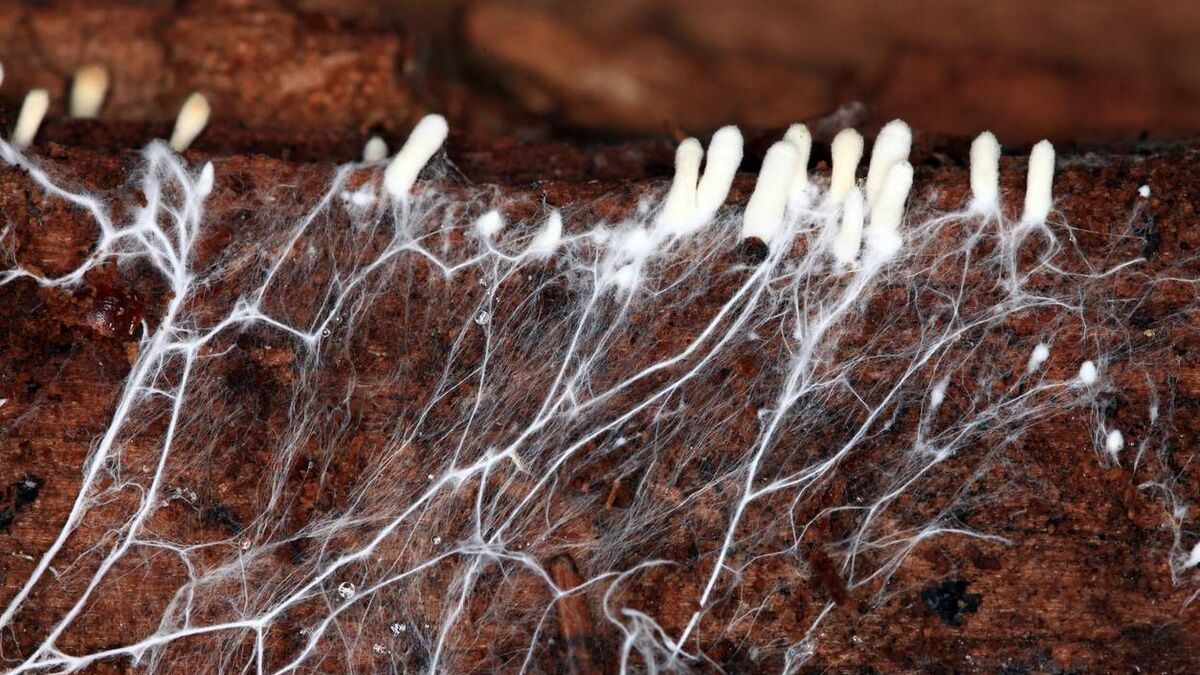
Threads of mycelium fungi weave through the ground under our feet like fibres in a mattress, turning wood, dead matter and even rock into soil
LAST week I talked about mushroom hunting, and learning about the various kinds of fungi around us lets us see the world around us from an entirely new angle.
We tend to think of the world as consisting of plants and animals, part of a life cycle dimly remembered from old textbooks: one inhaling oxygen and the other exhaling it, one creating food and the other eating it.
Fungi are the forgotten member of the trinity, recycling the world quietly from under our feet, without which the others could scarcely survive.
We casually group them with plants, but they are closer to animals, breathing oxygen as we do and eating plant and animal matter.
Threads of mycelium fungi weave through the ground under our feet like fibres in a mattress, turning wood, dead matter and even rock into soil.
Most mycelia spend their lives quietly under our feet, unappreciated by any but a few mycologists.
Only a few gain our notice, and then only when they poke their reproductive ‘fruit’ out of the ground — mushrooms.
They include the largest and oldest organisms on earth – one in Oregon covers 2,200 acres of land and is thousands of years old, but you can walk around on it and see nothing.
According to mycologist Paul Stamets, mushrooms were the first living things on land, breaking down rocks like lichens do today and making way for plants – and after extinctions like the meteor that killed off the dinosaurs, “mushrooms inherited the Earth”.
In his wonderful talk, ‘Six Ways Mushrooms Can Save the World’, Stamets also describes how mushrooms can be used to fight invasive insects, create cures for various diseases, create ethanol for fuel, clean up toxic waste sites and rebuild sterile land.
One variety of mushroom – the ink cap, which grows on our property – was used in olden times to make ink.
We tried this ourselves, soaking the caps in water with cloves for a few days, then draining the liquid into a pot on the stove and reducing it over low heat into a thick ink.
Some fungi forge an alliance with the aboveground trees, living on their roots and absorbing the nutrients they need, to the point that many trees cannot survive without their partners.
Many mushrooms appear around certain trees, and experienced mushroom hunters look at the trees above as often as the ground below.
Our ancestors probably ate mushrooms extensively and probably saw far more of them.
Even our ‘wilderness’ tends to be managed, with humans clearing away the old trees and fallen wood that once sustained centuries of mycelium. In the time of early humans, of course, unbroken trees stretched from Ireland to Japan, the ground covered layers of decomposing wood. In his book , Alan Weismann describes seeing one of the last patches of original forest in Europe, and seeing giant trees host mushrooms the size of dinner plates.
Humans can rebuild that kind of healthy relationship with mushrooms; I know an old man who owns acres of deep woods in County Clare, and I asked him why his land is so lush.
He told me that he pollards his trees – trims and prunes them, in other words – and buries a portion of the wood, so the mycelium thrive and the soil stays healthy.
His entire land management system depends on his relationship to fungi, and like all the other living things on his land, he treats them with respect.
If you want to use mushrooms yourself and have neither an expert nor personal woodland, you can still use them without having to buy a plastic package each week.
If you have a mushroom farm nearby, you can ask for some of the spent soil for your garden — it is often not completely spent and yields some mushrooms along with your garden plants.
If you can encourage mycelium in your soil, you could get the same patch of ground yielding mushrooms year after year.
We have several species growing under our land, and we keep an eye out for signs of their gift to us.
While getting a beetroot from the garden the other day, I pulled away the leaves and found that under them, between the familiar roots, were ink caps sprouting everywhere.
Our garden has been growing double crops this year, edible plants that create life and mushrooms that glean beauty and food from death.