Kildare's own Indiana Jones recounts being held by tribe
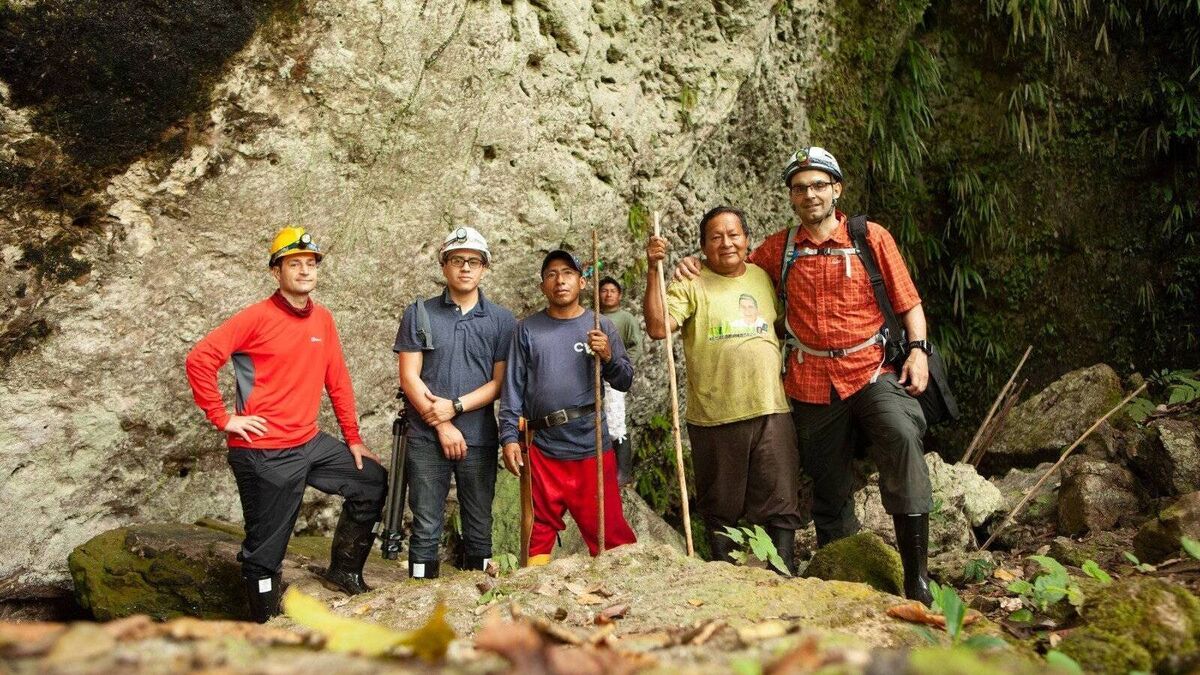
Crew and local indigenous guides with Dr Ionnais Sygrios on the right
A KILDARE-BASED explorer and technology expert has described how a decades-long investigation into mysterious artefacts in South America led him deep into the Amazon rainforest, led to him being held captive by a remote indigenous tribes during a series of expeditions comparable to those of Indiana Jones.
Greek national, Dr Ionnais Sygrios, has been living in Timolin for the last number of years and is the founder of an online history, archaeology and mythology website called Ancient Origins.
Though originally trained as an engineer, Mr Sygrios holds a Master’s degree and PhD in Artificial Intelligence.
Ancient history, he said, began as a personal passion before becoming his full-time job through his online platform.
The researcher now living in south Kildare founded the website in 2013 while he was living in Australia. Two years later, he relocated to Ecuador to expand his work on the ground.
In 2015, his investigations centred on a controversial historical case involving thousands of artefacts reportedly collected by Italian missionary Father Carlo Crespi in Ecuador in the mid-20th century.
According to accounts, many of the items, some said to resemble Mesopotamian-style objects, were given to the priest by local indigenous communities as gifts in gratitude for his humanitarian work.
“Some of the artefacts were made locally, but some were described as very unusual and historically significant,” he said. “There were said to be thousands of pieces.”
Father Crespi, who also held a PhD in anthropology, later opened a small museum to display what were believed to be the most important items.
A little time after, the museum was destroyed by fire, and many of the most mysterious artefacts reportedly disappeared.
In later years, Fr Crespi became increasingly isolated and the story faded from public view.
Interest in the case was revived in the 1960s and 70s when an international expedition involving British, American and Ecuadorian participants, including astronaut Neil Armstrong, searched for the alleged source of the objects.
Indigenous accounts spoke of a hidden underground chamber known as a “Metal Library,” said to contain artefacts from an unknown ancient civilisation. The official expedition report stated that nothing was found.
Years later, the Kildare-based researcher and his team began conducting their own inquiries into the mystery. They were granted access to remaining Crespi artefacts held in a museum vault in Cuenca, where they examined stored items including elongated skulls attributed to indigenous groups. However, Ionnais said the most controversial artefacts were missing.
The team then turned their attention to the Amazon, launching a series of expeditions, five or six in total, to search for caves identified in indigenous testimony as possible locations of the lost artefacts. According to local accounts, the cave entrance can only be accessed underwater when river levels are low.
During one expedition near the edge of Ecuador’s deep forest and on lands of the Kichwa people, the group was detained by local tribe villagers after passing through territory without proper authorisation from tribal leadership.
“We received permission from someone who did not have the authority to grant it,” said Ionnais. “When other villagers saw us, they captured us and brought us to the centre of the village.”
The team, which were unarmed and carrying only research gear, cameras and drones, were surrounded by approximately 30 to 40 villagers, some who were carrying machetes.
Ionnais said the group was held in a central area while community members conducted a form of public questioning to decide what should happen to them.
“It was like a village trial,” he said. “Everyone gathered around. Different people spoke and gave their opinion about who we were and what they thought we were doing there.”
Communication was difficult for all involved, as the crew had limited Spanish and did not speak the local indigenous language.
The tribe examined their passports, paperwork and equipment while questioning their intentions.
“They checked everything, our IDs, our cameras, our drones, our bags,” he said.
Their confinement lasted between four and five hours. Eventually, the group negotiated their release by offering money and supplies and by repeatedly explaining their research purpose.
Because night was approaching, villagers escorted them onward for safety to the next village.
“Eventually they let us go, but with an escort, because it was already night and the head hunters are out during the night,” said Ionnais.
But the ordeal did not end there.
After being escorted out, the team entered another nearby village, where they were again detained and questioned, this time by residents carrying guns as well as machetes.
He told villagers he was a professor and researcher and explained the archaeological focus of the expedition. This second detention lasted about two hours before the group was released.
Despite the danger, he said the team focused on staying calm and non-confrontational throughout both incidents.
“We didn’t show fear. We controlled our reactions and tried not to escalate anything,” he said.
“And we didn't have anything to protect ourselves, no machetes, nothing."
Despite the incidents, he described the happenings as an amazing experiences – spoken like a true lover of adventure. Further expeditions to the area were halted during the Covid-19 pandemic, but Dr Sygrios hopes to resume exploration next year.
But for now, he hangs up his fedora and bullwhip to live an ordinary life as a local resident and father in south Kildare.