Rural guesthouse in Kildare refused planning
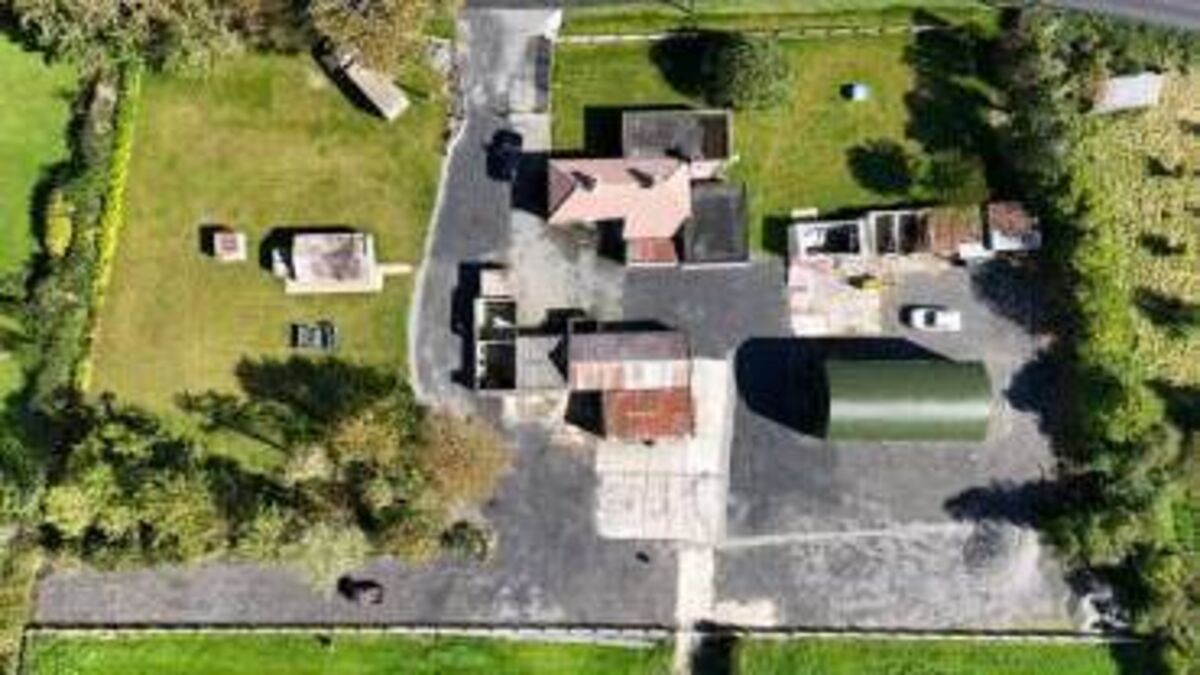
An aerial view of the 0.5Ha farmhouse in Alasty that was refused permission for conversion into holiday accommodation
PLANS for a 22-bed guesthouse at Alasty, off the Straffan Road, just north of the Palmerstown Estate have been turned down by Kildare County Council.
The application was submitted by Ricky Wilson, of Wilsons Auctions in Dublin 22.
The proposal included retaining permission for road widening works already carried out at the site entrance, together with the conversion and extension of a number former farm buildings into guest accommodation.
However, it was noted in a pre-planning meeting in August last year the entrance widening and the removal of a significant amount of hedgerow from the perimeter had already taken place, and a warning letter had been issued in regards of this.
The applicant had bought the derelict farm at auction, and proposed to convert it into holiday accommodation, particularly aimed at golf tourism, as the location has six golf clubs within five kilometres.
The planning report notes that substantial tree and hedgerow removal, together with entrance widening works, had already taken place at the site prior to the planning application being determined.
The report also records that a planning enforcement file was opened and that a warning letter had previously been issued in relation to unauthorised development.
The council refused permission on four separate grounds.
First of these was the failure to demonstrate safe and achievable sightlines at the proposed entrance about road safety.
The planners also cited the intensification of use of the entrance from a private residential access to a 22-bed commercial tourism development, as well as the impact on residential amenity, rural character and visual amenity in the area.
Of particular interest, the planning report states that substantial tree and hedgerow removal had already occurred on the site and that replacement planting could take approximately 20 years to provide a similar level of screening and visual protection.
The council concluded that the landscaping proposals would not adequately mitigate the impact on neighbouring residential properties.
The report also confirms that the roads department recommended refusal of permission on three separate issues.
The council ultimately concluded that safe sightlines had not been demonstrated and that the proposed development would create a potential traffic hazard.
The application attracted significant local interest and a number of submissions and observations were submitted from local residents during the planning process.