Athy company loses appeal over development levies
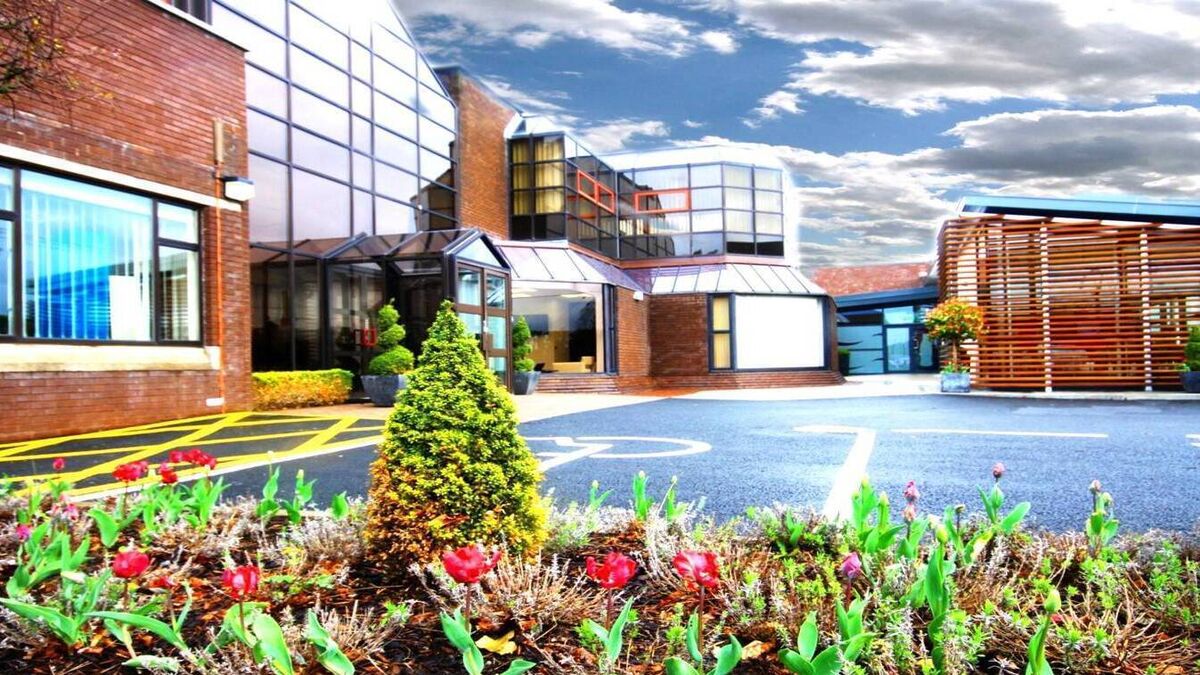
Fruit and Flavors corporate offices in Athy
ONE of the biggest employers in Athy will have to pay over €20,000 in development levies after An Coimisiún Pleanála (ACP) sided with Kildare County Council (KCC) in a story that began last September.
Back then TSL Projects Ltd, the parent company of American Fruits and Flavors who are best known for their Monster Energy drinks, who employ 100 people in the Townsparks Industrial Estate applied to Kildare County Council to retain a trade effluent waste water treatment system.
This saw the construction of a sludge removal building 8.73m high, and an underground attenuation (collection) water tank to assist the pond to the south of the premises that was granted four years ago.
The extension will include a control building, a dissolved air flotation building, an aeration tank and two clarifiers.
The firm sent clarification correspondence to the Environmental Health Department, Inland Fisheries, and Uisce Eireann detailing their plans, to the apparent satisfaction of all.
Following a comprehensive review of all the SuDS options the underground tank was identified as the most practical and environmentally friendly option for the site.
After a little to-ing and fro-ing the council finally granted retention with conditions on 9 April, with a bill for development levies of €20,466 – a figure TSL objected to, which saw them the only applicant on the appeal to ACP.
TSL argued that “the Development Contribution Scheme (DCS) had not been properly applied.
“KCC calculated the figures on the floor area of ancillary buildings, ie. sludge building, control building, and the dissolved aid flotation building.
“These are characterized as operational infrastructure, not development, which generates demand on public services.
“They are needed to treat operational waste arising from the primary development, and do not give rise to additional, or separate infrastructural demand."
However, following a site inspection by ACP’s Inspector on 22 June he initially agreed that: “while the buildings permitted are infrastructural, it is incorrect to suggest that they do not generate any demand from public services as they are connected to the public surface water system. The terms of the Development Contribution Scheme have been properly applied”.